



Commentary / World Jan 28, 2015
Other nations' troubles could slow U.S. growth
President Barack Obama has declared America's economic crisis over, but will global weakness infect the U.S. expansion?
President Barack Obama has declared America's economic crisis over, but will global weakness infect the U.S. expansion?
The U.S. unemployment rate has dropped from a peak of 10 percent in October 2009 to 5.6 percent at the end of 2014. Yet, hourly wage gains haven't accelerated. Economists are baffled.
Instead of facing the real issues of how to cut spending in the U.S. budget debate, Republicans and Democrats find it easier to argue over technical questions that, in the end, won't much affect the budget.
There is common agreement that the decline of double-digit inflation in the U.S. was the big economic event of the 1980s. But to say that President Ronald Reagan had almost nothing to do with that is wrong.
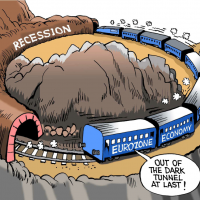
The European economic crisis refuses to go gently into the night because of the danger that Greece and its creditors can't agree and because of meager economic growth in the eurozone.
Economics columnist Robert J. Samuelson describes five issues to watch in 2015: oil prices, European debt, U.S. interest rates, wages vs. prices, and China's economy.
Nine percent of Americans carry no cash, and China's government estimates that by 2020, about 30 million eligible bachelors will be unable to find a wife. These are among the year's more interesting 15 statistics compiled by columnist Robert J. Samuelson.
In our mind's eye, old age is to be endured as much as enjoyed, since people fear declining health, growing dependence and increasing social isolation. Then why do public opinion surveys show that, on average, people count themselves happier after age 65?
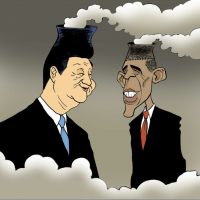
The U.S.-China emissions deal is a huge political triumph, but whether it alters the world's climate is an open question.

Americans are avoiding unpopular choices by hiding behind ideological platitudes.