


Commentary / World Jul 23, 2023
Russia’s fractured state
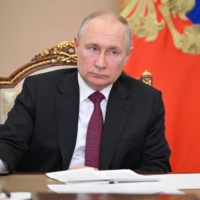
In the wake of Yevgeny Prigozhin's aborted rebellion, President Vladimir Putin’s weakness — and the cracks in the system he so meticulously built — are unmistakable.
In the wake of Yevgeny Prigozhin's aborted rebellion, President Vladimir Putin’s weakness — and the cracks in the system he so meticulously built — are unmistakable.
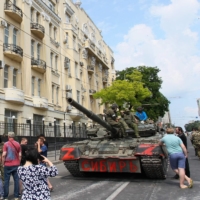
Russian President Vladimir Putin’s response to the rebellion by Wagner Group boss Yevgeny Prigozhin was hardly that of a powerful leader or even a skilled tactician.
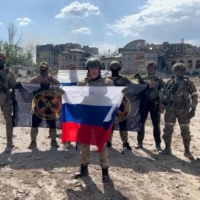
The Wagner mercenary chief has been attacking Russia's top military brass and warning that ordinary Russians, increasingly frustrated with the lack of progress in the Ukraine war, could revolt.

Despite the full force of the security state breathing down the necks of ordinary Russians, covert resistance to the Kremlin's narrative about the war can be found everywhere.

Chinese President Xi Jinping likely visited Vladimir Putin in Moscow recently to show the West he is in charge.
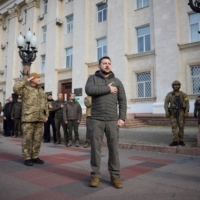
Just as the Ukraine war carries a high price, so would peace with Russia — not least for whomever negotiates it.
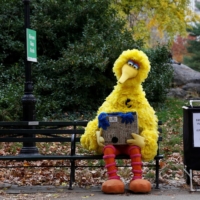
The experience in the 1990s of trying to introduce “Sesame Street” to Russia offers valuable insights into the Russian mind.
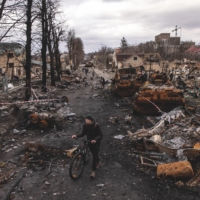
Russia may no longer be the totalitarian society that Nikita Khrushchev ruled six decades ago, but totalitarianism seemingly remains in its DNA.
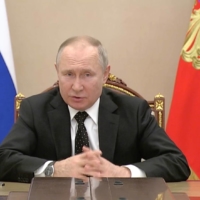
Unlike Russian President Vladimir Putin, former Soviet Leader Nikita Khrushchev during the Cuban missile crisis had the wisdom not to start an apocalyptic war simply to save face.
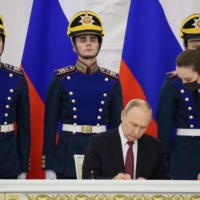
The more apparent it is that Russia is losing the war in Ukraine, the more forcefully President Vladimir Putin declares that it is not.