


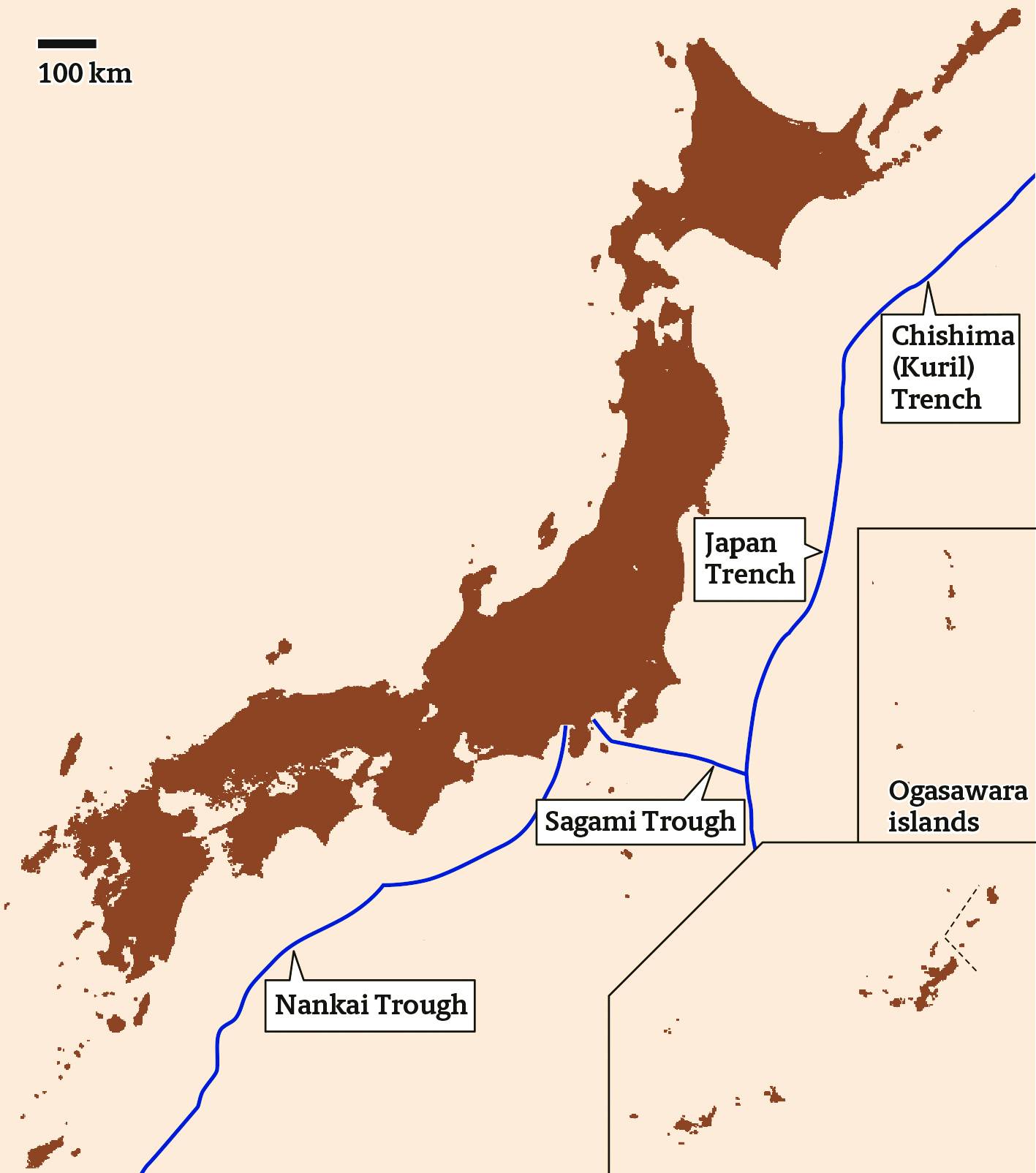
Nagoya – Off the southern coast of Japan, from Shizuoka to Kyushu, there is a massive ocean-floor trench. Along this trench, the Philippine Sea Plate is sinking beneath the Eurasian Plate. As the two plates grind against one another, friction builds and builds … and builds.

Friction has been accumulating at this unfortunate meeting point, known as the Nankai Trough, for 75 years. History has recorded nine major Nankai Trough earthquakes, over the course of more than a millennium. These are no ordinary shakes, either, and a quake there could directly affect well over a third of Japan’s population, from Kagoshima to Yokohama.
“When the Nankai earthquake occurs, it will be a huge historical event for Japan,” says Nobuo Fukuwa, a professor at the Disaster Mitigation Research Center at Nagoya University. “On par with when World War II ended or the 1854 earthquakes that helped lead to the end of the Edo Period. It will shake half of Japan.”
Since the year 1361, Nankai Trough earthquakes have struck approximately every 90 to 150 years, but scientists believe that an earlier scenario is possible.

In a time of both misinformation and too much information, quality journalism is more crucial than ever.
By subscribing, you can help us get the story right.
With your current subscription plan you can comment on stories. However, before writing your first comment, please create a display name in the Profile section of your subscriber account page.