


* Japanese name: Hasami mushi
* Scientific name: Dermaptera species
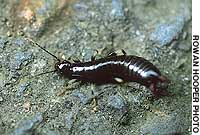
* Description: Earwigs are small (20 mm long), dark-colored insects with flattened bodies and a semi-circular, very thin pair of wings. The wings are elaborately folded under tiny elytra (wing cases), and it is the nature of the wing (thin, like sunburned, peeling skin) that gives the order its scientific name: Dermaptera means “skin wing.” Earwigs have long antennae, up to 50 segments long. But the most obvious thing about earwigs, and their easiest identifying feature, are the forceps on the end of the abdomen. In males they are curved, in females they are straight. The function of the forceps is not clear — they are sometimes raised, scorpion-like, over the abdomen when the insect is threatened, and they are sometimes used when males wrestle. The forceps give earwigs their Japanese name, meaning “scissor insect.”
* Where to find them: All over the country, all year round (though they tend to be less active in winter). Earwigs are nocturnal, and during the day they like to squeeze into dark, narrow crevices so that they can feel contact on their upper and lower bodies. Turning over rocks and stones is a good way to find them.
* Food: Earwigs are omnivorous scavengers, eating everything from flower petals to carrion and small living insects. They have simple biting jaws. Despite the sharp forceps, earwigs are not harmful to humans.
With your current subscription plan you can comment on stories. However, before writing your first comment, please create a display name in the Profile section of your subscriber account page.