


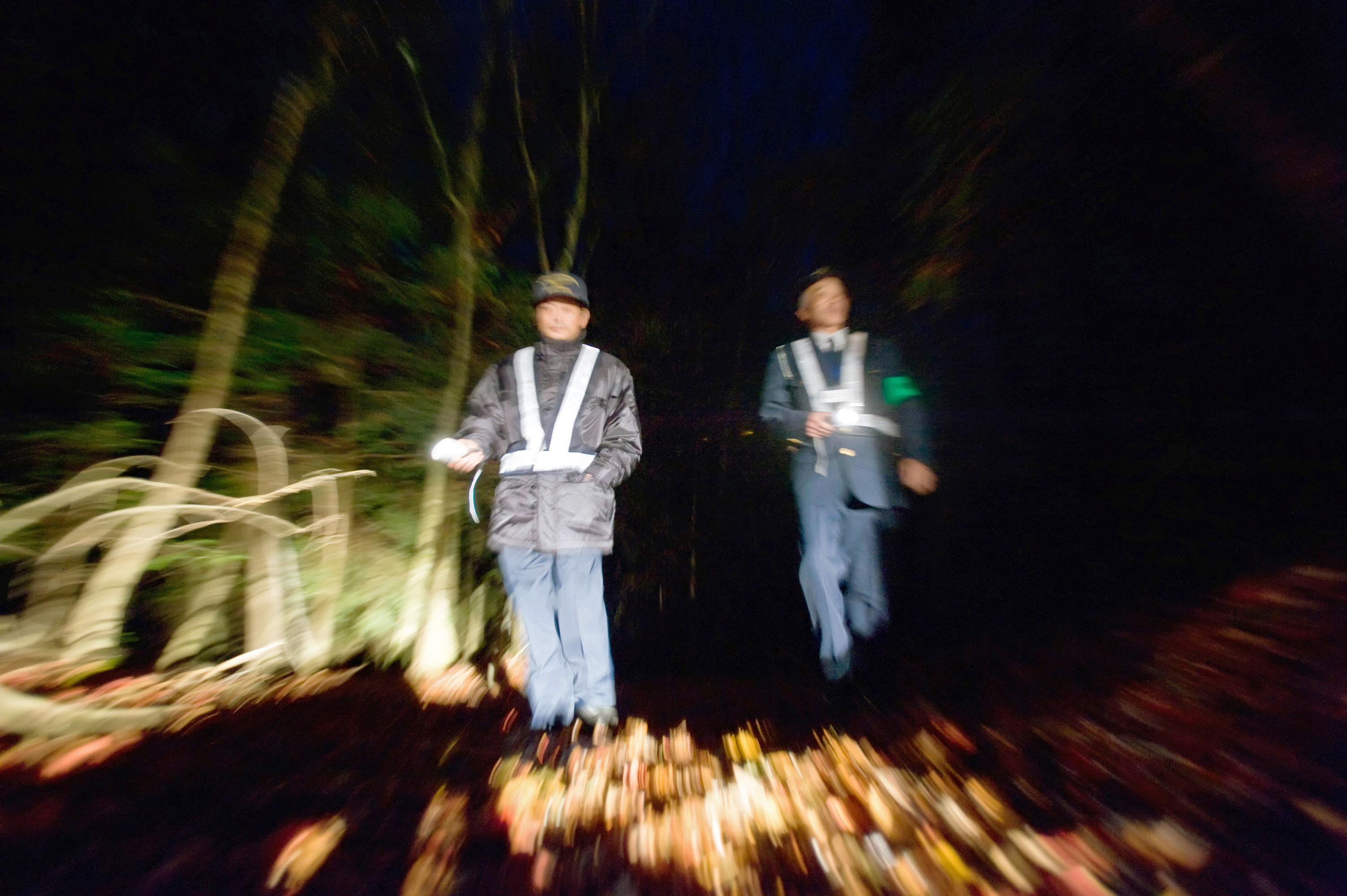
I am walking through Aokigahara Jukai forest, the light rapidly fading on a mid-winter afternoon, when I am stopped dead in my tracks by a blood-curdling scream. The natural reaction would be to run, but the forest floor is a maze of roots and slippery rocks and, truth be told, I am lost in this vast woodland whose name, in part, translates as “Sea of Trees.”
Inexplicably, I find myself moving toward the sound, searching for signs of life. Instead, I find death.
The source of that scream remains a mystery as, across a clearing, I see what looks like a pile of clothes. But as I approach, it becomes apparent it’s more than just clothes I’ve spotted.
In a small hollow, just below a tree, and curled up like a baby on a thick bed of dead leaves, lies a man, his thinning gray hair matted across his balding cranium. His pasty upper torso is shirtless, while his legs are covered only by black long johns — with blue-striped boxers sticking out above the waistband — and a pair of woolly socks.
Under his bent legs a pair of slacks, a white shirt and a jacket have been spread out as a cushion at his final resting place. Scattered around are innumerable documents, a briefcase and other remnants of a former life. Nearer to him are items more closely related to his demise: empty packets of prescription pills, beer cans, and bottles of liquor.
KEYWORDS




In a time of both misinformation and too much information, quality journalism is more crucial than ever.
By subscribing, you can help us get the story right.
With your current subscription plan you can comment on stories. However, before writing your first comment, please create a display name in the Profile section of your subscriber account page.