


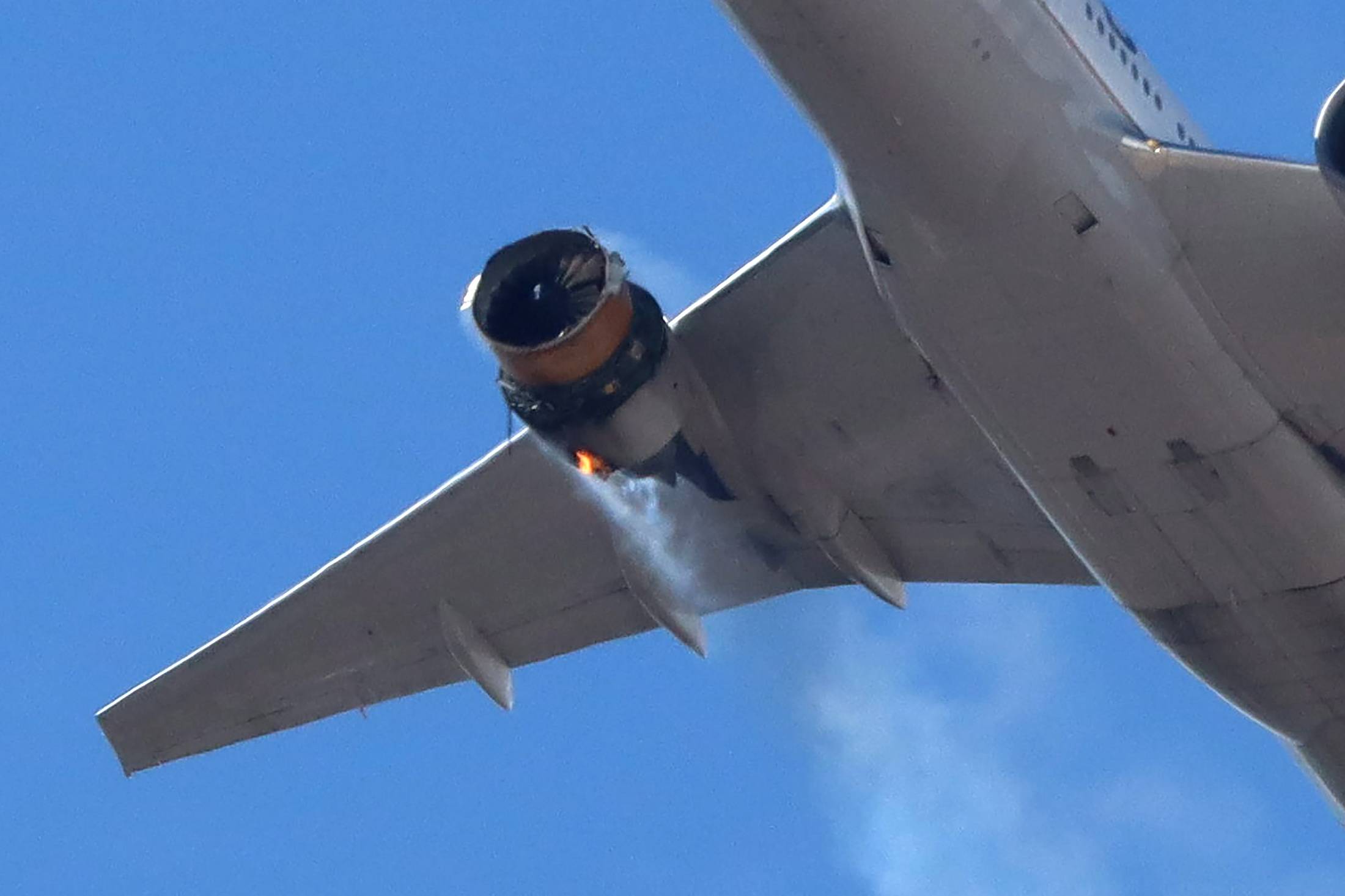
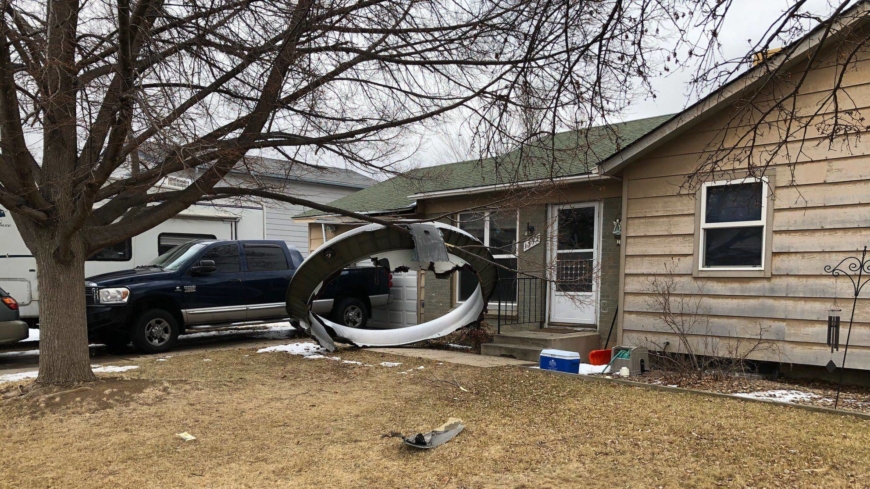
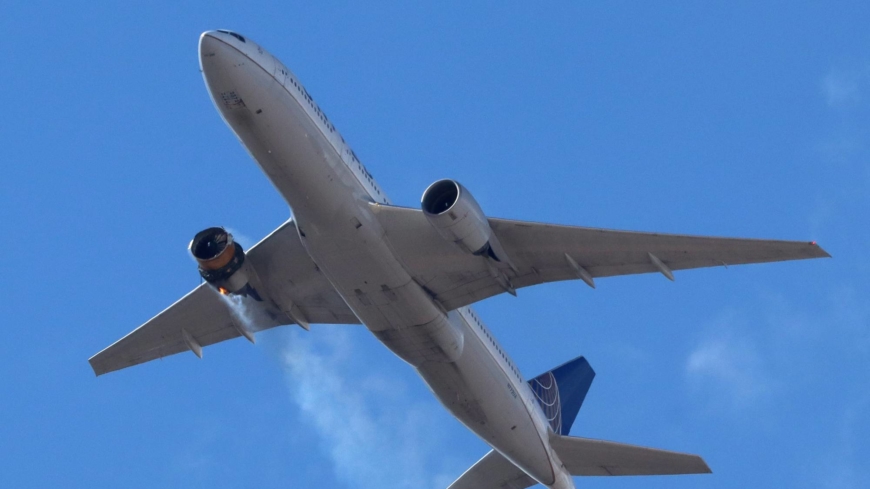
The midair disintegration of a jet engine over suburban Denver Saturday is the latest in a string of failures that has raised alarm among regulators about debris evading shielding that’s supposed to keep broken parts from hitting aircraft.
The incident aboard United Airlines flight 328, which showered neighborhoods with metal debris, appears to have been the fifth in five years in which a fan blade broke and destroyed the front section of the engine, according to accident reports and safety experts. That portion of the engine isn’t as protected as the core areas around the jet turbines that are built to contain material in a failure.
“It’s getting more attention with each fan-blade-out event, resulting in these dramatic pictures showing the core of an engine hanging from a wing,” said Jeffrey Guzzetti, the former head of accident investigations for the U.S. Federal Aviation Administration.
No one was hurt in Saturday’s incident and the Boeing Co. 777 safely landed. But a similar episode above Pennsylvania in 2018 killed a woman on a Southwest Airlines Co. jet after a metal chunk from the engine struck the window where she was seated and sucked her partially out of the jet.
On Sunday, regulators in the U.S., Japan and elsewhere said they are concerned that a crack on a fan blade in the Pratt & Whitney PW4077 was allowed to grow to the point that caused it to break off, triggering the failure. They ordered emergency inspections on the hollow titanium blades, which effectively grounded several dozen older 777-200s. Pratt is a division of Raytheon Technologies Corp.
In a time of both misinformation and too much information, quality journalism is more crucial than ever.
By subscribing, you can help us get the story right.
With your current subscription plan you can comment on stories. However, before writing your first comment, please create a display name in the Profile section of your subscriber account page.