


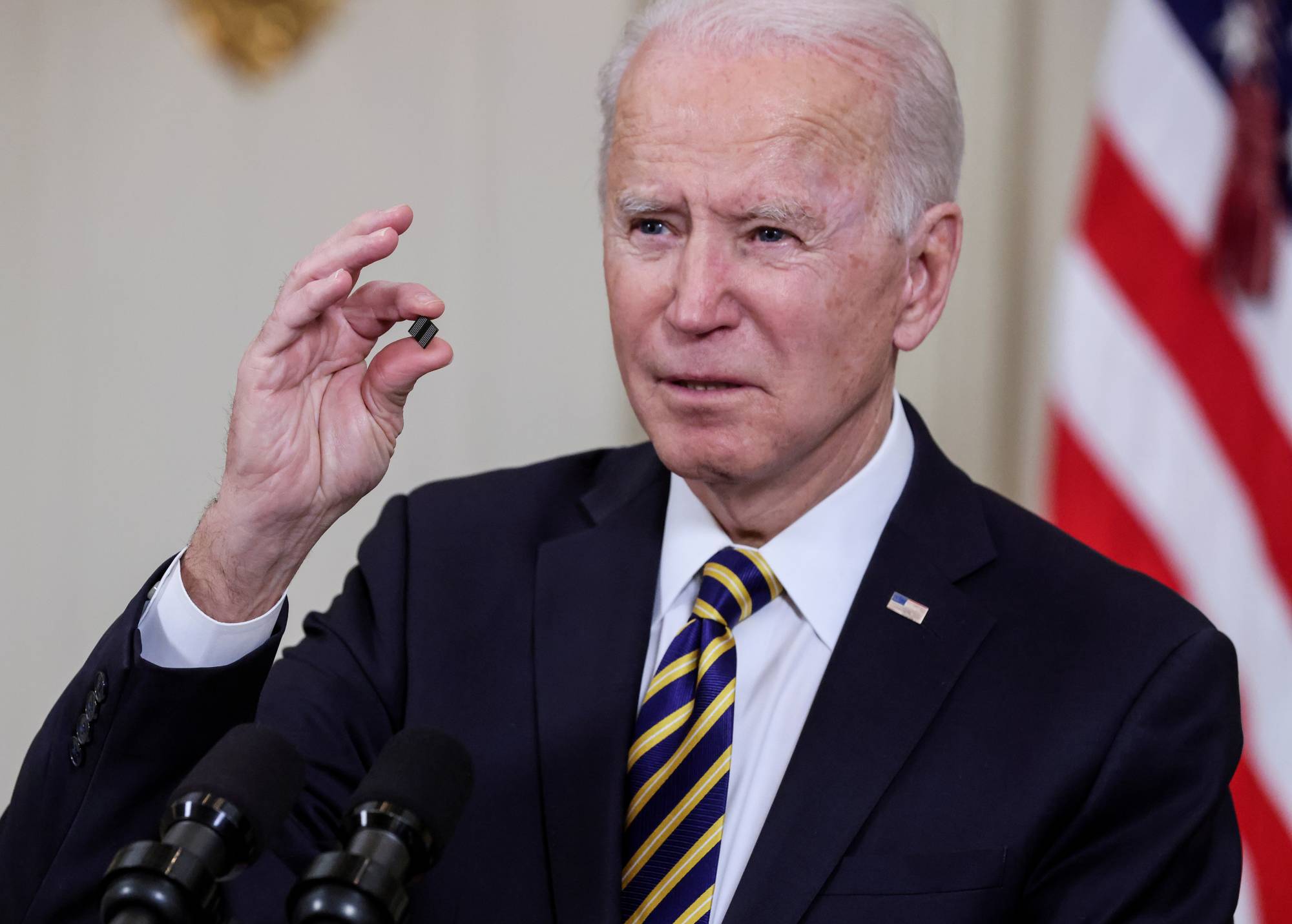
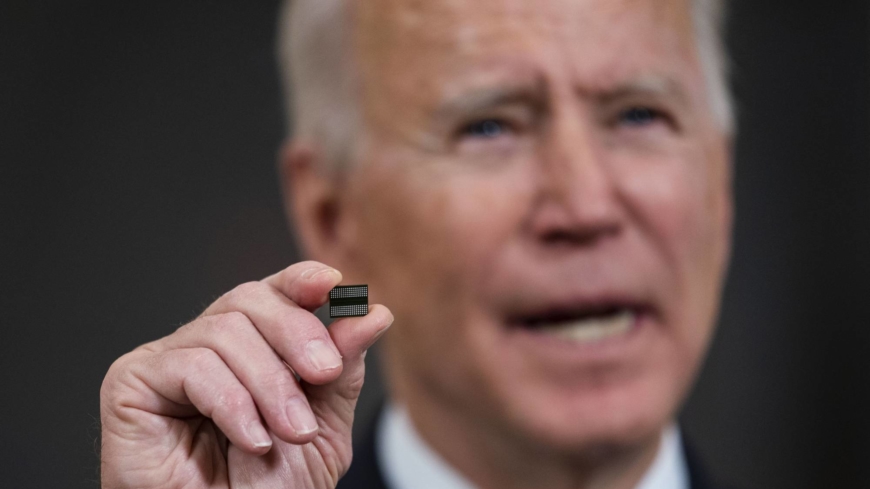
When U.S. President Joe Biden on Wednesday stood at a lectern holding a microchip and pledged to support $37 billion in federal subsidies for American semiconductor manufacturing, it marked a political breakthrough that happened much more quickly than industry insiders had expected.
For years, chip industry executives and U.S. government officials have been concerned about the slow drift of costly chip factories to Taiwan and Korea. While major American companies such as Qualcomm Inc. and Nvidia Corp. dominate their fields, they depend on factories abroad to build the chips they design.
As tensions with China heated up last year, U.S. lawmakers authorized manufacturing subsidies as part of an annual military spending bill due to concerns that depending on foreign factories for advanced chips posed national security risks. Yet funding for the subsidies was not guaranteed.
Then came the auto-chip crunch. Ford Motor Co. said a lack of chips could slash a fifth of its first-quarter production and General Motors Co. cut output across North America.
“It brings home very clearly the message that the semiconductor is really a critical component in a lot of the end products we take for granted,” said Mike Rosa, head of strategic and technical marketing for a group within semiconductor manufacturing toolmaker Applied Materials Inc that sells tools to automotive chip factories.
KEYWORDS
In a time of both misinformation and too much information, quality journalism is more crucial than ever.
By subscribing, you can help us get the story right.
With your current subscription plan you can comment on stories. However, before writing your first comment, please create a display name in the Profile section of your subscriber account page.