


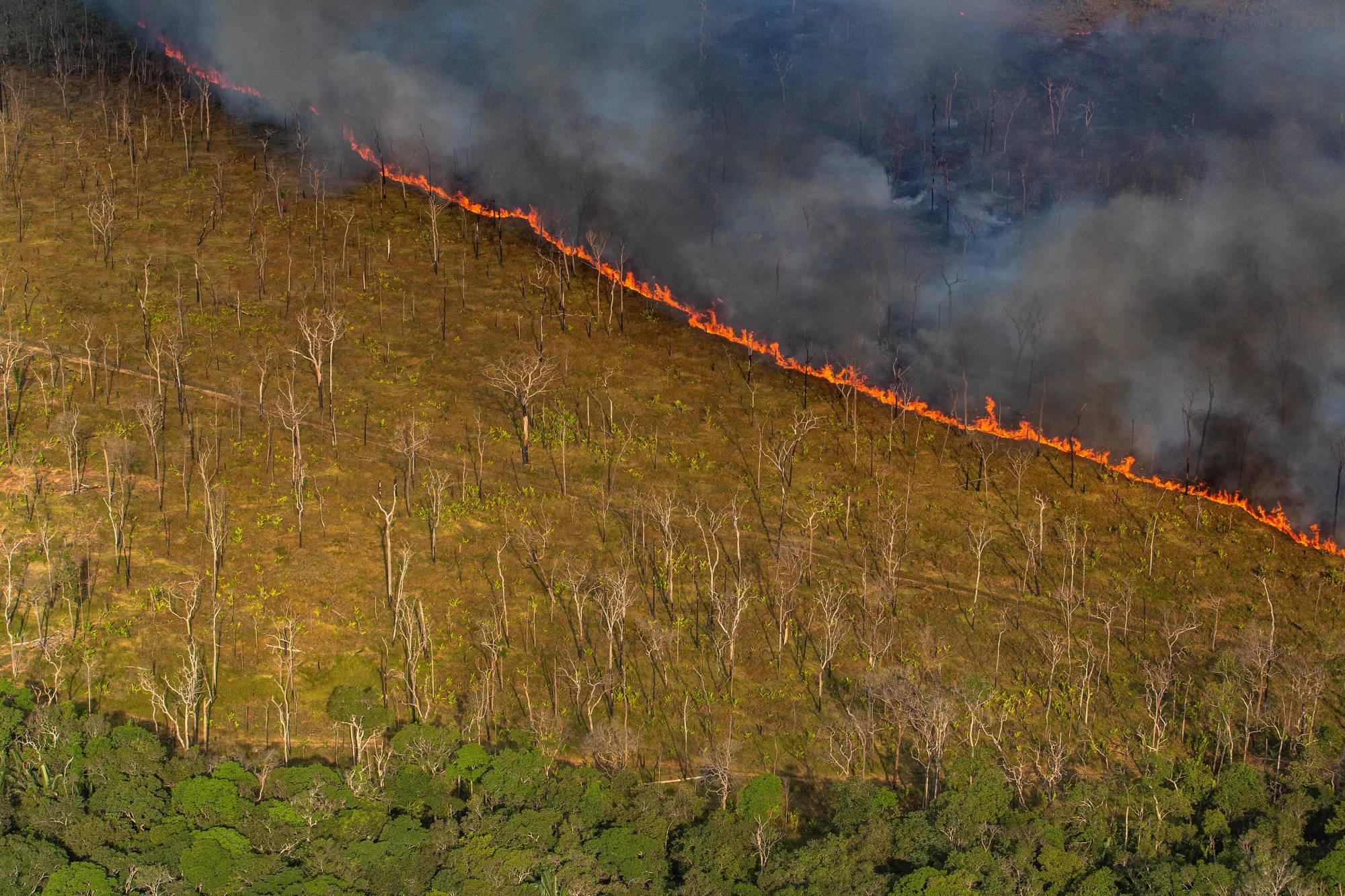
BOGOTA – Deforestation in the Amazon, the world’s largest rainforest, rose by 17% last year, with wildfires, beef production and logging causing forested areas roughly the size of El Salvador to disappear, according to new data published on Wednesday.
The loss of primary forest — the clearing of old-growth, intact forest for the first time — hit its third-highest annual total on record since 2000, reaching 2.3 million hectares (5.6 million acres) in the nine countries spanned by the Amazon.
“2020, the year dominated by COVID-19, turned out to be quite dire for the Amazon,” said Matt Finer, who leads an Amazon satellite monitoring project called MAAP for U.S.-based Amazon Conservation, a nonprofit that issued a report containing the data.
Bolivia, Ecuador and Peru recorded historically high deforestation levels, while Brazil had “another bad year,” losing over 1.5 million hectares of primary forest, said Finer.
After Brazil, the countries with the highest primary Amazon forest loss in 2020 were Bolivia, Peru and Colombia — which suffered its second-highest loss on record — followed by Venezuela and Ecuador, according to the report based on analysis of the data produced by the University of Maryland.
KEYWORDS
In a time of both misinformation and too much information, quality journalism is more crucial than ever.
By subscribing, you can help us get the story right.
With your current subscription plan you can comment on stories. However, before writing your first comment, please create a display name in the Profile section of your subscriber account page.