


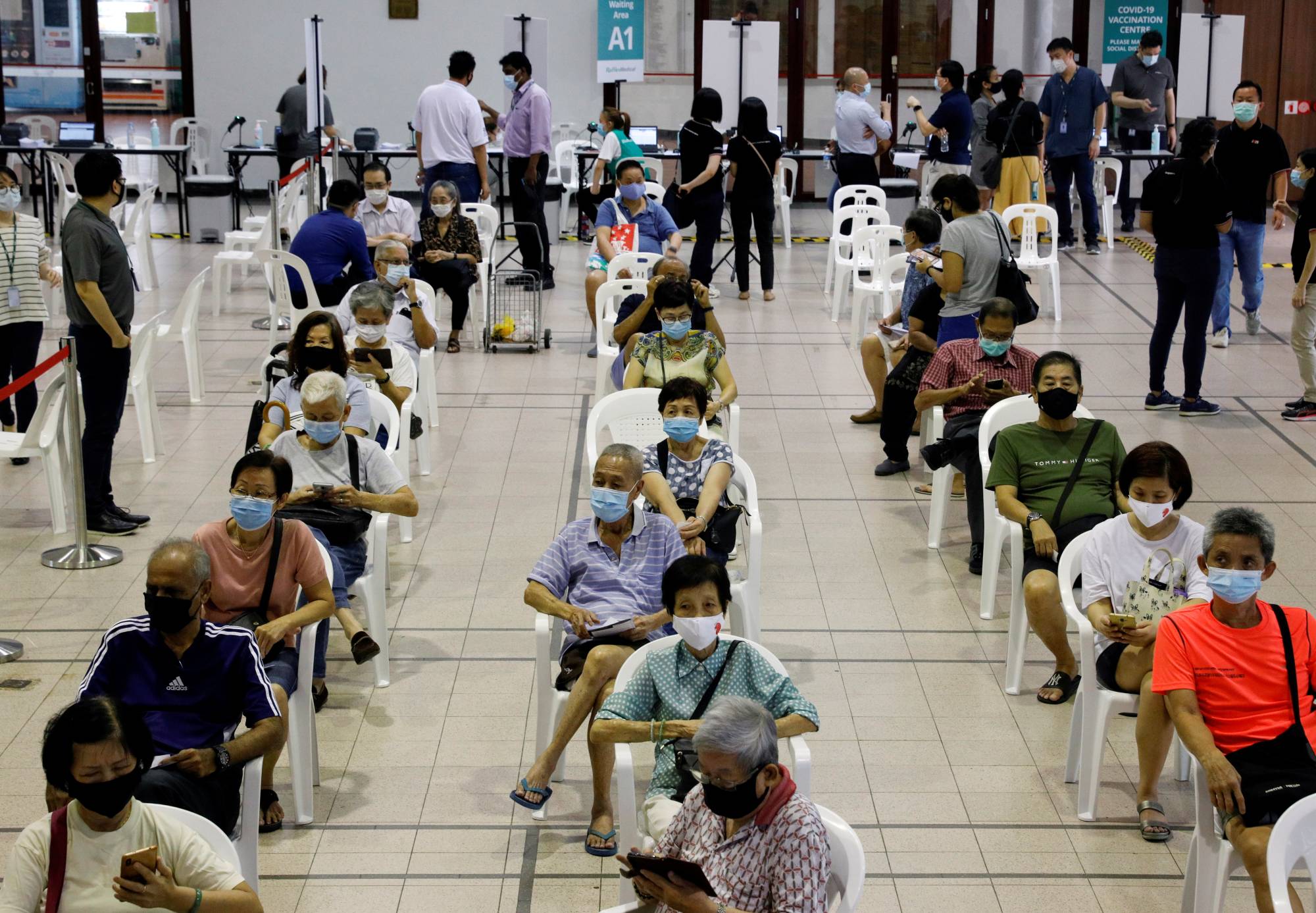
Faced with a limited supply of shots and anxious populations waiting their turn, more countries are turning to an initially controversial strategy that’s now been vindicated by scientific studies: doubling or tripling the intervals between the first and second dose of a two-dose COVID-19 vaccine.
A delay in getting the second shot not only allows the existing supply of shots to be more widely distributed, it boosts their protective power by giving the immune system more time to respond to the first inoculation. Levels of antibodies produced to fight off the virus are 20% to 300% higher when the follow-up vaccine comes later, new research shows.
That’s welcome news for places like Singapore, which is grappling with a rare, albeit small, rise in cases after strict mitigation measures contained the virus last year. The city-state is now extending dose intervals — previously three to four weeks — to six to eight weeks, in order to reach a goal of covering its entire adult population with at least one shot by the end of August. India, facing a catastrophic outbreak, is advising 12 to 16 weeks between shots.
Other nations with few vaccine doses and antsy populations are likely to follow.
“If I could, I would push a button that says right now, this second, we give one dose to everybody we can reach,” Gregory Poland, a virologist and director of the Mayo Clinic’s Vaccine Research Group. “We’ll get around to second doses later.
KEYWORDS
In a time of both misinformation and too much information, quality journalism is more crucial than ever.
By subscribing, you can help us get the story right.
With your current subscription plan you can comment on stories. However, before writing your first comment, please create a display name in the Profile section of your subscriber account page.