


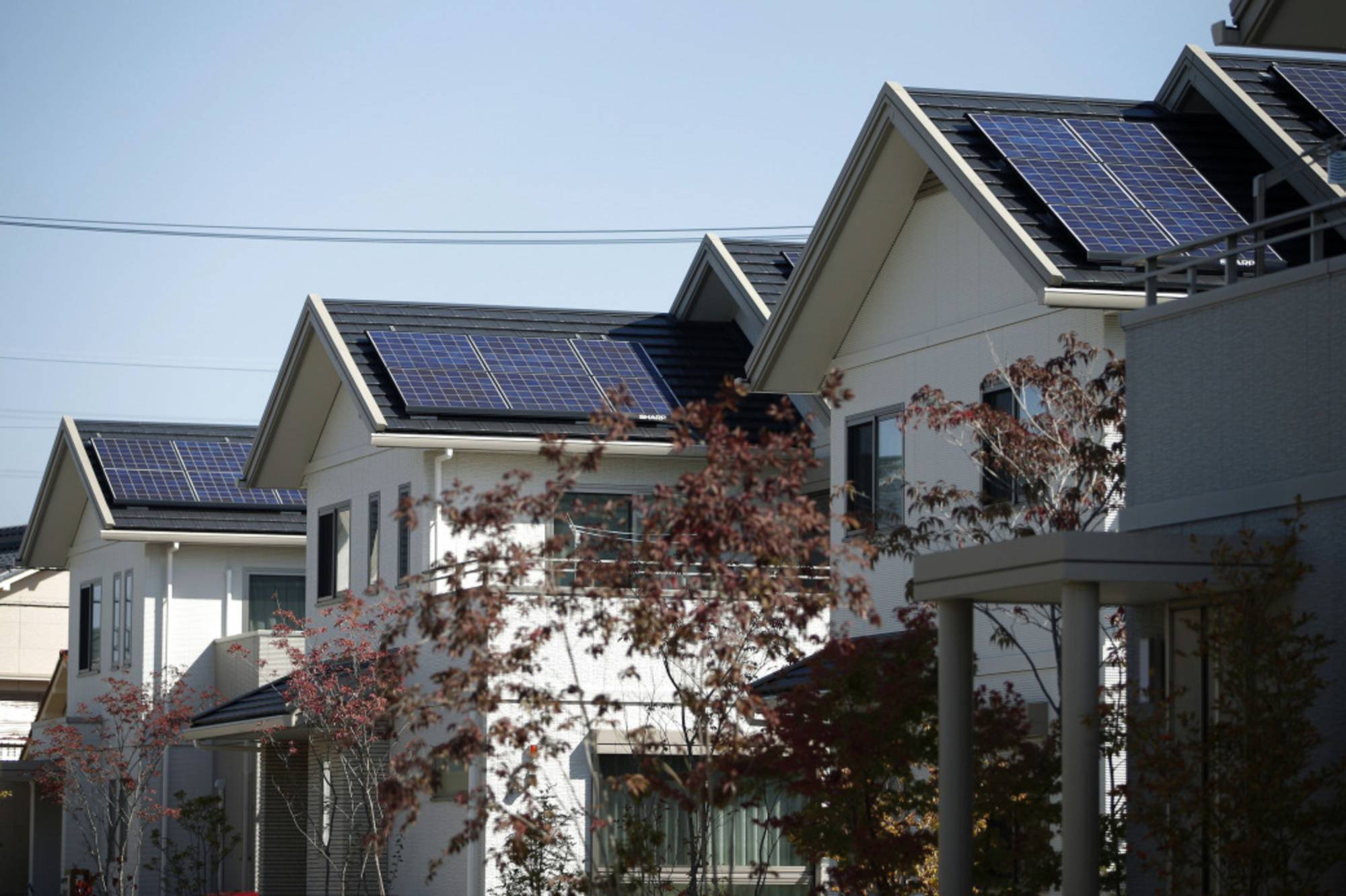
Japan seeks to add more solar power in a bid to achieve its ambitious 2030 emissions reduction goal, which could eventually lead to every building, parking lot and farm in the densely populated nation being fitted with rooftop panels.
The world’s third-biggest economy aims to have 108 gigawatts of solar capacity online by 2030, about 1.7 times higher than the nation’s previous target and 20 gigawatts more than the current pace of additions, according to presentations from the nation’s environment and trade ministries. The new target comes after Japan said earlier this year that it would reduce its greenhouse gas emissions 46% by 2030 compared with 2013, strengthening a previous commitment under the Paris Agreement.
The country, which is roughly as big as California but with three times the population, is studying how to lower its dependence on dirty fossil fuels as it grapples with limited available space and a large anti-nuclear contingent. But it has a long way to go to wean itself off coal and natural gas, which is used to generate more than 70% of its electricity.
Japan is already the world’s leader in terms of solar capacity per square kilometers, and there is limited land to add large-scale projects. That leaves the nation needing to increase so-called distributed solar generation, which are small-scale panels on top of buildings or farms.
According to the Environment Ministry’s report, Japan aims to hit the new 2030 solar goal using several strategies:
KEYWORDS
In a time of both misinformation and too much information, quality journalism is more crucial than ever.
By subscribing, you can help us get the story right.
With your current subscription plan you can comment on stories. However, before writing your first comment, please create a display name in the Profile section of your subscriber account page.