


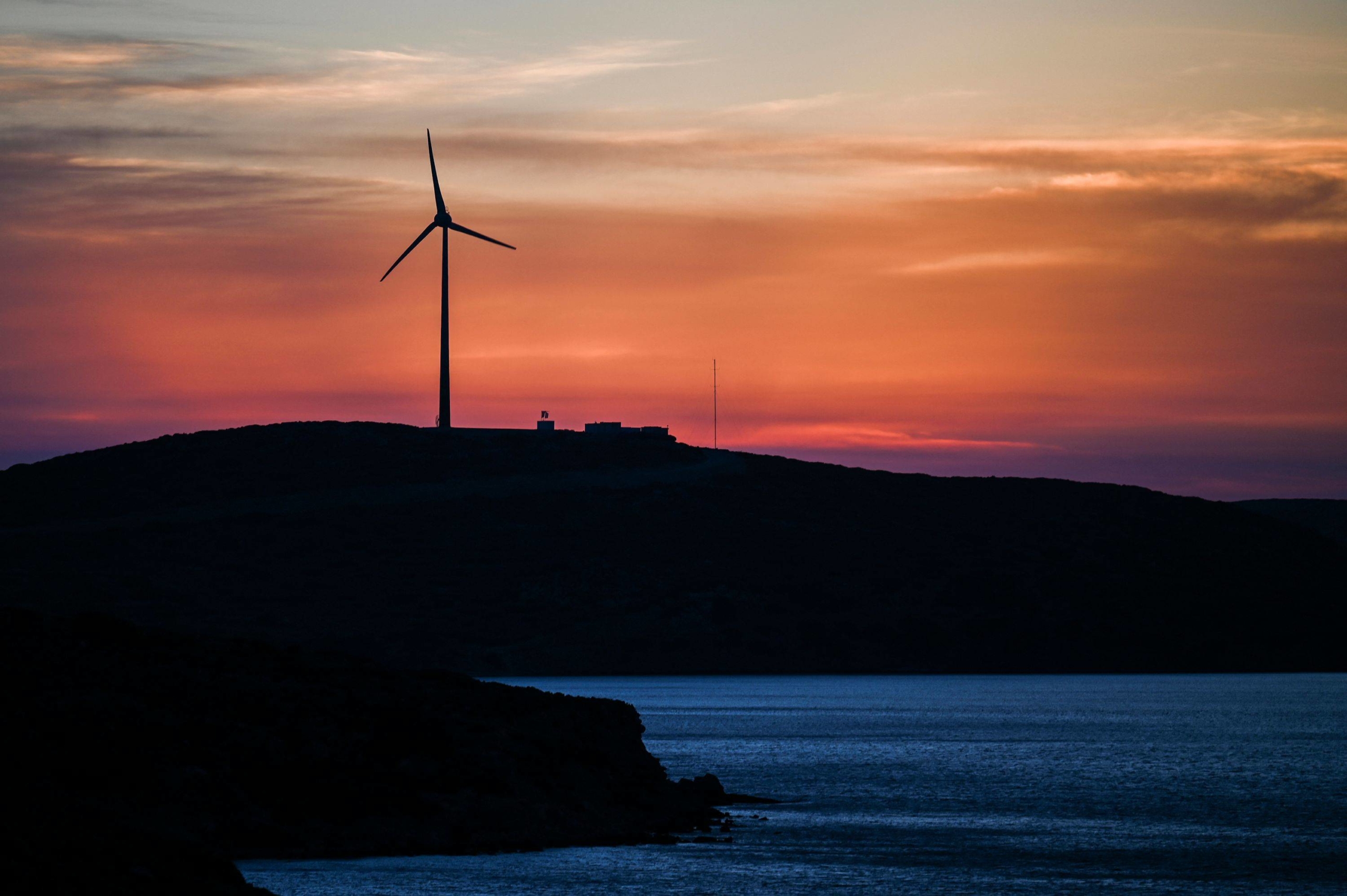
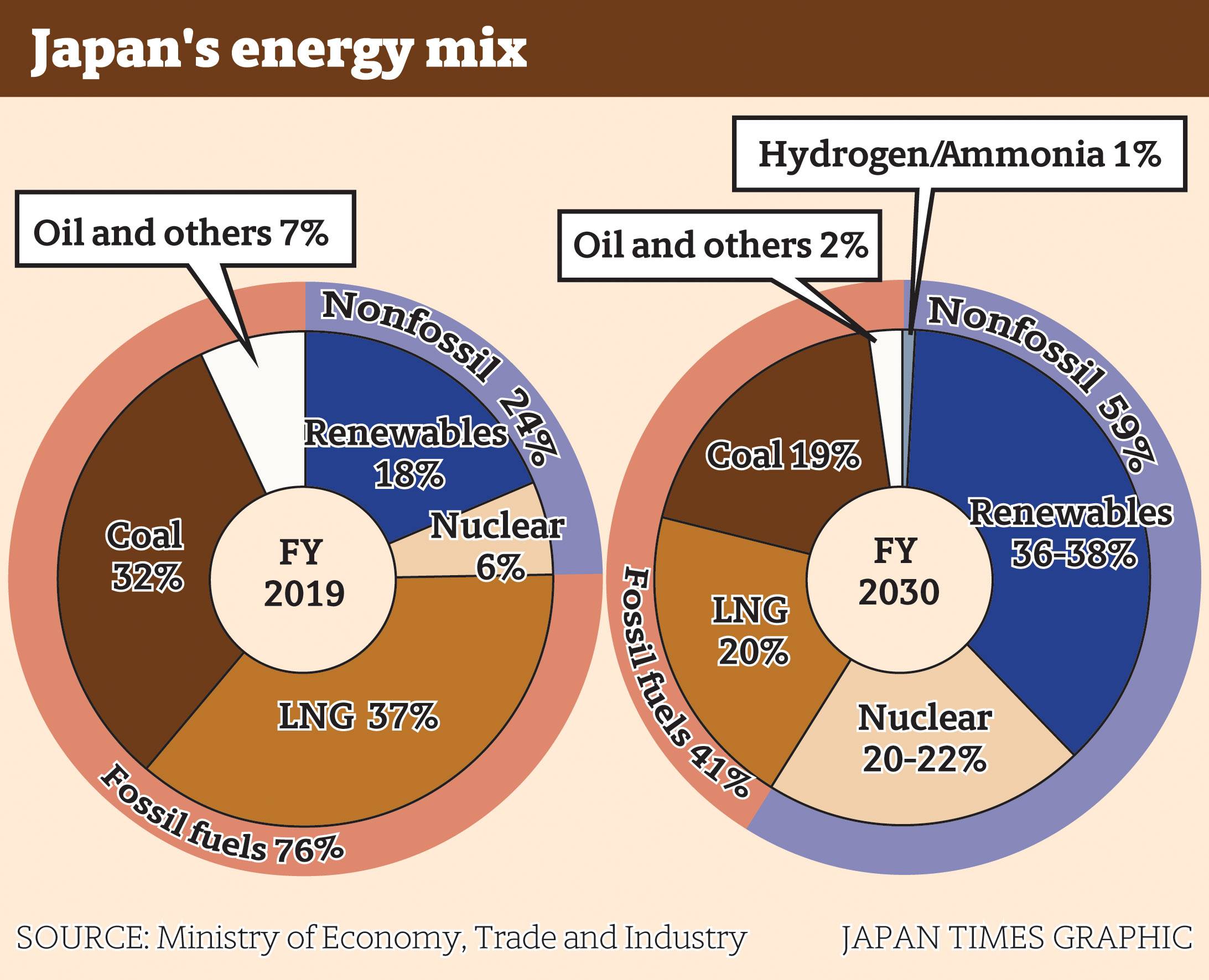
Japan aims to raise its share of nonfossil fuels for electricity generation, including renewables and nuclear power, to about 60% of total production by fiscal 2030 — 2.5 times the current level — the trade ministry’s draft basic energy policy showed Wednesday. But experts say the ambitious target may not be feasible.
The first revision of the energy policy in three years took into account the nation’s new target of a 46% cut in greenhouse gas emissions by 2030 from fiscal 2013 levels that was announced in April, a sharp upgrade from the 26% cut that the world’s fifth-biggest emitter had pledged six years ago.
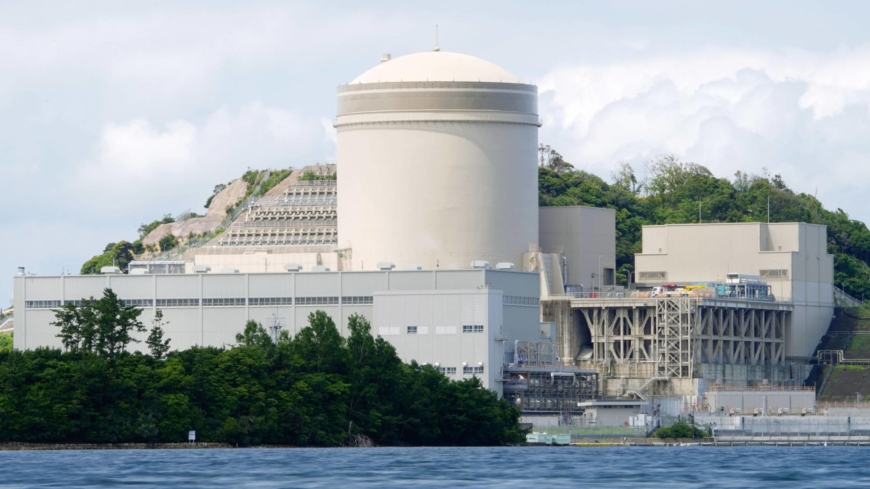
Renewable energy will account for 36% to 38% of total power production, up from 22% to 24% in the previous plan for 2030, while the share of nuclear power was kept at 20% to 22%. In fiscal 2019, renewables and nuclear made up 18% and 6% of total power generation, respectively.
If achieved, the total carbon dioxide emissions from the consumption of fossil fuels and power generation, which account for roughly 90% of the nation’s total, would fall by about a third from 2019 levels to about 680 million tons in 2030.
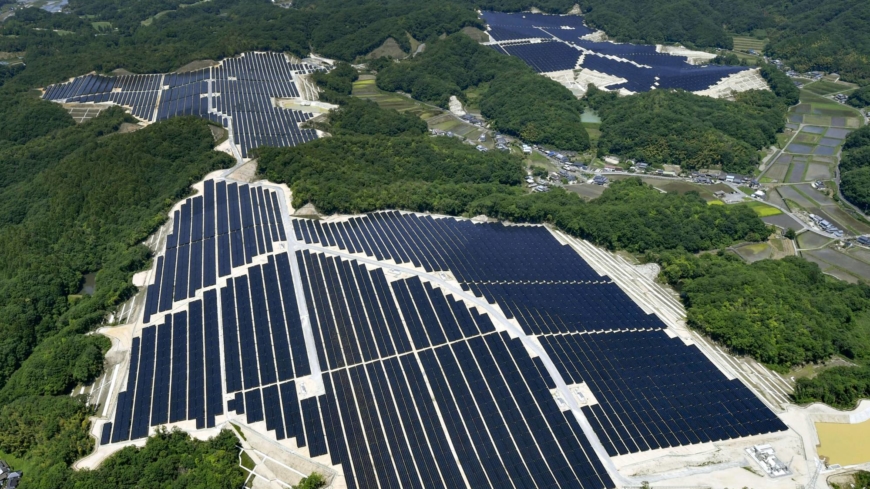
The new plan sets what experts say is a fairly high bar for renewables, with the share for solar, wind, geothermal, hydropower and biomass set to account for 15%, 6%, 1%, 10% and 5% in 2030, up from 6.7%, 0.7%, 0.3%, 7.7% and 2.6% in 2019.
KEYWORDS
In a time of both misinformation and too much information, quality journalism is more crucial than ever.
By subscribing, you can help us get the story right.
With your current subscription plan you can comment on stories. However, before writing your first comment, please create a display name in the Profile section of your subscriber account page.