


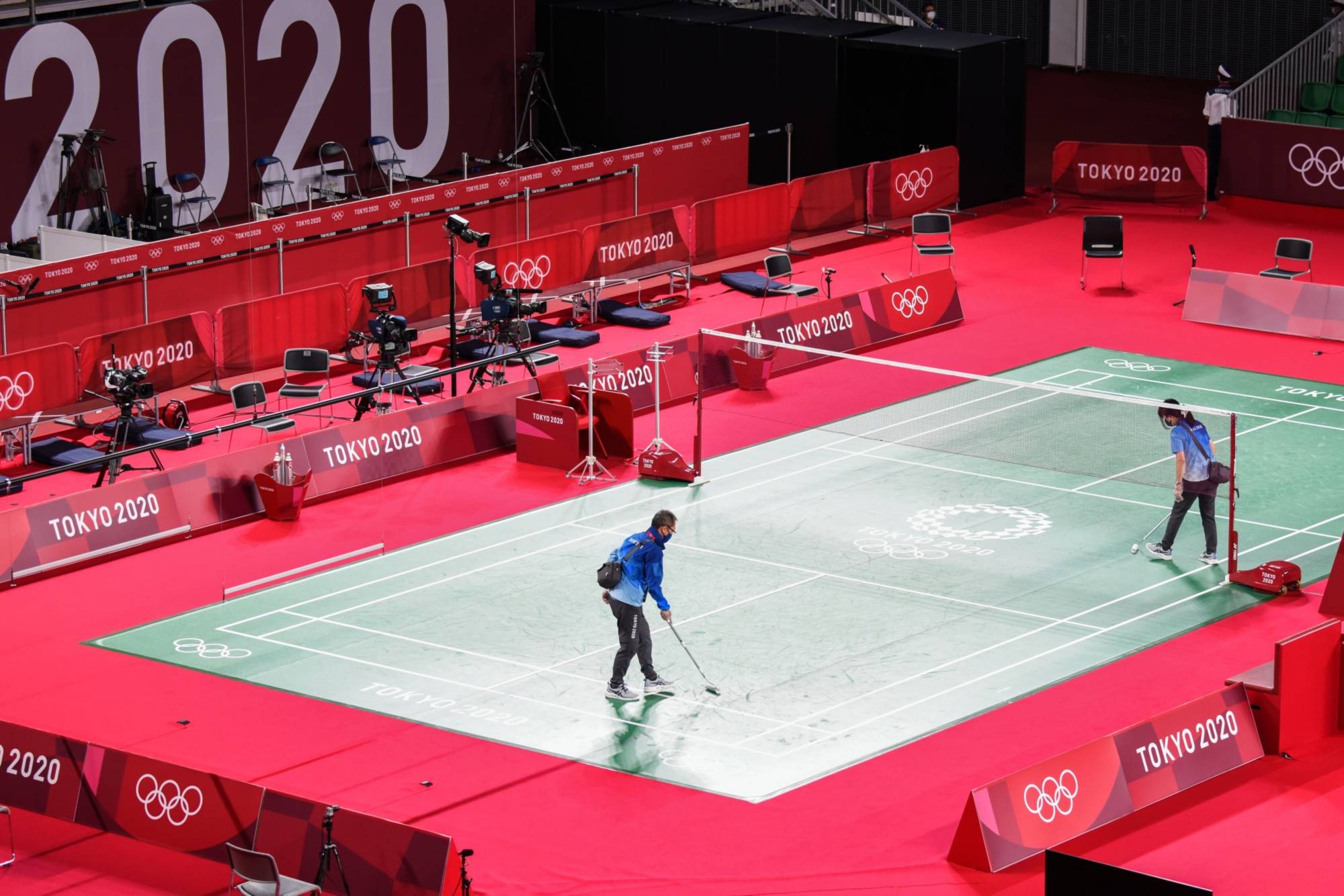
The Tokyo Games have reported over 270 cases of COVID-19 among athletes and related personnel, but experts say the bubble system created to separate the sporting event from the Japanese capital appears to be working — so far.
Outside the Olympic venues, the city of Tokyo is seeing a surge in COVID-19 infections and reported a record 4,058 new cases on Saturday. Yet, among athletes and stakeholders of the Olympics, the virus positivity rate has been only 0.02% with over 400,000 tests conducted so far, organizers said on Sunday. Of the over 40,000 tests performed at the airport for Games participants, only 35 have been positive.
Before the Games kicked off, many scientists had warned that the Olympics could cause major clusters that could spread to the general population, a risk of holding a major international event during a pandemic. For now, the risk of cross-contamination seems contained, public health experts say, while warning that the situation could change suddenly given the threat from the highly infectious delta variant that’s spreading in Tokyo and around the world.
“The testing and bubble protocol appears to be functioning well,” said Amesh Adalja, a senior scholar at the Johns Hopkins Center for Health Security and an infectious disease physician on Thursday. “Since the organizers bafflingly did not mandate vaccination as a condition of participation and the unvaccinated were welcomed, these numbers seem within expectations,” he said of the positive cases reported so far at the Games.
In the so-called Olympics bubble, a string of measures separate participants from the general public. Athletes cannot travel outside of their place of stay and competition venues. They can only use transportation dedicated for the Olympics, and can only spend time with people on a pre-submitted list of contacts. They are also separated from the media by a distance of at least two meters at all times.
KEYWORDS
In a time of both misinformation and too much information, quality journalism is more crucial than ever.
By subscribing, you can help us get the story right.
With your current subscription plan you can comment on stories. However, before writing your first comment, please create a display name in the Profile section of your subscriber account page.