


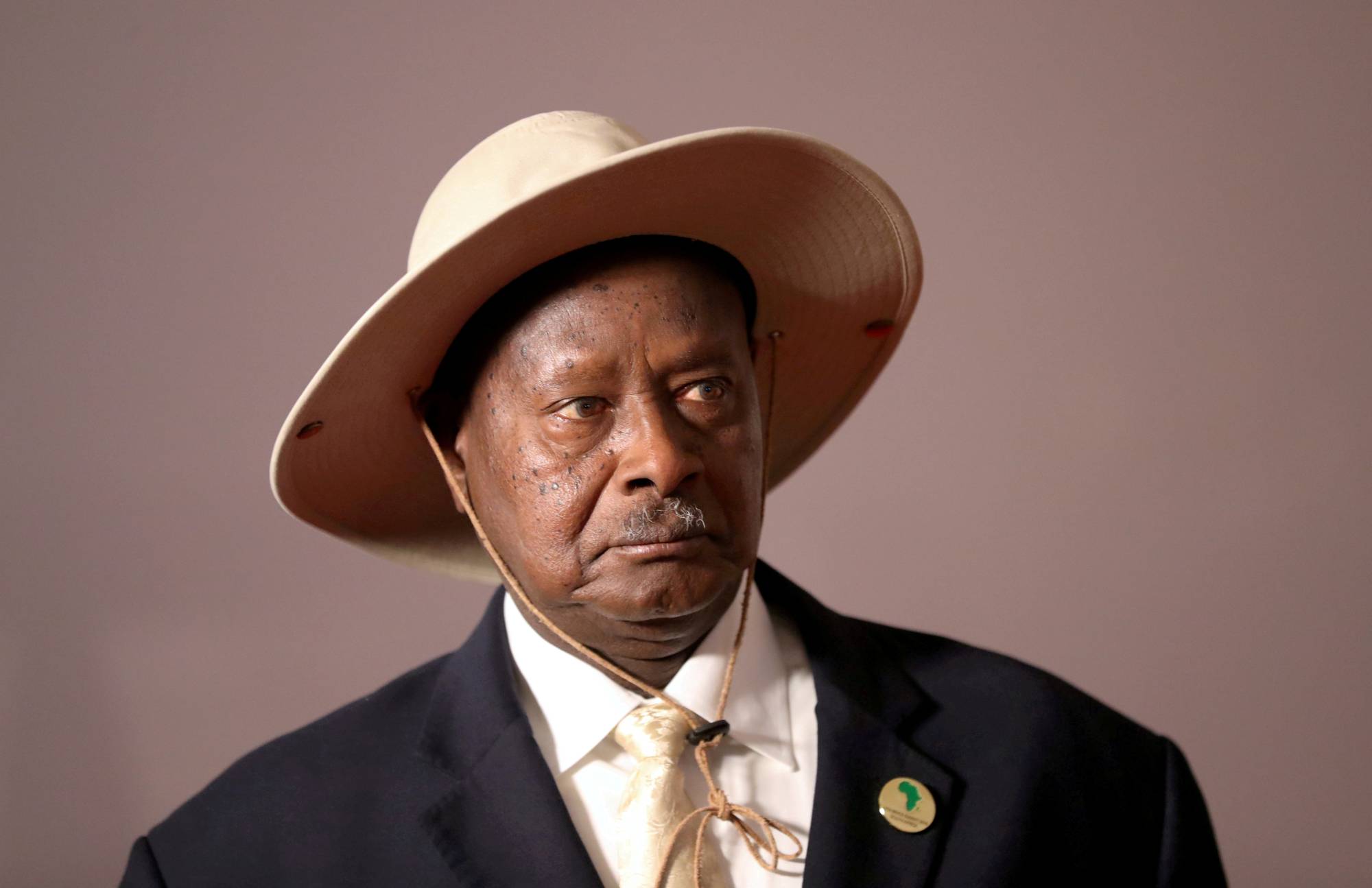
In late 2020, when Ugandan President Yoweri Museveni faced a fresh challenge to his 35-year rule, a new tool helped to silence his critics: anti-money laundering legislation promoted by the Group of Seven advanced economies.
The Financial Action Task Force (FATF), established by the G7 to protect the global financial system, had written to Uganda’s government eight years earlier telling it to do more to combat money laundering and terrorism financing or risk being placed on a “gray list” of deficient countries, according to a top Ugandan official who described the private letter. Such a move could damage Uganda’s ties to foreign banks and investors, which closely follow the FATF’s updates.
Within a year, Uganda’s parliament passed a new law to criminalize both offenses and established an intelligence unit to enforce it.
But Uganda didn’t deploy the law as the FATF intended.
Last December, as Museveni prepared for a January election, authorities used the law to temporarily freeze the bank accounts of three rights groups and arrest a prominent lawyer, 40-year-old Nicholas Opiyo, on money laundering charges related to the funding of an NGO he founded. Opiyo, who was later released on bail, called the charges “spurious.” The government has denied using the law to target its critics. In January, amid accusations of voter fraud by Museveni’s main rival, the electoral commission declared Museveni had won re-election.
KEYWORDS
In a time of both misinformation and too much information, quality journalism is more crucial than ever.
By subscribing, you can help us get the story right.
With your current subscription plan you can comment on stories. However, before writing your first comment, please create a display name in the Profile section of your subscriber account page.