


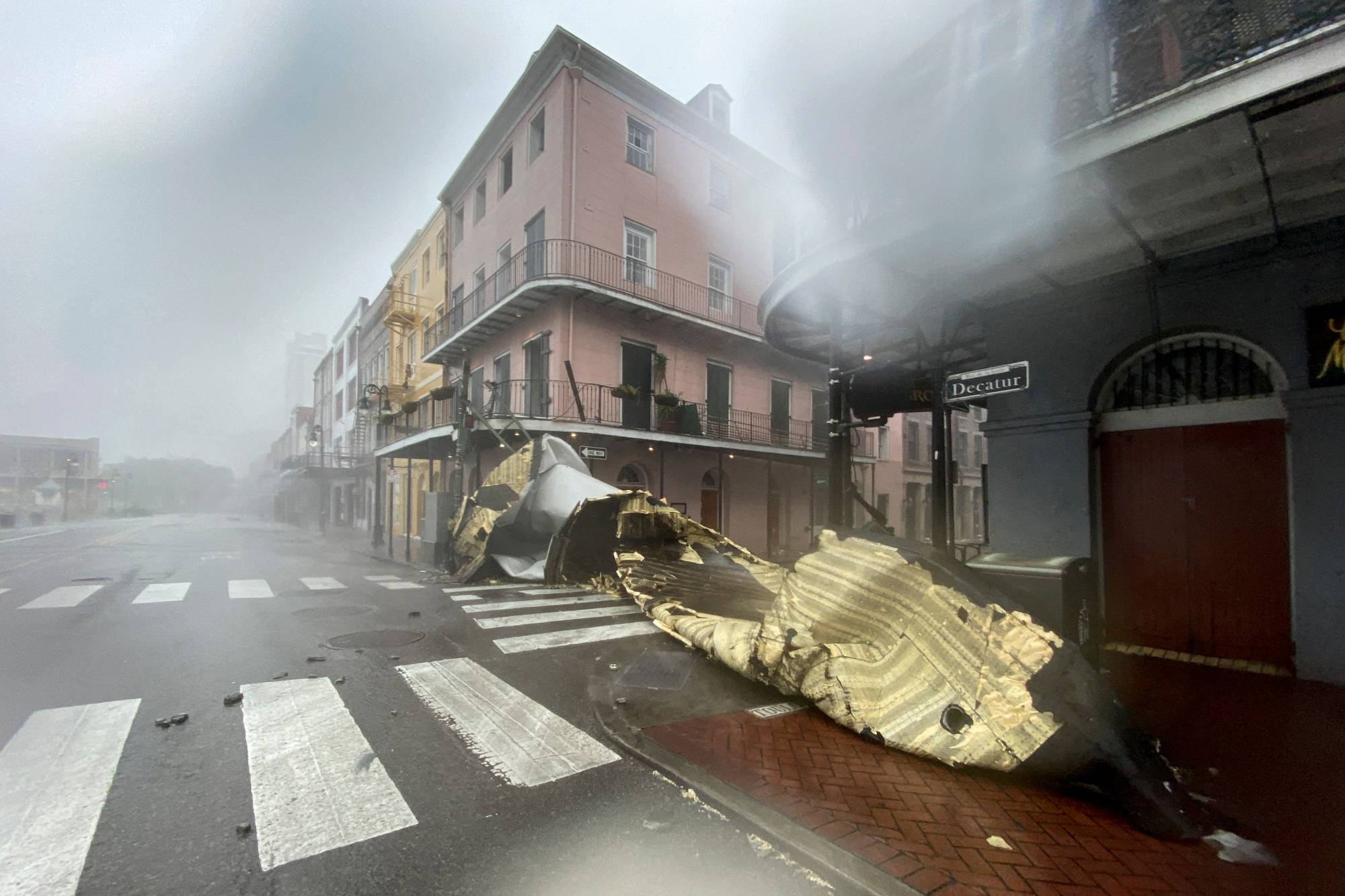
Hurricane Ida pummeled New Orleans and the Louisiana coast overnight with lashing rain and ferocious gusts, leaving much of the region without electricity and bracing for widespread floods and devastation.
The storm, wielding some of the most powerful winds ever to hit the state, drove a wall of water inland when it thundered ashore Sunday as a Category 4 hurricane. All of New Orleans was without power when evening fell. And as Ida lumbers north, it’s expected to unleash a potentially catastrophic amount of rain, totaling up to 61 centimeters.
“We’re in for some historic floods,” said Jim Rouiller, lead meteorologist at the Energy Weather Group. “The rainfall — that is going to be the next story.”
Ida struck New Orleans on the 16th anniversary of Hurricane Katrina, the costliest tropical cyclone in U.S. history that left much of the city in ruins. Now the levees, pumps and other infrastructure rebuilt after that 2005 storm are being put to their biggest test yet. Louisiana’s hospitals, meanwhile, are already overwhelmed with more than 2,600 coronavirus patients.
The storm’s impact wasn’t fully clear late Sunday, and first responders don’t plan to start answering search and rescue calls until sunrise Monday. Yet signs have already emerged that Ida’s toll has been dire.
KEYWORDS
In a time of both misinformation and too much information, quality journalism is more crucial than ever.
By subscribing, you can help us get the story right.
With your current subscription plan you can comment on stories. However, before writing your first comment, please create a display name in the Profile section of your subscriber account page.