


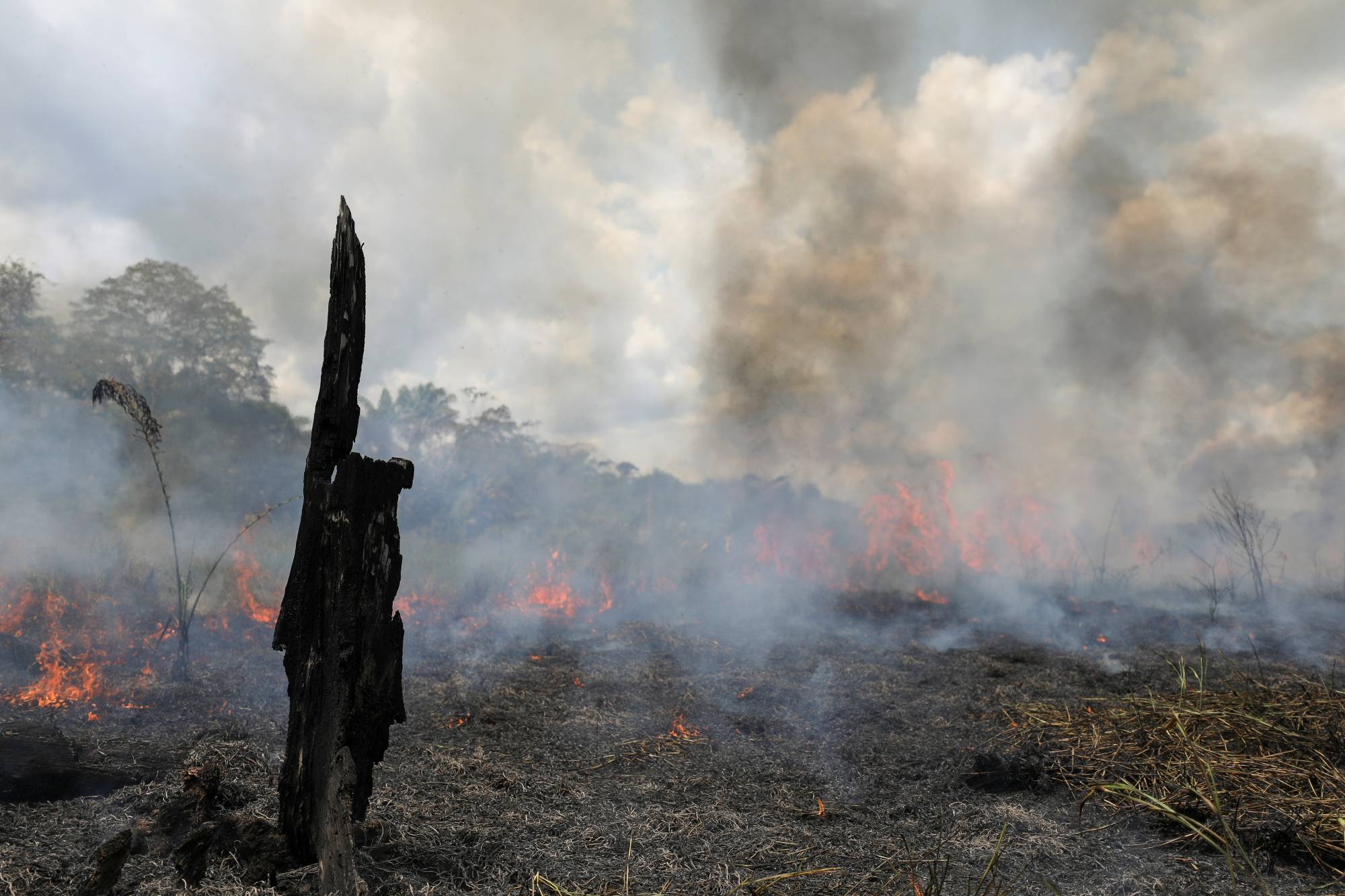
BOGOTA/RIO DE JANEIRO – When the presidents of South America’s Amazonian nations met in Colombia’s jungle town of Leticia two years ago to discuss how to better protect the world’s largest rainforest, they signed a landmark deal that raised hopes deforestation would decline.
The Leticia Pact aimed to drive sustainable forest use and reforestation, restore degraded land, improve information sharing and the use of satellite data to monitor deforestation and wildfires, and empower women and indigenous groups.
But since seven heads of state inked the plan, as indigenous leaders looked on, its pledges have remained largely unfulfilled, with scant evidence of up-and-running forest protection and restoration efforts as a direct result of the pact, critics said.
As deforestation continues to surge in the Amazon, the plan has also failed to attract significant new funding, they said.
Julia Jacobin, a researcher at Institutor Sociambiental, a Brazilian nonprofit working in the Amazon region, said what has happened since the deal was signed amounts to “nothing,” with nonprofits and other organizations still the key drivers of forest protection and coordination efforts in the region.
KEYWORDS
In a time of both misinformation and too much information, quality journalism is more crucial than ever.
By subscribing, you can help us get the story right.
With your current subscription plan you can comment on stories. However, before writing your first comment, please create a display name in the Profile section of your subscriber account page.