


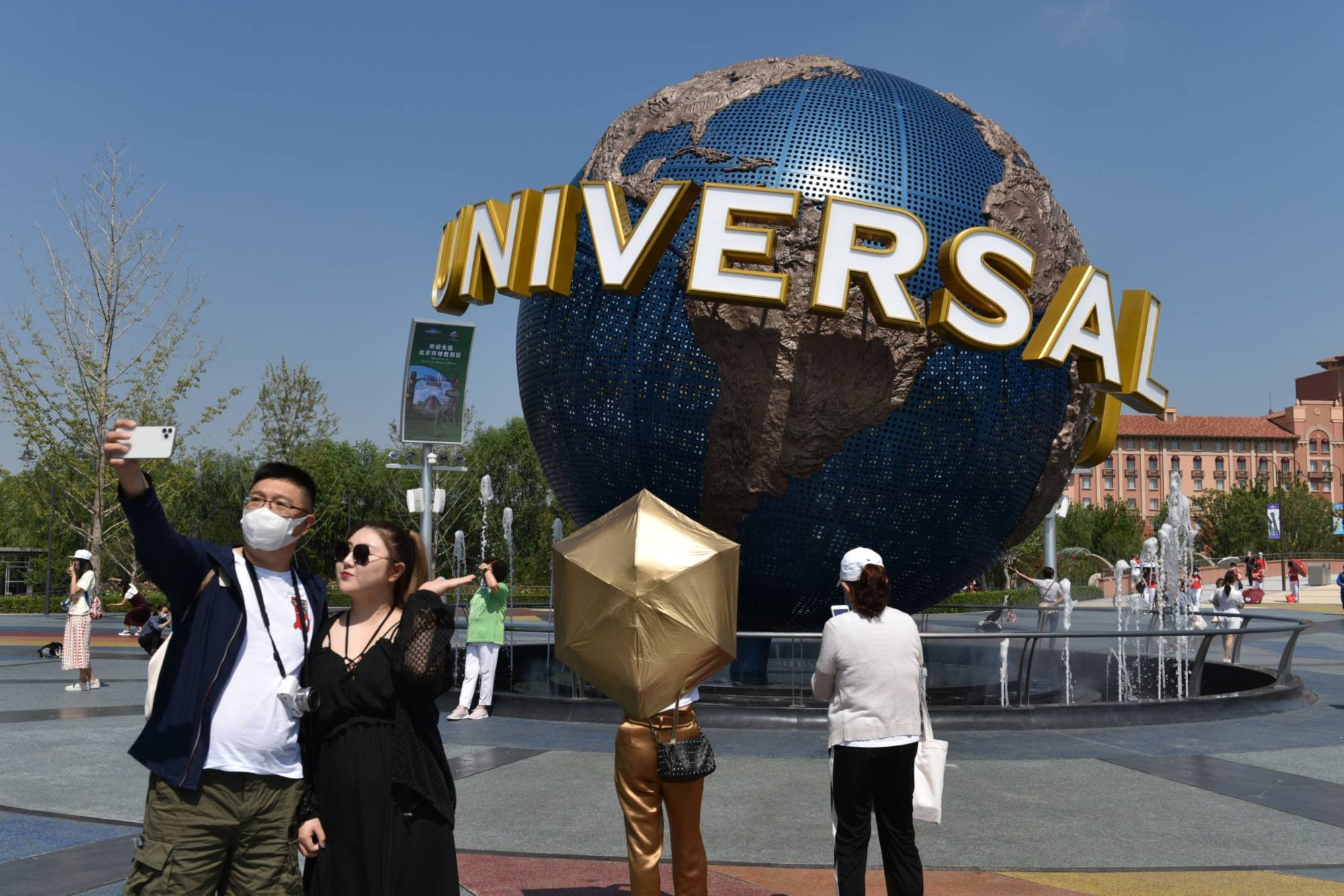
As President Xi Jinping’s government looks to tame China’s celebrities, the popularity of a new Universal Studios theme park in Beijing shows Hollywood’s enduring soft power among the nation’s 1.4 billion people.
Tickets for the grand opening on Monday, priced at 638 yuan ($99), sold out within 30 minutes of going online last week — as did rooms costing as much as 20,000 yuan at the resort’s two hotels, according to state-run media. Fliggy, an online travel site operated by Alibaba Group Holding Ltd., last week apologized for overselling the 500 yuan Universal Express Pass that lets visitors skip lines.
The surging demand underscores the challenge Xi faces in dampening the appetite for celebrities among the general public, as the Communist Party looks to curtail foreign influences and promote the concept of “common prosperity.” A commentary published widely in state-run media last month warned against “fan culture” and “worshiping Western culture.”
Earlier this month the National Radio and Television Administration — China’s broadcast regulator — ordered television companies and internet platforms to ban film stars with “incorrect politics,” cap salaries and do away with idol worship. One of China’s most popular film stars, Zhao Wei, was blacklisted from China’s internet while another actress was ordered to pay 299 million yuan in overdue taxes, late fees and fines last month.
The popularity of the Universal Studios theme park shows resistance to the Communist Party’s tightening of cultural standards after decades of allowing Western influences, according to Adam Ni, co-editor of China Neican, a newsletter on Chinese public policy issues.
KEYWORDS
In a time of both misinformation and too much information, quality journalism is more crucial than ever.
By subscribing, you can help us get the story right.
With your current subscription plan you can comment on stories. However, before writing your first comment, please create a display name in the Profile section of your subscriber account page.