


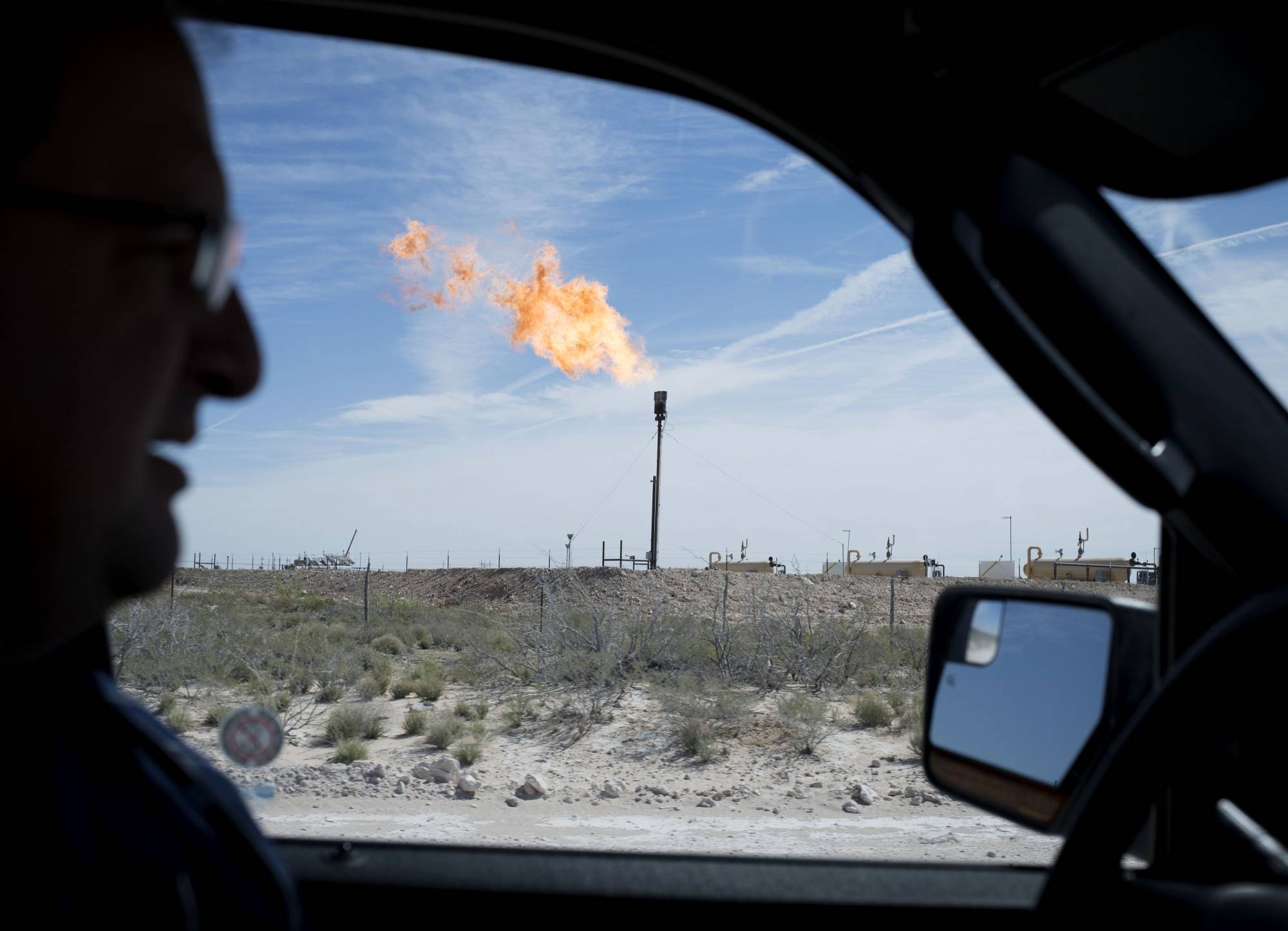
The free ride for methane, a climate-warming gas 84 times stronger than carbon dioxide, is finally nearing an end in Washington.
While one atmosphere-heating pollutant after another has fallen under regulators’ sway, powerful petrochemical interests and, until recently, scientific uncertainty about the scale of the problem, have thwarted methane restrictions. That will begin to change in coming weeks when the Biden administration proposes the most aggressive federal methane mandates yet for oil and gas wells.
“Science tells us we have vanishingly little time left to slow global warming before we start passing serious climate tipping points,” said Sarah Smith, director of the Clean Air Task Force’s super pollutants program. “The fastest way to pump the brakes is to reduce methane pollution.”
Curbing methane — blamed by scientists for more than a quarter of the global warming happening today — has acquired new urgency as the consequences of climate change become more apparent in drought-fueled forest fires ravaging the Western U.S. and intense coastal storms drenching cities with record rainfalls.
The administration’s coming regulations, to be proposed by the Environmental Protection Agency, will address leaks from nearly a million oil and gas wells — among the largest sources of the gas. The EPA proposals would order more robust inspections and repairs of equipment at new wells and would force companies to plug leaks on hundreds of thousands of wells that were drilled long ago but have so far escaped restrictions.
KEYWORDS
In a time of both misinformation and too much information, quality journalism is more crucial than ever.
By subscribing, you can help us get the story right.
With your current subscription plan you can comment on stories. However, before writing your first comment, please create a display name in the Profile section of your subscriber account page.