


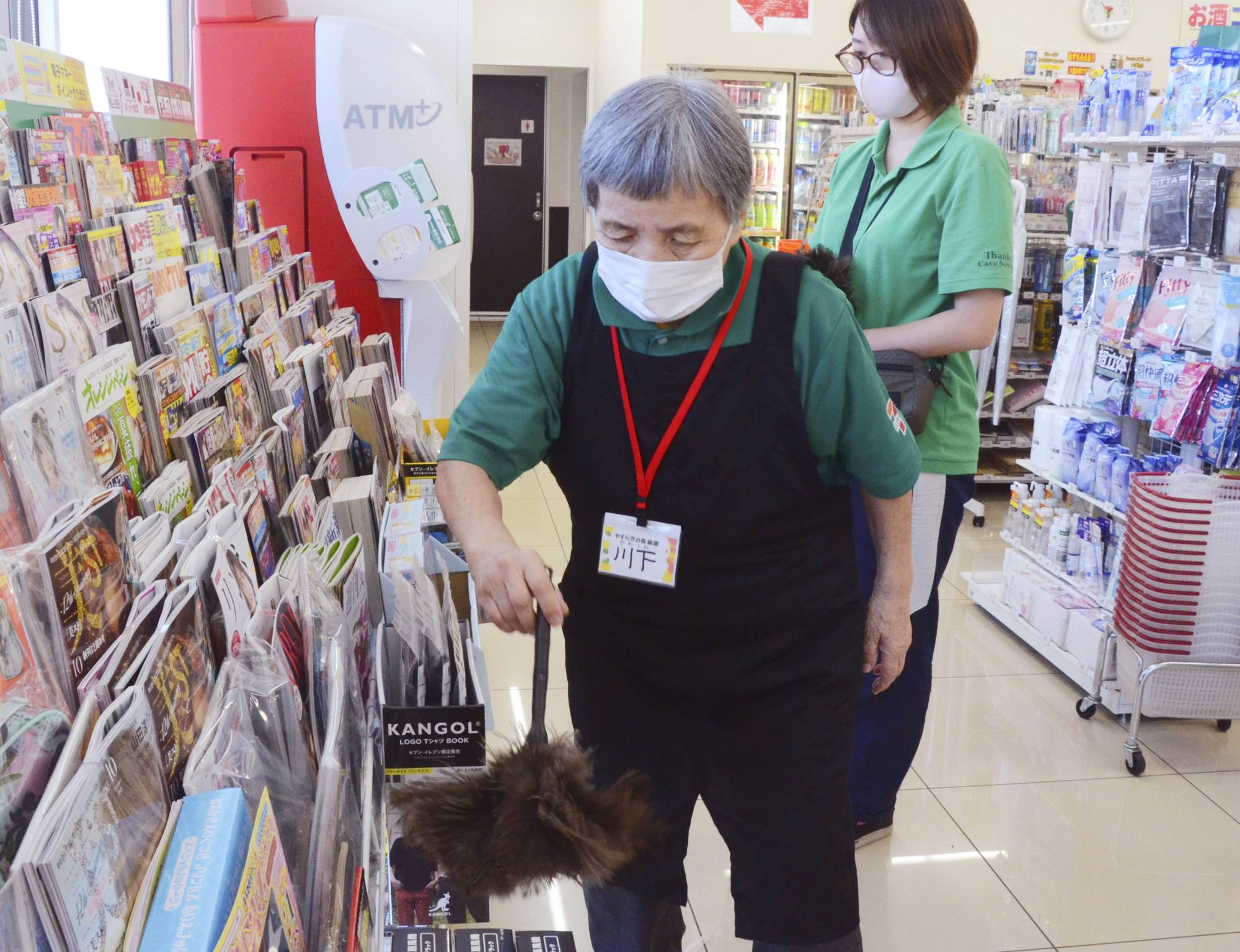
Chiba – Older people in long-term nursing care for dementia and other illnesses are increasingly getting involved in work at convenience stores and other businesses that are struggling to find staff due to Japan’s acute labor shortage.
The feeling of purpose gained from their efforts encourages people to become self-reliant and gives a sense of satisfaction, according to an industry insider, who says the initiatives offer an opportunity to expand a framework that has proven mutually beneficial to social-welfare service providers as well as understaffed businesses.
“I enjoy coming here, and I am happy to see other people pleased,” said Masako Kawashita, 80, who works at a 7-Eleven convenience store in Funabashi, Chiba Prefecture. Wearing a company uniform and black apron, she performs tasks such as sanitizing shopping baskets.
As part of an arrangement between the store and a nearby care facility, Kawashita and others in their 60s to 90s who are certified as requiring long-term care for mild dementia, engage in work such as stacking and checking shelves with the support of a caregiver from the facility. They do not serve customers.
They work one hour each visit and receive a shopping voucher worth ¥1,000 ($8.80) for every three shifts, which they can exchange for products throughout the 7-Eleven store network.
In a time of both misinformation and too much information, quality journalism is more crucial than ever.
By subscribing, you can help us get the story right.
With your current subscription plan you can comment on stories. However, before writing your first comment, please create a display name in the Profile section of your subscriber account page.