


Speak of Hiroshima and Nagasaki, and the significance is obvious. “Trinity Site?” Most people are still unaware that it was the location of the world’s first nuclear explosion and endures as one of the most consequential sites in human history.
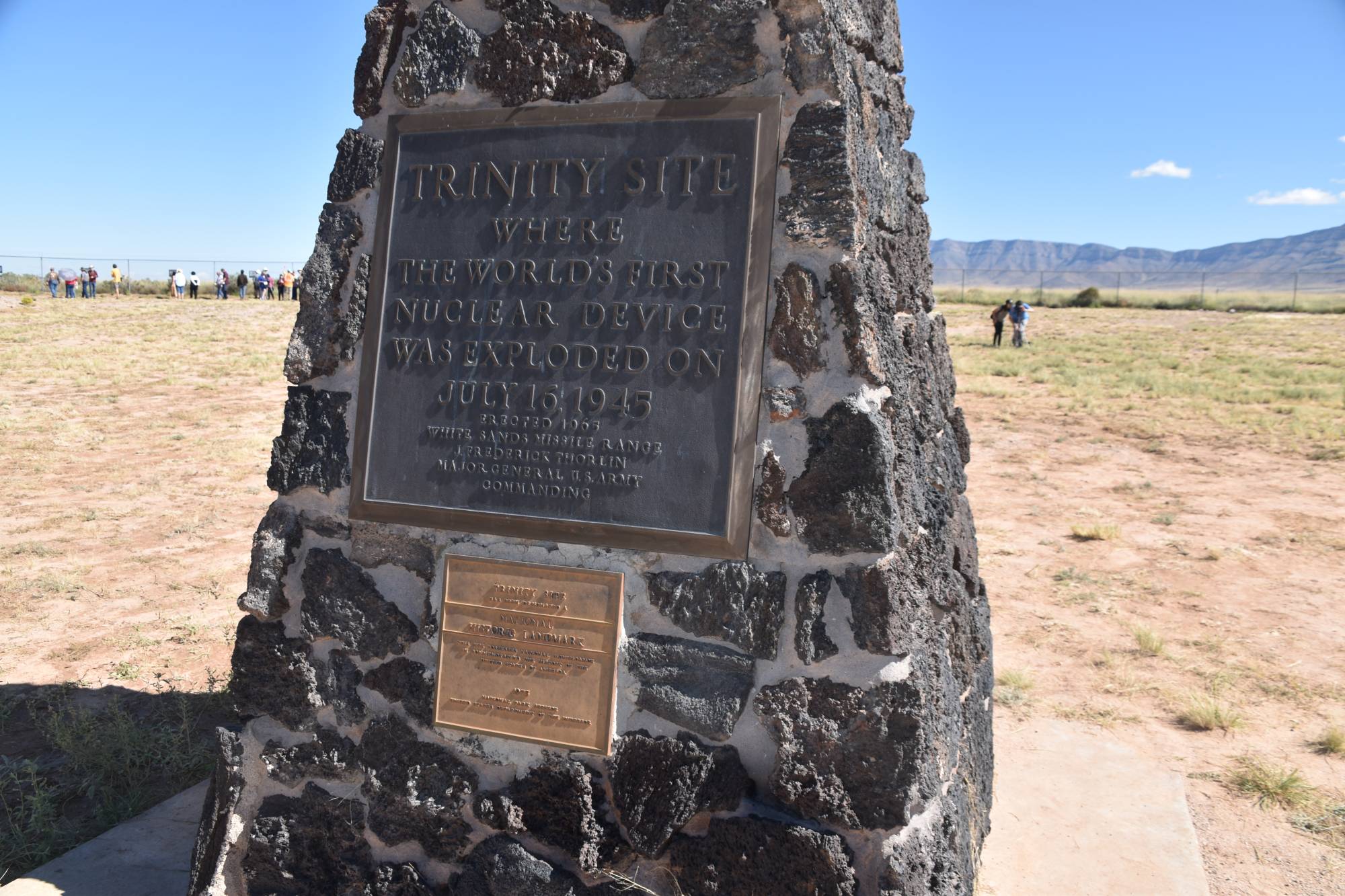
Drifting packs of tourists take turns snapping photographs in front of a 3-meter obelisk where a plaque explains that Trinity is where the first nuclear device was ever detonated on July 16, 1945. Most seem indifferent to what many view as the stage for a dry run to the devastating atomic bombings of the two Japanese cities.
The site, part of the U.S. Army’s White Sands Missile Range in southern New Mexico, opened to the public on Oct. 2 for the first time in two years and saw about 2,500 visitors, a modest downtick from previous years, which site officials attributed to the COVID-19 pandemic.
Aside from the plaque and some photographs depicting the site and explosion that occupy a nearby fence, little illustrates the magnitude of what happened there 76 years ago when the Manhattan Project’s secret test scattered radioactive ash over the residents, flora and fauna, of nearby villages.
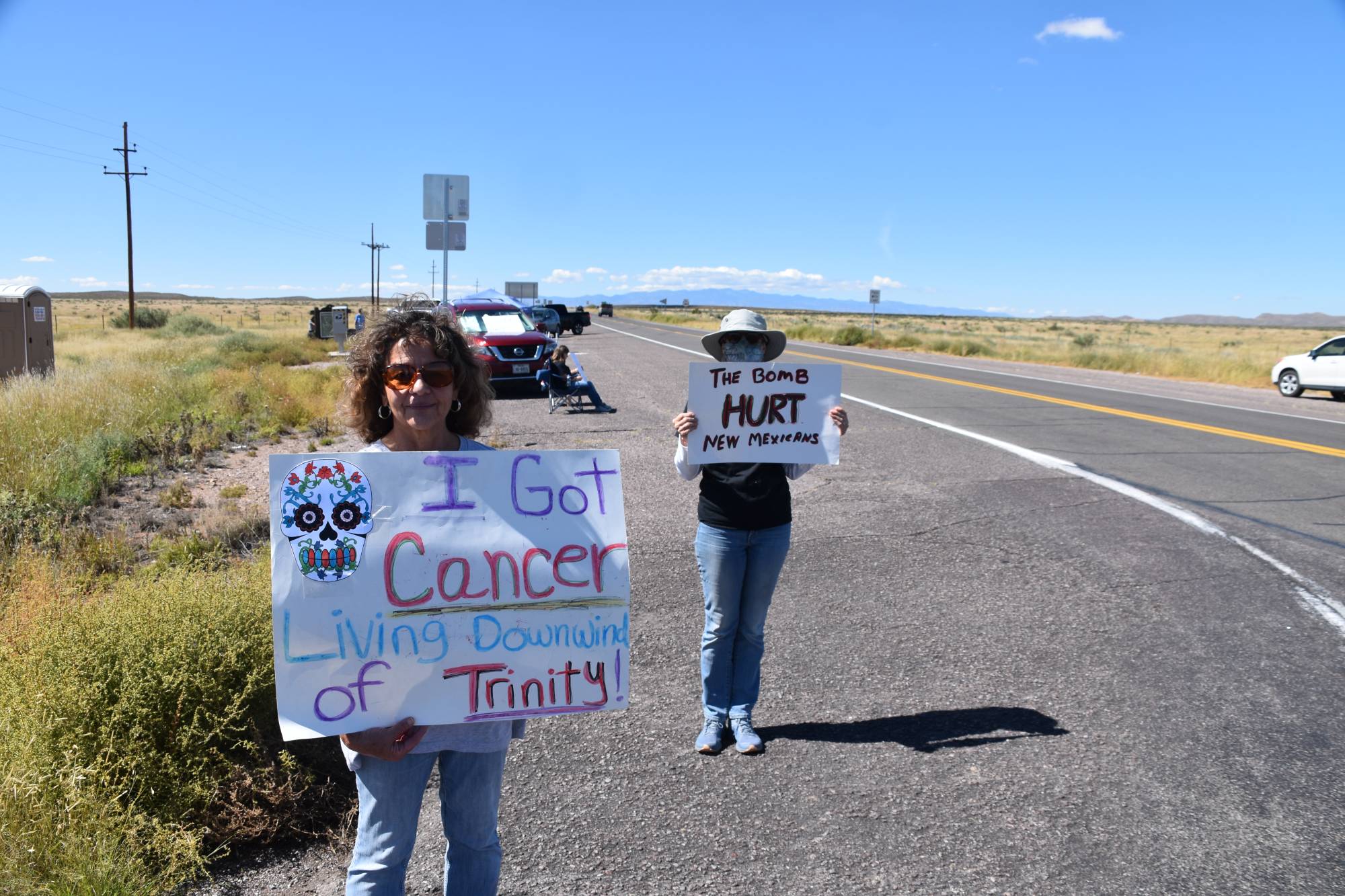
But at the entrance to the site, a small group of peaceful protestors display signs and hand out pamphlets to raise awareness for “the unknowing, unwilling, and uncompensated innocent victims” of the 1945 test. Public access at Trinity is only allowed twice a year.
KEYWORDS
In a time of both misinformation and too much information, quality journalism is more crucial than ever.
By subscribing, you can help us get the story right.
With your current subscription plan you can comment on stories. However, before writing your first comment, please create a display name in the Profile section of your subscriber account page.