


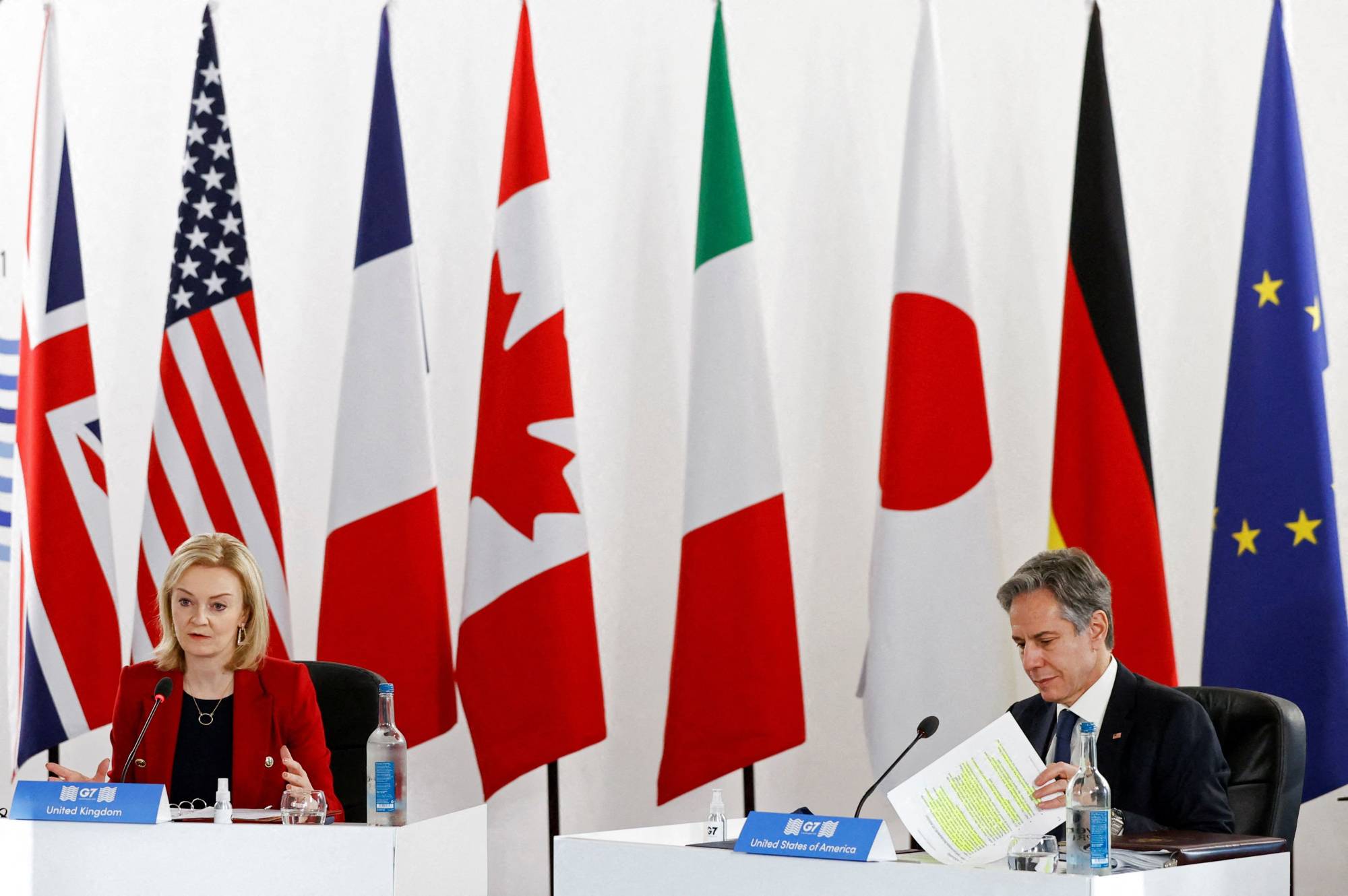
The Group of Seven foreign ministers expressed concern Sunday about China’s “coercive” economic policies in what critics call “debt-trap” diplomacy toward developing countries, British Foreign Secretary Liz Truss said.
The ministers also discussed “the situations in Hong Kong and Xinjiang,” where Beijing has been accused of human rights abuses, and the “importance of peace and stability across the Taiwan Strait,” according to a statement issued by Britain, the G7 chair, after their two-day talks in Liverpool, England.
In a separate statement, the G7 ministers and their counterparts from the Association of Southeast Asian Nations, who attended a part of the meeting, reaffirmed their “shared interest in maintaining a free and open Indo-Pacific region,” in a veiled counter to China’s attempts to alter the regional status quo with its growing military and economic clout.
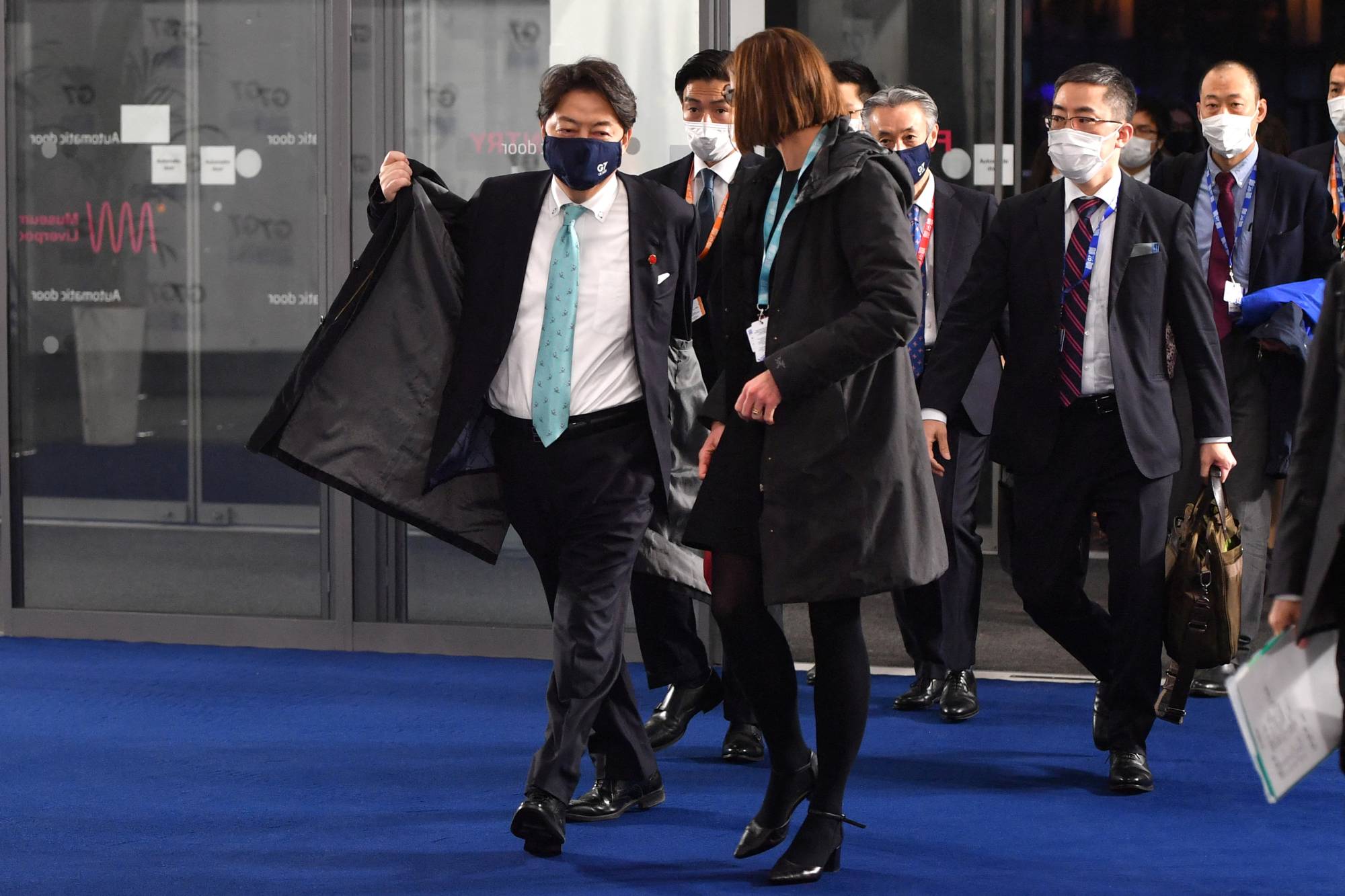
Japanese Foreign Minister Yoshimasa Hayashi stressed that ASEAN is key to achieving a free and open Indo-Pacific, according to his ministry.
The G7 foreign ministers held talks with their counterparts from the ASEAN countries for the first time, as well as those from Australia, South Korea and India, on the second day of the G7 gathering, apparently to coordinate with the 10-member ASEAN and three other regional powers over policy on China.
In a time of both misinformation and too much information, quality journalism is more crucial than ever.
By subscribing, you can help us get the story right.
With your current subscription plan you can comment on stories. However, before writing your first comment, please create a display name in the Profile section of your subscriber account page.