


At a glance, the pandemic picture in the United States may seem remarkably stable. The average number of new confirmed coronavirus cases per day has hardly budged for weeks, hovering between 95,000 and 115,000 a day each day in June.
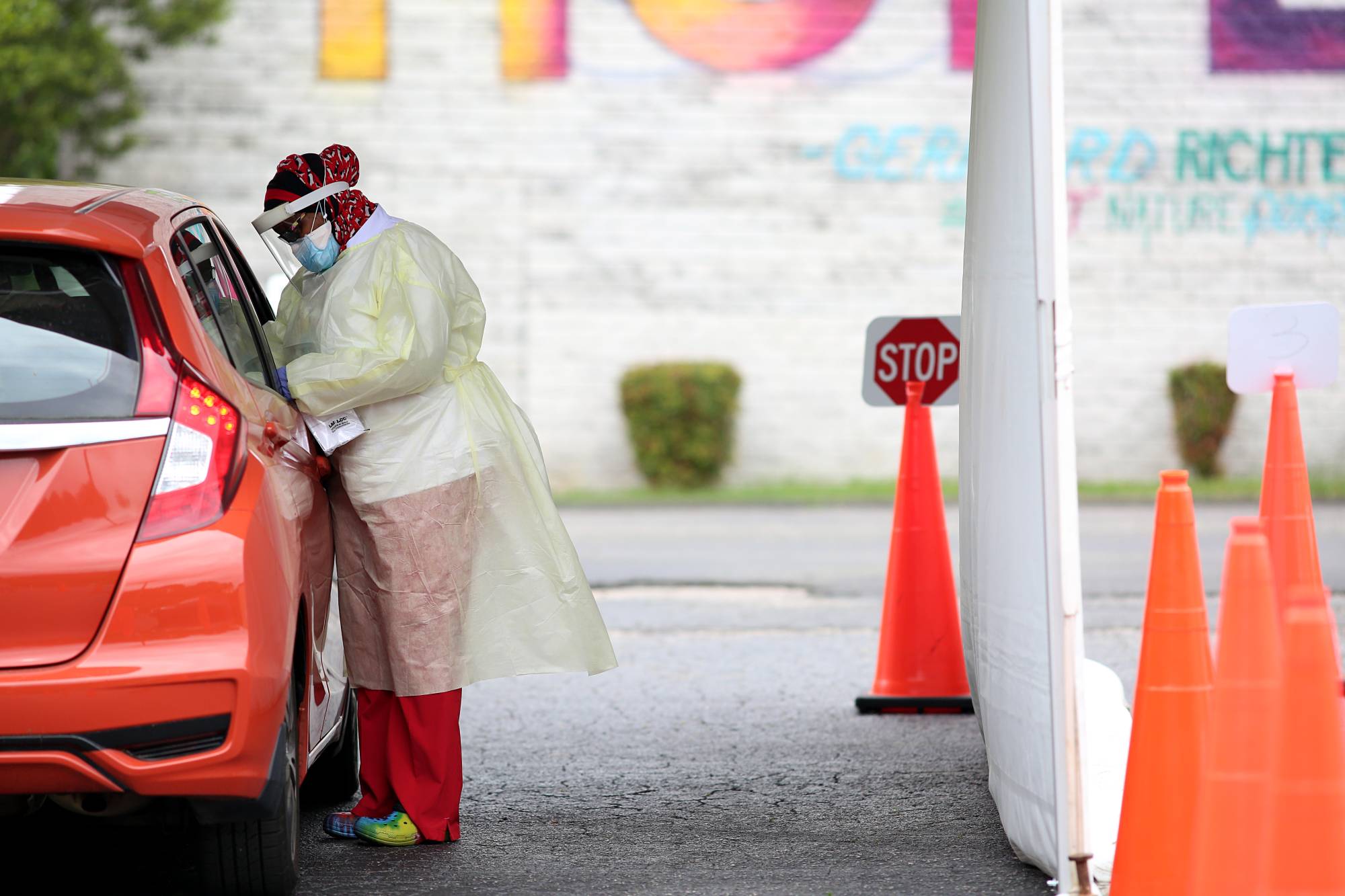
A closer look shows that as public testing sites run by state and local governments have winnowed, more states have also stopped giving daily data updates, creating a foggier look at the state of virus across the country.
That comes as new federal estimates Tuesday showed that the rapidly spreading omicron subvariant known as BA.5 has become dominant among new coronavirus cases. As of the week ending Saturday, BA.5 made up about 54% of new cases in the United States, according to the Centers for Disease Control and Prevention. Just a week ago, the agency’s estimates had put BA.5 and BA.4, another omicron subvariant, together as dominant, a trend experts had predicted. The new statistics, released Tuesday morning, are based on modeling and can be revised as more data comes in.
BA.4 and BA.5 are able to evade some of the antibodies produced after coronavirus vaccinations and infections, including infections caused by some other versions of omicron. But researchers in South Africa recently reported that a spring surge driven by BA.4 and BA.5 did not appear to cause significantly more severe disease than the nation’s first omicron wave.
The reduction in U.S. public testing means that lab-based PCR testing capacity in July will be only half of what it was in March, according to a recent estimate by Health Catalysts Group, a research and consulting firm. Even a few testing companies announced layoffs and closures last week.
In a time of both misinformation and too much information, quality journalism is more crucial than ever.
By subscribing, you can help us get the story right.
With your current subscription plan you can comment on stories. However, before writing your first comment, please create a display name in the Profile section of your subscriber account page.