


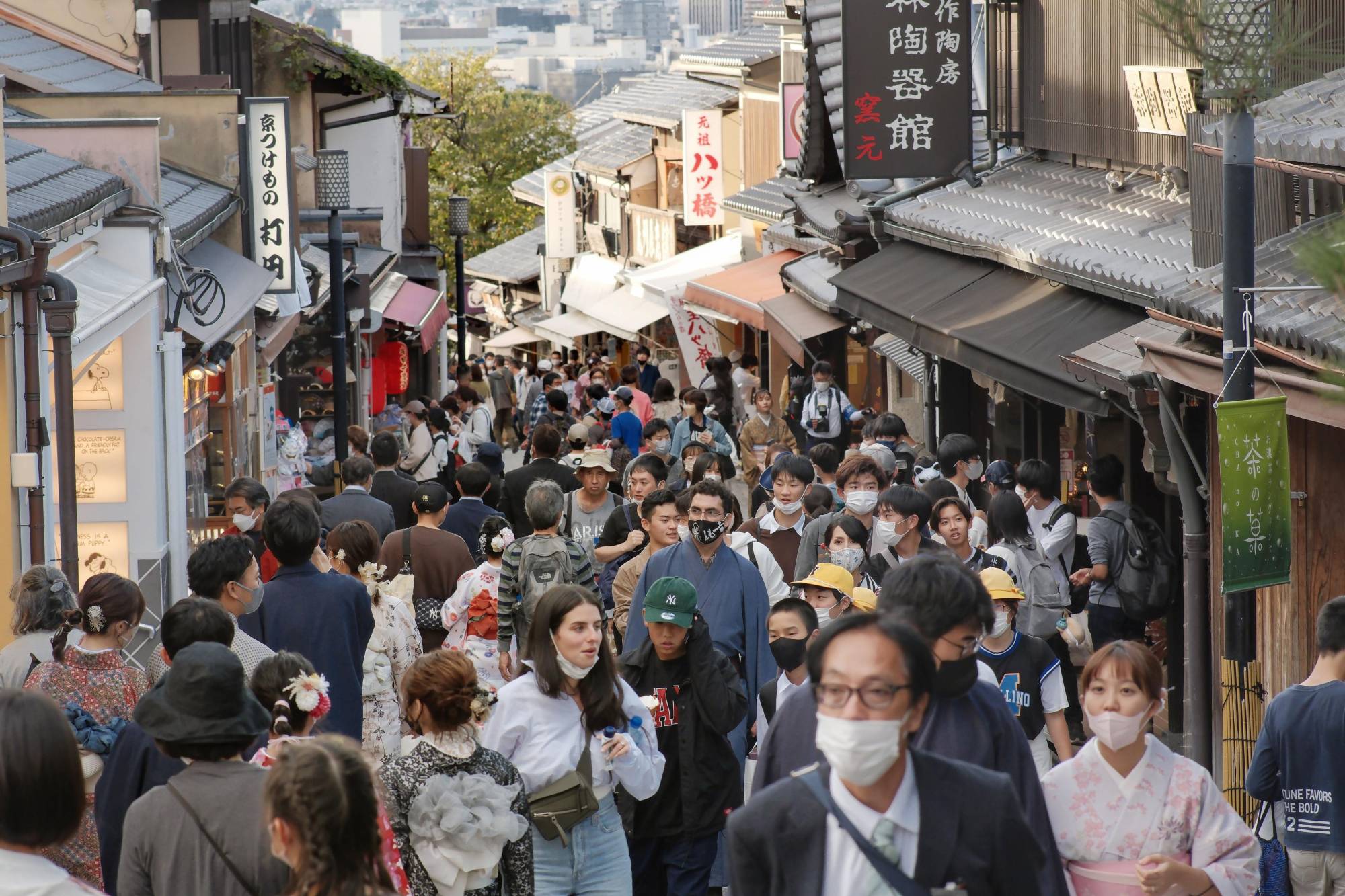
Japan’s full easing of COVID-19 border controls may bode well for the pandemic-hit domestic tourism sector, but it could raise fears that the first inflow of visa-free foreign travelers in more than two years could increase the spread of infections at home.
While the government of Prime Minister Fumio Kishida has pledged to relax coronavirus rules, its policy shift to scrap the cap on daily arrivals is expected to prompt Japanese citizens to rely more on face masks to prevent infections.
In addition, concerns are growing that if infections actually expand after the full reopening of borders to independent foreign tourists, some discrimination against those visiting Japan from abroad, many of whom may have become re-accustomed to life without masks, might prevail.
On Tuesday, Japan lifted the 50,000-person entry cap and allowed short-term visa-free travel for people coming from 68 countries and regions, terminating its strict border controls, some of the most stringent among the world’s major economies.
But in Japan, despite nearly five months having passed since the Kishida administration eased its guidance on wearing masks, the message that they do not need to be worn whenever possible has not been widely heeded by the public.
KEYWORDS
In a time of both misinformation and too much information, quality journalism is more crucial than ever.
By subscribing, you can help us get the story right.
With your current subscription plan you can comment on stories. However, before writing your first comment, please create a display name in the Profile section of your subscriber account page.