


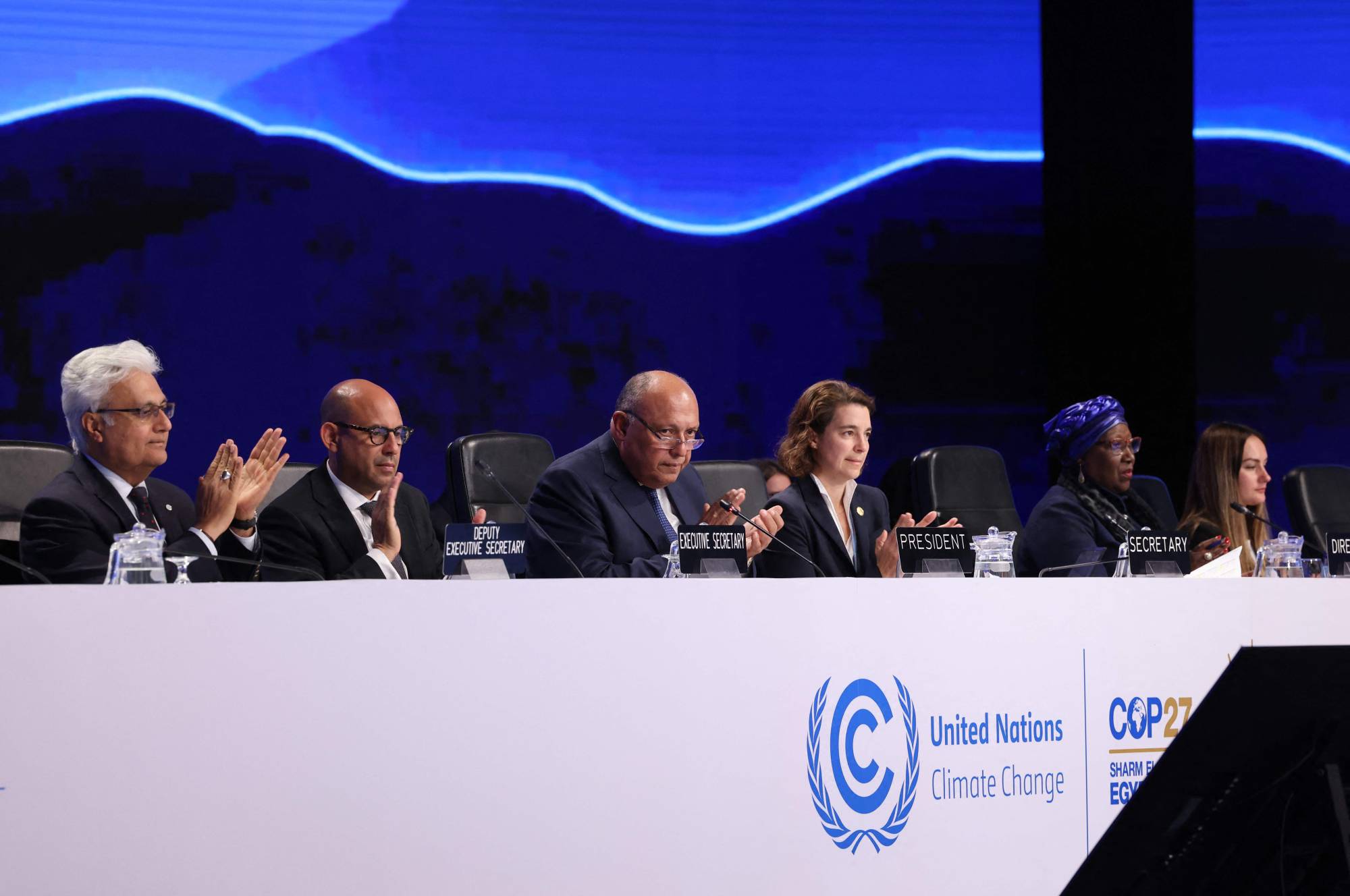
They got there in the end. After dawn on Sunday morning in Egypt, bleary-eyed ministers adopted a final agreement for COP27 and completed more than two weeks of U.N. climate negotiations in the Sinai peninsula.
The deal included a historic provision to set up a fund to help poorer countries face the harm caused by climate change, and that outcome was understandably celebrated by nations on the front line of a warming world. “A mission 30 years in the making has been accomplished,” said Molwyn Joseph, the minister from Antigua and Barbuda and chair of the AOSIS group of small island nations.
But beyond loss and damage — the COP-world term for paying up for climate catastrophes — the final deal was a clear disappointment for those wanting to ratchet up the ambitions of last year’s Glasgow agreement. The statement didn’t include a commitment to broaden the pledge to phase down unabated coal emissions to cover all fossil fuels, and there was no reference to global greenhouse gas emissions peaking by 2025.
The endgame was clearly tough for the European Commission climate chief Frans Timmermans, who had taken center stage at the summit, proposing a grand bargain on loss and damage in exchange for more emissions ambition and then threatening a late walkout by the European Union.
In the end, the EU and its allies had to settle for some technical changes to the so-called work program on mitigation. Now that the books have closed on COP27, here’s a look at eight key takeaways from two weeks of climate talks involving nearly 200 countries.
KEYWORDS
In a time of both misinformation and too much information, quality journalism is more crucial than ever.
By subscribing, you can help us get the story right.
With your current subscription plan you can comment on stories. However, before writing your first comment, please create a display name in the Profile section of your subscriber account page.