


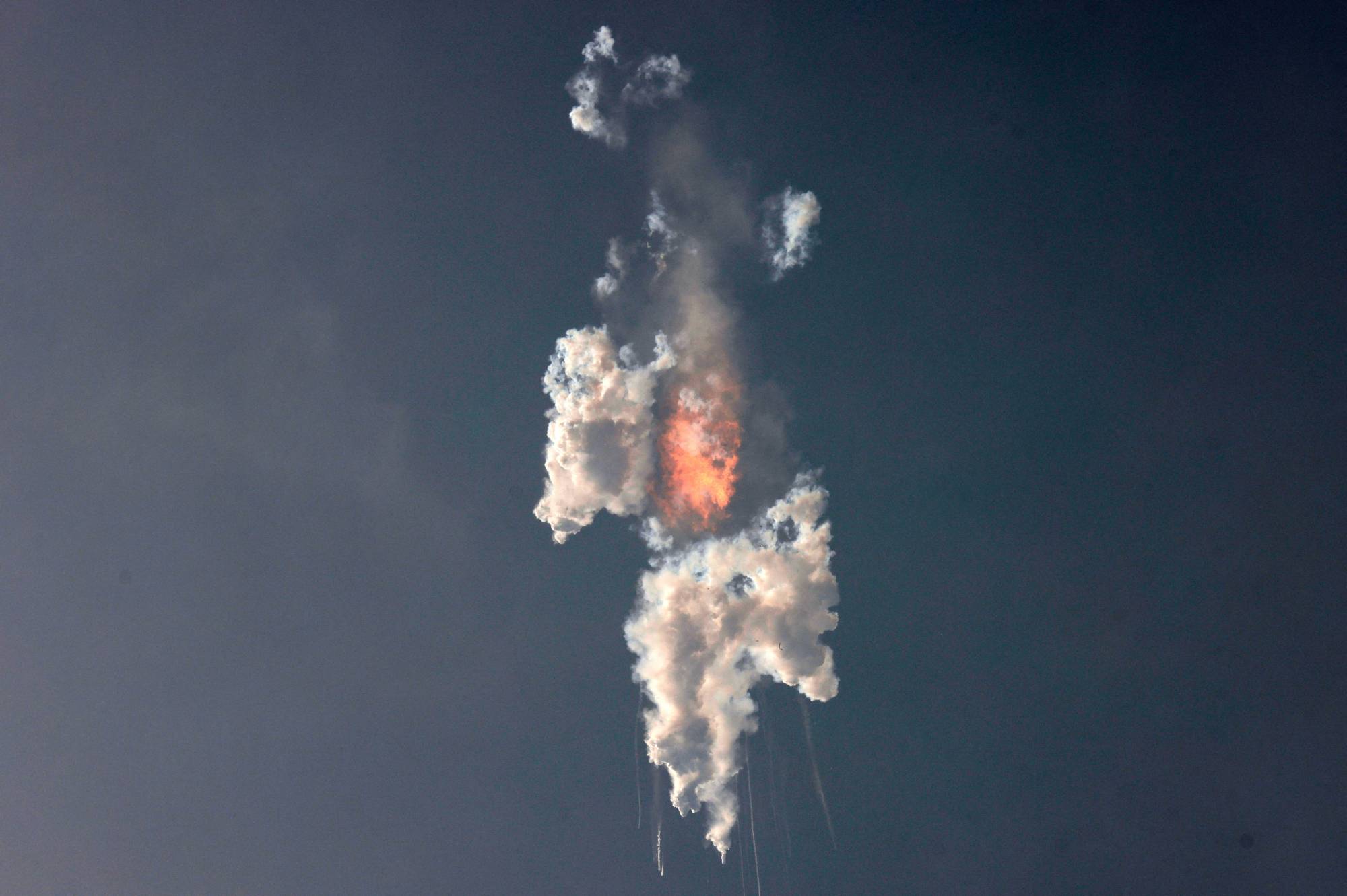
SpaceX’s Starship rocket exploded Thursday, minutes after lifting off from a launchpad in south Texas. The rocket, the most powerful ever built, did not reach orbit but provided important lessons for the private spaceflight company as it worked toward a more successful mission.
At 9:33 a.m. Eastern time, the engines on the Super Heavy booster ignited in a huge cloud of fire, smoke and dust, and Starship rose slowly upward. About a minute later, the rocket passed through a period of maximum aerodynamic pressure, one of the crucial moments for the launch of any rocket. Shortly after, it began to tumble before exploding in a fireball high above the Gulf of Mexico.
Despite the mission’s fiery outcome, Bill Nelson, the NASA administrator, offered congratulations to the company. “Every great achievement throughout history has demanded some level of calculated risk, because with great risk comes great reward,” Nelson wrote on Twitter.
The space agency is relying on SpaceX to build a version of Starship that will carry two astronauts from lunar orbit to the surface of the moon during its Artemis III mission. There was great anticipation from the flight, which had been delayed from Monday as the gargantuan rocket could one day carry massive amounts of cargo and many people into space.
Before the launch, which had no people aboard and aimed to validate whether the design of the rocket system is sound, Elon Musk, the company’s founder, had tamped down expectations. He said it might take several tries before Starship succeeds at this test flight.
In a time of both misinformation and too much information, quality journalism is more crucial than ever.
By subscribing, you can help us get the story right.
With your current subscription plan you can comment on stories. However, before writing your first comment, please create a display name in the Profile section of your subscriber account page.