


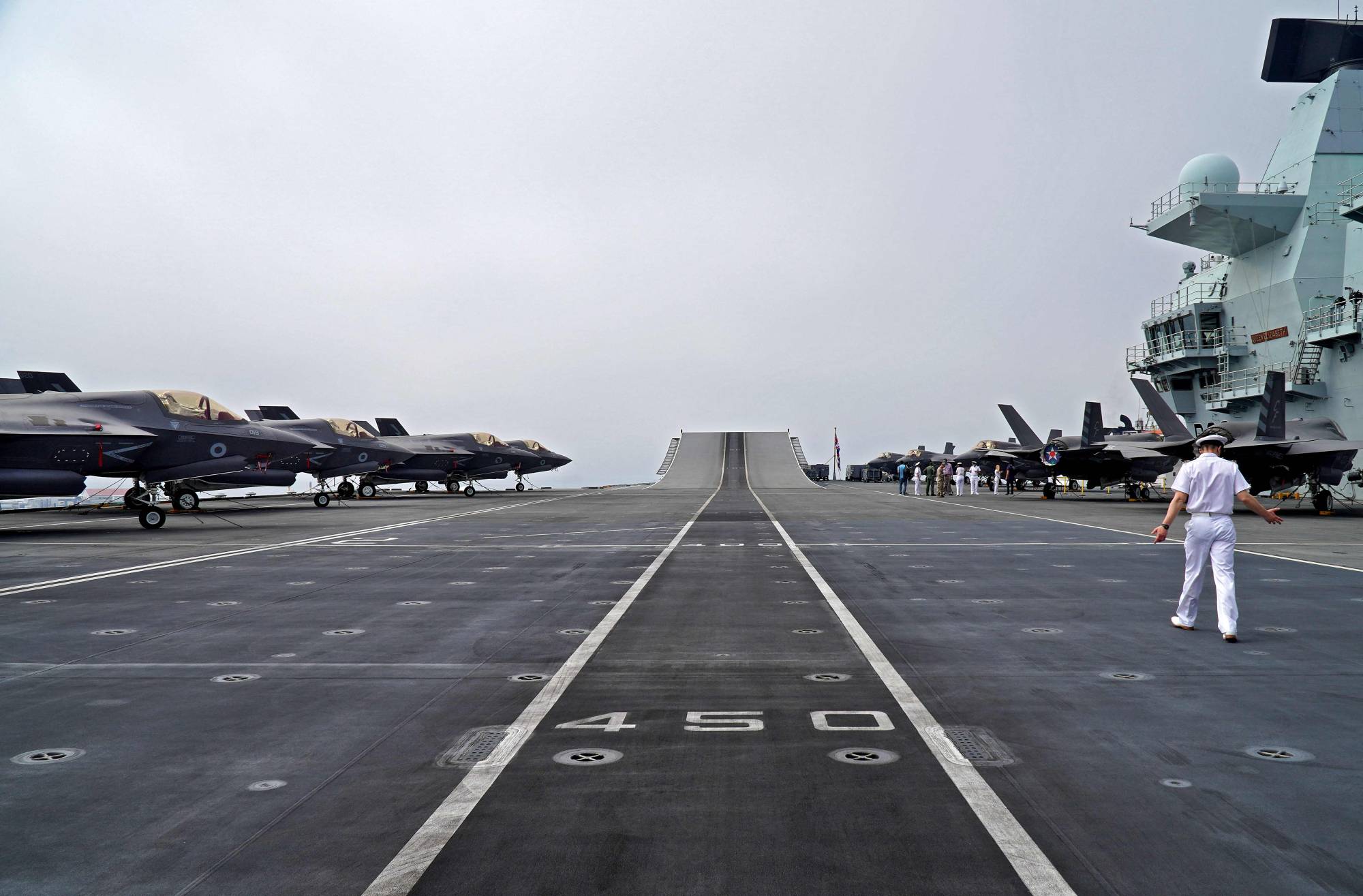
The powerful supercarrier HMS Queen Elizabeth, the largest warship ever built by Britain, with its crew of 2,500, has now arrived in the Gulf of Aden and the Indian Ocean where it is holding joint drills and maneuvers with units of the Maritime Self-Defense Force.
This great naval rendezvous, which will be joined by contingents from other countries, has received much media coverage and will undoubtedly be an awe-inspiring affair. The immediate purpose is clear, and will become clearer still as the carrier strike group, with its fleet of lethal F-35s and its attendant flotilla of protective support vessels, heads on in its journey toward the Taiwan Strait.
It will be one more reminder both that all international waterways must be kept open for peaceful commerce and that attempts to settle disputes and quarrels in the region by force of arms will always be frustrated by equal force and with global backing — China’s increasing saber-rattling over Taiwan and the Senkaku Islands being very much in mind.
But behind this classic exercise in deterrence lie much deeper questions about modern power deployment and conflict resolution. Those questions include whether traditional, and invariably costly displays of land and sea power, backed by weaponry of unimaginable power and complexity, are the most effective ways to defeat tyranny and contain terror (the two often allied). And with such power, is it still possible to prevent anarchy and violence in their many new forms, which often spread like skin rashes across the globe and threaten every society in unfamiliar, yet deadly ways.
This demands the kind of continuous campaigning and integrated operating concepts that today’s defense strategists, certainly in the U.K. and in America, but in most other democracies as well, are beginning to discuss and develop. Can such military hardware on the scale of aircraft carriers, however heavily armed, win alone against these kinds of new threats that poison from within and undermine and destabilize whole societies?
KEYWORDS
In a time of both misinformation and too much information, quality journalism is more crucial than ever.
By subscribing, you can help us get the story right.
With your current subscription plan you can comment on stories. However, before writing your first comment, please create a display name in the Profile section of your subscriber account page.