


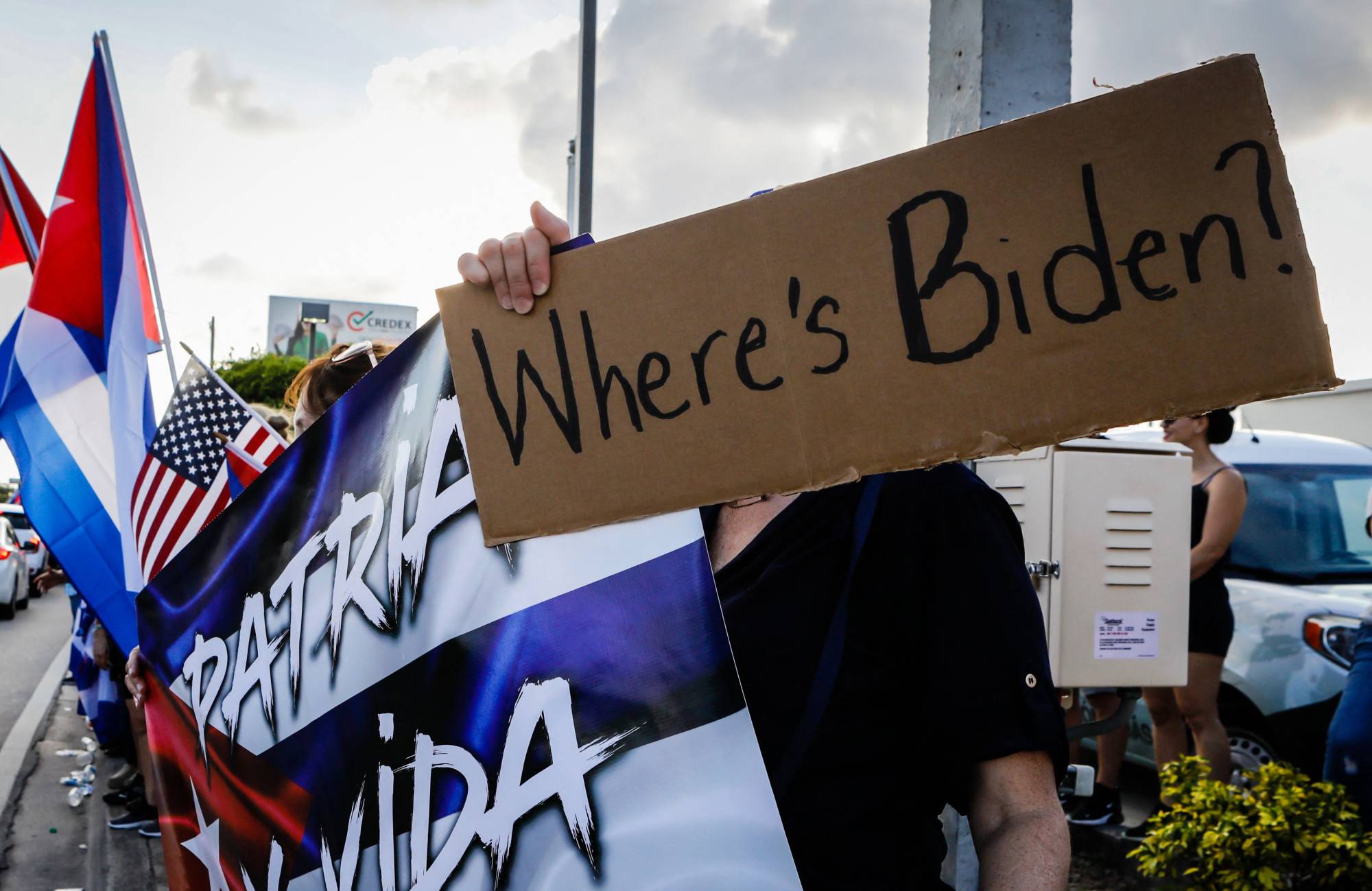
The unrest on Cuba’s streets is the biggest challenge to the country’s communist government in decades. And it poses a dilemma for the Biden administration, which previously said it wants to ease U.S. sanctions against the Cuban regime.
U.S. President Biden needs a way to maintain pressure on the government while moderating penalties that have unavoidably worsened the economic plight of ordinary Cubans. This will require something of a balancing act.
Discontent has been simmering for months. The Cuban economy shrank 11% in 2020. Dwindling foreign-currency reserves have led to shortages of food and electricity.
Cuba’s homegrown COVID-19 vaccine has reached less than one-third of the population and cases continue to rise, overwhelming the country’s hospitals. Anger at deteriorating living conditions has galvanized a grassroots movement led by artists and musicians demanding freedom of expression, civil rights and an end to one-party rule.
It’s unlikely the protesters will force Cuba’s rulers to liberalize, let alone give up power. The government has a history of violent repression. Since the start of the revolt, Cuba’s military has reportedly arrested over 200 citizens, including journalists and activists, and one protester has died.
In a time of both misinformation and too much information, quality journalism is more crucial than ever.
By subscribing, you can help us get the story right.
With your current subscription plan you can comment on stories. However, before writing your first comment, please create a display name in the Profile section of your subscriber account page.