


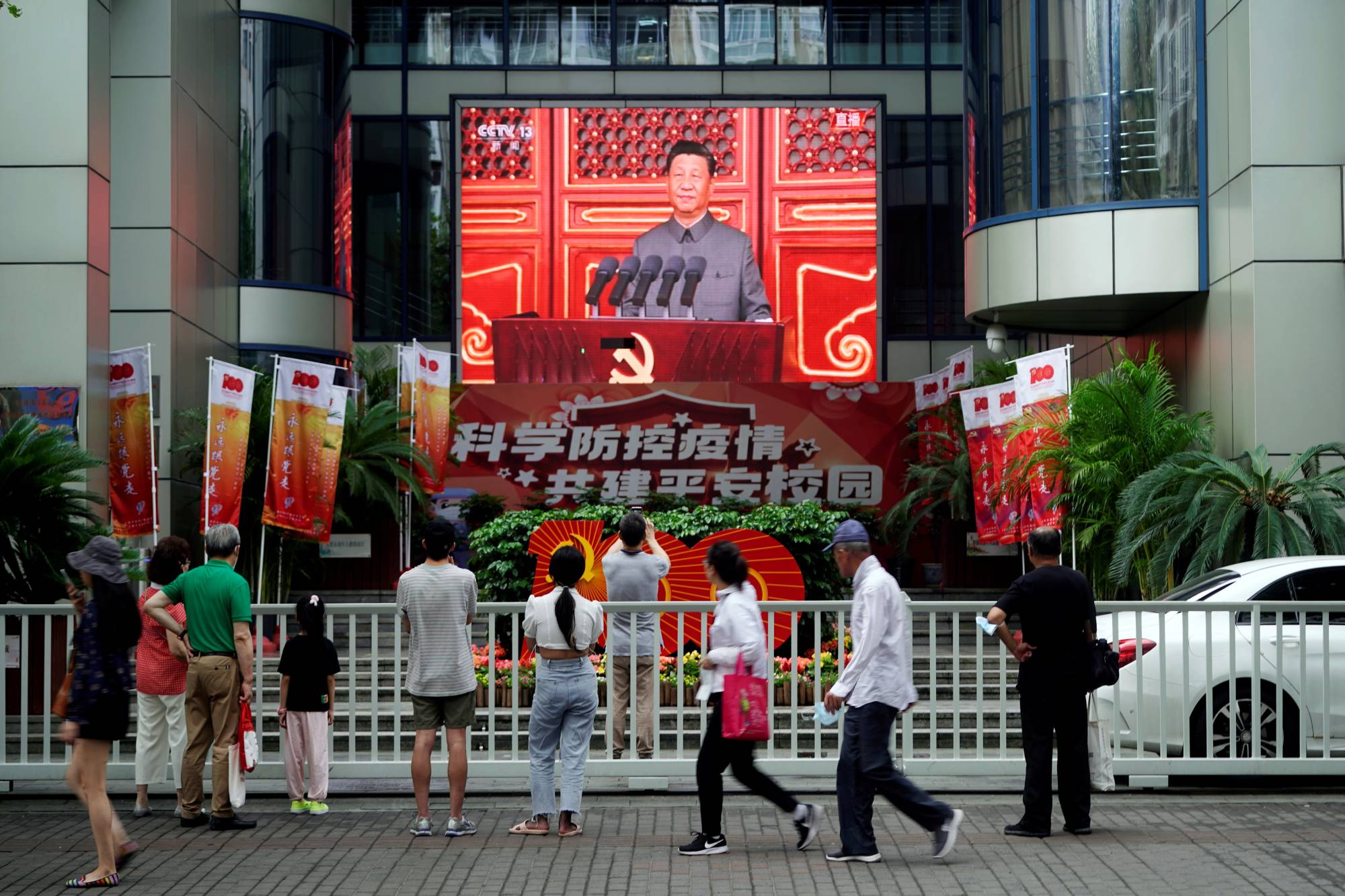
Global investors are shocked to have discovered that China is run by communists.
Shares of online education companies collapsed recently after the government all but outlawed the industry, and internet behemoth Tencent Holdings Ltd. shed more than $50 billion of value at one point after state media declared electronic games to be “spiritual opium.”
China’s leaders are making abundantly clear where they stand on the tension between private profits and social wellbeing. These sudden regulatory shifts have thrown asset managers across the world into a frenzy of effort to understand and explain how prospects for investors in the second-largest economy have changed.
The most lucid and logically coherent explanation also happens to be the simplest: Take China’s Communist Party at its word.
For decades, foreign investors have told themselves a comforting story. China was no longer truly communist, after late paramount leader Deng Xiaoping embraced markets in the late 1970s and kicked off the country’s spectacular economic rise. The wealth and growth generated by capitalist techniques had converted the government and people. While the ruling party continued to wrap itself in the rhetoric of communism, its members knew they were paying lip service to a bankrupt ideology, or so the thinking ran.
KEYWORDS
In a time of both misinformation and too much information, quality journalism is more crucial than ever.
By subscribing, you can help us get the story right.
With your current subscription plan you can comment on stories. However, before writing your first comment, please create a display name in the Profile section of your subscriber account page.