


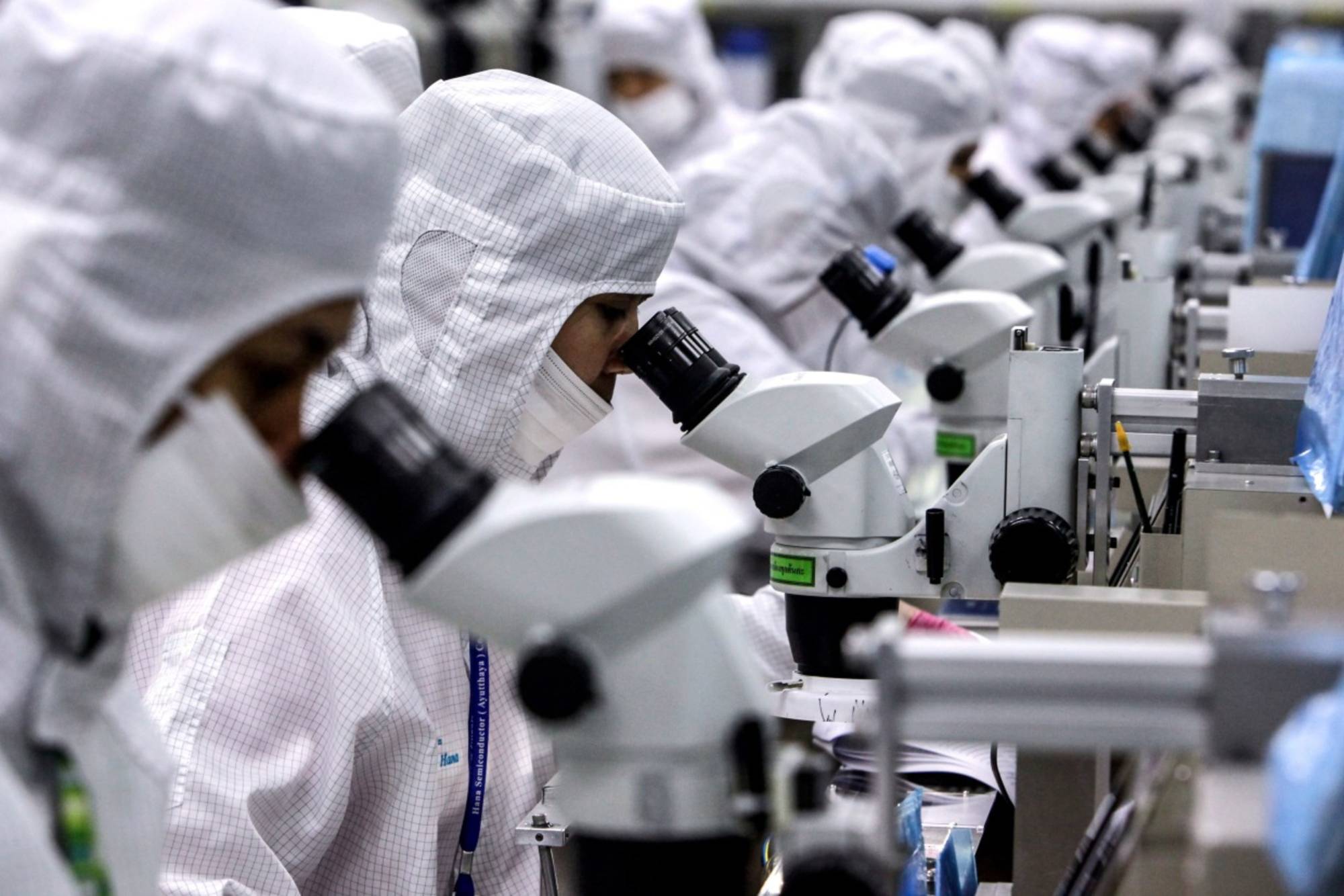
MUNICH, Germany – Automobile and electronics manufacturers worldwide have recently had to reduce output because a severe drought in Taiwan has hit the island’s production of semiconductors.
This and other global supply-chain disruptions — many of them caused by the COVID-19 pandemic — have prompted advanced economies to take steps to mitigate the potential impact. But what types of government action make economic sense?
Supply-chain bottlenecks can have a significant economic effect. Germany, for example, imports 8% of its intermediate products from low-wage countries (the United States relies on these economies for just 4.6% of its inputs). Problems with input deliveries recently led Germany’s Ifo Institute to lower its forecast for German GDP growth this year by almost half a percentage point, to 3.3%.
This vulnerability helps to explain why the European Union has earmarked part of its €750 billion ($884 billion) Next Generation EU recovery fund to bolster Europe’s semiconductor design and manufacturing capabilities. The U.S. chipmaker Intel plans to invest in several European countries and to open a semiconductor factory in the region with EU help.
Meanwhile, Bosch, Europe’s largest automotive supplier, recently opened a chip-manufacturing plant in Dresden with the help of European subsidies. Bosch’s investment in eastern Germany is the latest in a series of battery cell projects in “Silicon Saxony,” which policymakers hope will reduce Europe’s dependence on Asian suppliers and make it more resilient to future global health and climate crises.
KEYWORDS
In a time of both misinformation and too much information, quality journalism is more crucial than ever.
By subscribing, you can help us get the story right.
With your current subscription plan you can comment on stories. However, before writing your first comment, please create a display name in the Profile section of your subscriber account page.