


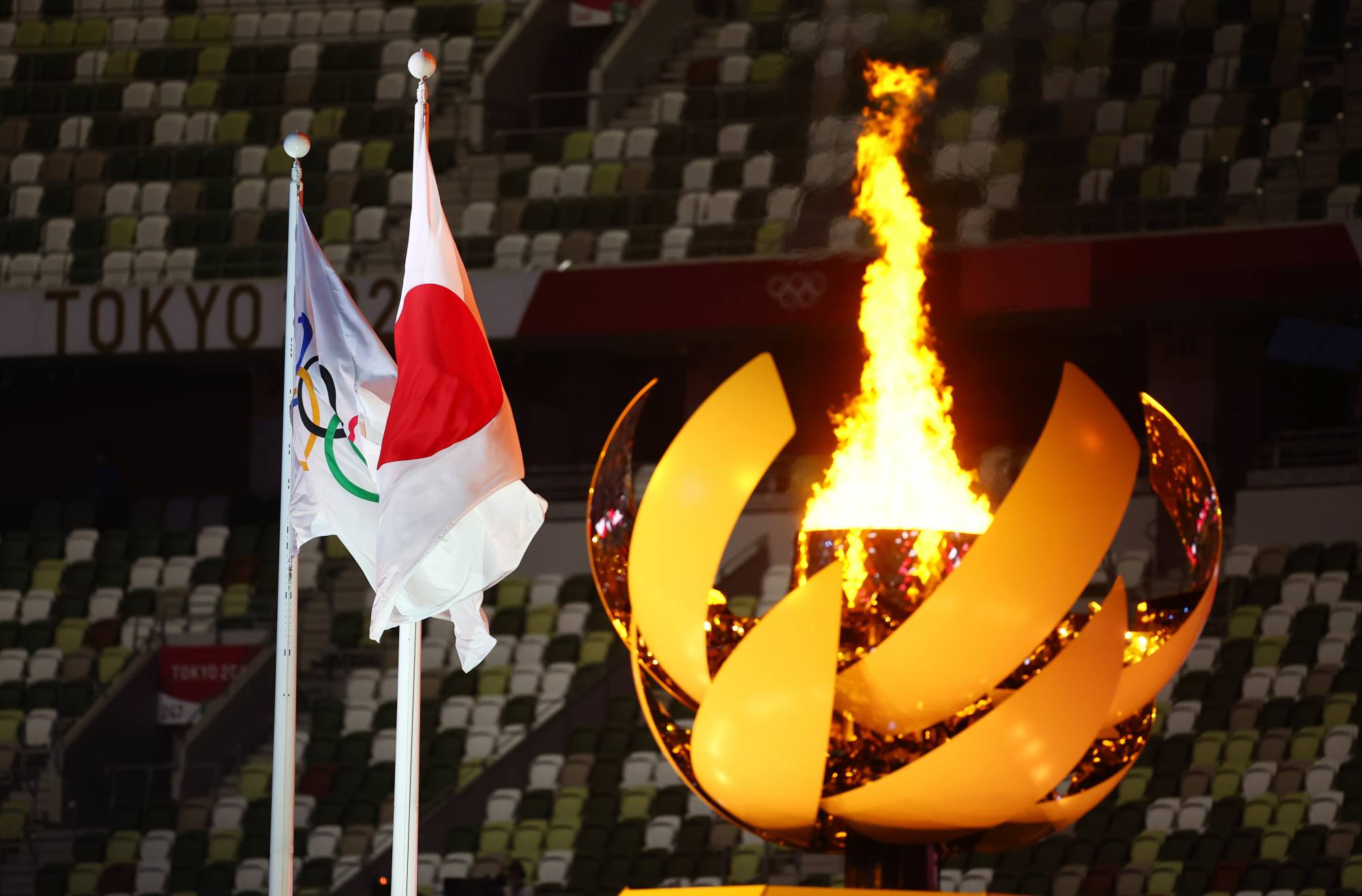
The XXXII Olympiad, the 2020 Tokyo Olympics, are finished and by just about every measure they were a success.
There was drama, surprises, amazing performances and records aplenty. Just as important, there were few mistakes and no crises — no COVID-19 outbreaks, no compromised events and no breakdowns or organizational disasters.
As the Olympic flame was extinguished and the Olympic flag was passed to Paris Mayor Anne Hidalgo, host of the 2024 Games, the Japanese organizing committee and the International Olympic Committee (IOC) celebrated their accomplishment. Yet even while delighted by the athletes’ outstanding performances, the world is pondering the meaning of this event and its toll — on those same athletes and the cities that host the quadrennial extravaganza.
There are many reasons to celebrate, not least of which is the holding of a gathering of the world’s best athletes to show what they can do. The mere fact that the Games were held was a victory over a disease that has claimed millions of lives and ruined tens of millions more.
Fears that the coronavirus might also ruin the Olympics were misplaced: Strict protocols and extensive testing limited the number of infections among Olympic personnel to 430 people — a sliver of the estimated 170,000 athletes, staff and volunteers affiliated with the Games.
KEYWORDS
In a time of both misinformation and too much information, quality journalism is more crucial than ever.
By subscribing, you can help us get the story right.
With your current subscription plan you can comment on stories. However, before writing your first comment, please create a display name in the Profile section of your subscriber account page.