


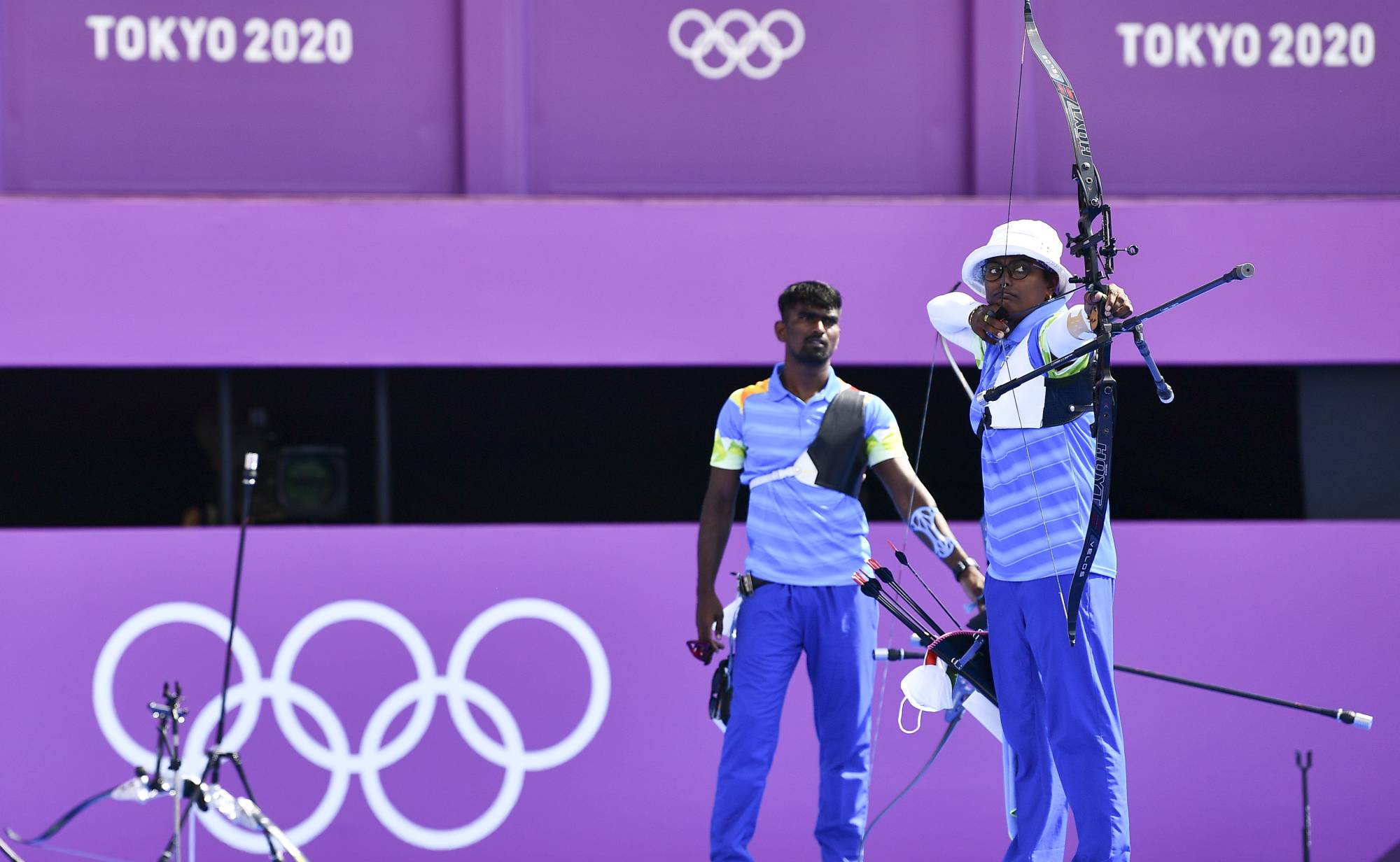
NEW DELHI – The Tokyo Games are over and the Japanese people and government have heaved a sigh of relief that the spectacle passed without a major COVID-19 outbreak in the athletes’ village or other disasters.
Here in India, the celebrations of the country’s first gold medal in the men’s javelin throw — and its best-ever medal performance at a single Olympics — have not yet subsided. But how good, really, is our best?
A decade or so ago, many spoke of India and China in the same breath. The two countries were supposedly the new contenders for global eminence after centuries of Western ascendancy, the Oriental response to generations of Occidental economic success. Some even spoke of “Chindia,” as if they were joined at the hip in the international imagination.
But anyone seeking confirmation that such twinning is, to put it mildly, out of place, need only look at the medal tally in Tokyo. China ranked a proud second, with 38 gold medals — one fewer than the United States — and 88 medals in total. Now scroll down, past Belarus, divided Georgia, the Bahamas and even the breakaway province of Kosovo (whose independence India does not recognize). There, in 48th place, sits India, with seven medals in all, one gold, two silver and four bronze.
In fact, this is not a surprise. Whereas China has systematically strived for Olympic success since it re-entered global athletic competition after years of isolation, India has remained complacent about its lack of sporting prowess. China lobbied for and won the right to host the Summer Olympics barely two decades after its return to the Games. But India rested on its laurels after hosting the 1982 Asian Games in Delhi and is now seen as being further behind in the competition to host the Olympics than it was four decades ago.
KEYWORDS
In a time of both misinformation and too much information, quality journalism is more crucial than ever.
By subscribing, you can help us get the story right.
With your current subscription plan you can comment on stories. However, before writing your first comment, please create a display name in the Profile section of your subscriber account page.