


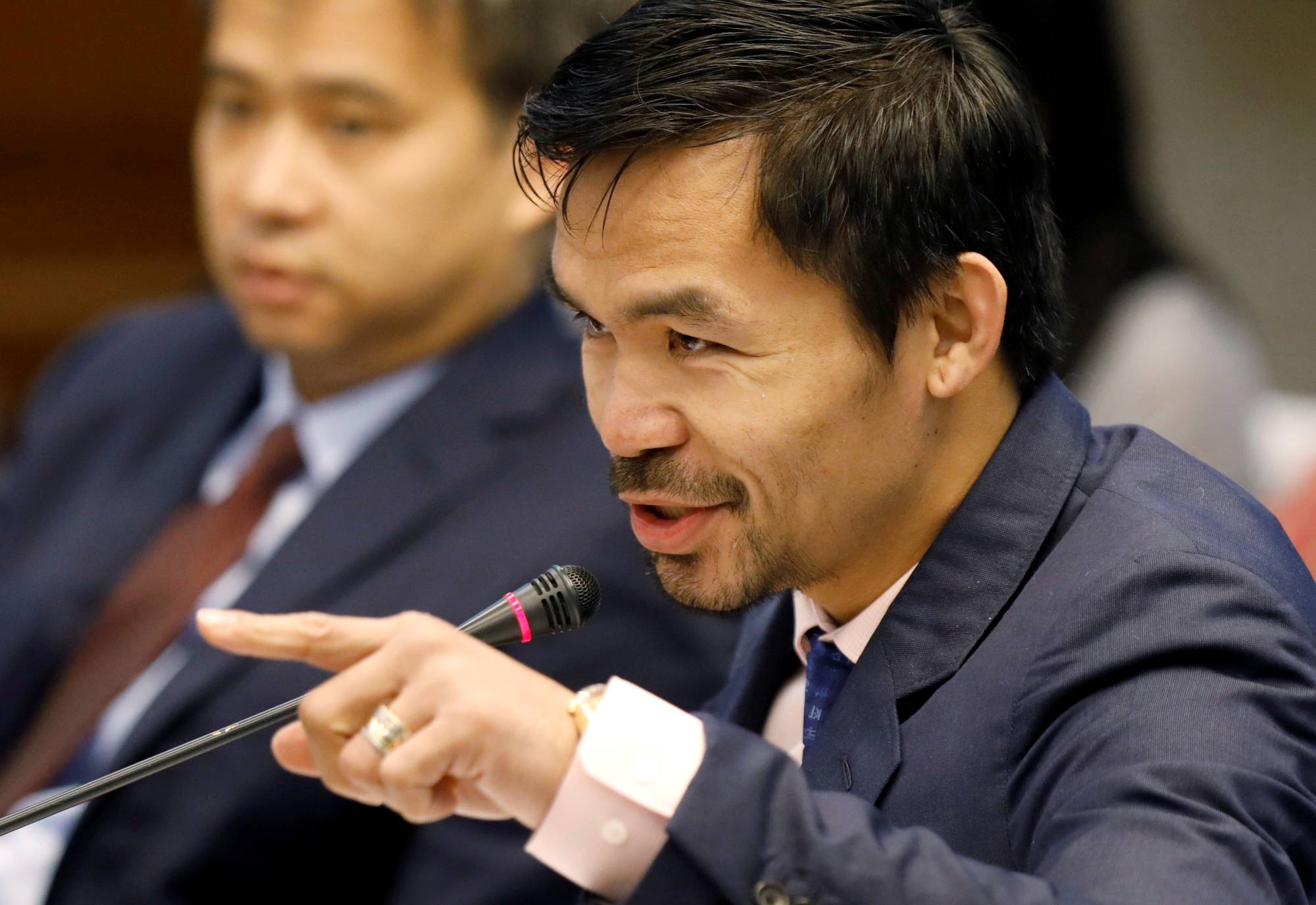
Manny Pacquiao is running to be president of the Philippines.
In a country obsessed with celebrity culture, the candidacy of its most famous son feels as inevitable as night following day. That’s reason enough for caution.
Pacquiao, or “Pac-Man,” is rightly regarded as a hero. A lightning-quick boxer of exceptional aggression and bravery, he is the only man to have held titles at eight different weight divisions, and ranks among the greatest of all time in his sport. The 42-year-old also has a compelling life story, having grown up in extreme poverty in the southern Philippines. Pacquiao presents himself as a champion of the poor and has been feted regularly for his philanthropy. What’s not to like?
Plenty, actually. There’s his lack of legislative accomplishment as a congressman and senator; his support of President Rodrigo Duterte’s war on drugs, a campaign of extrajudicial killings in which tens of thousands may have died; his illiberal policy positions on social issues. Whatever the candidate’s personal qualities and good intentions, a Pacquiao presidency would represent an extension of the strongman-savior syndrome that has done much to hold the Philippines back.
A small vignette serves to illustrate the nature of the country’s choice. The news of Pacquiao’s candidacy brought back memories of a pair of interviews that this writer attended during the 2010 campaign and the contrast they evoked.
KEYWORDS
In a time of both misinformation and too much information, quality journalism is more crucial than ever.
By subscribing, you can help us get the story right.
With your current subscription plan you can comment on stories. However, before writing your first comment, please create a display name in the Profile section of your subscriber account page.