


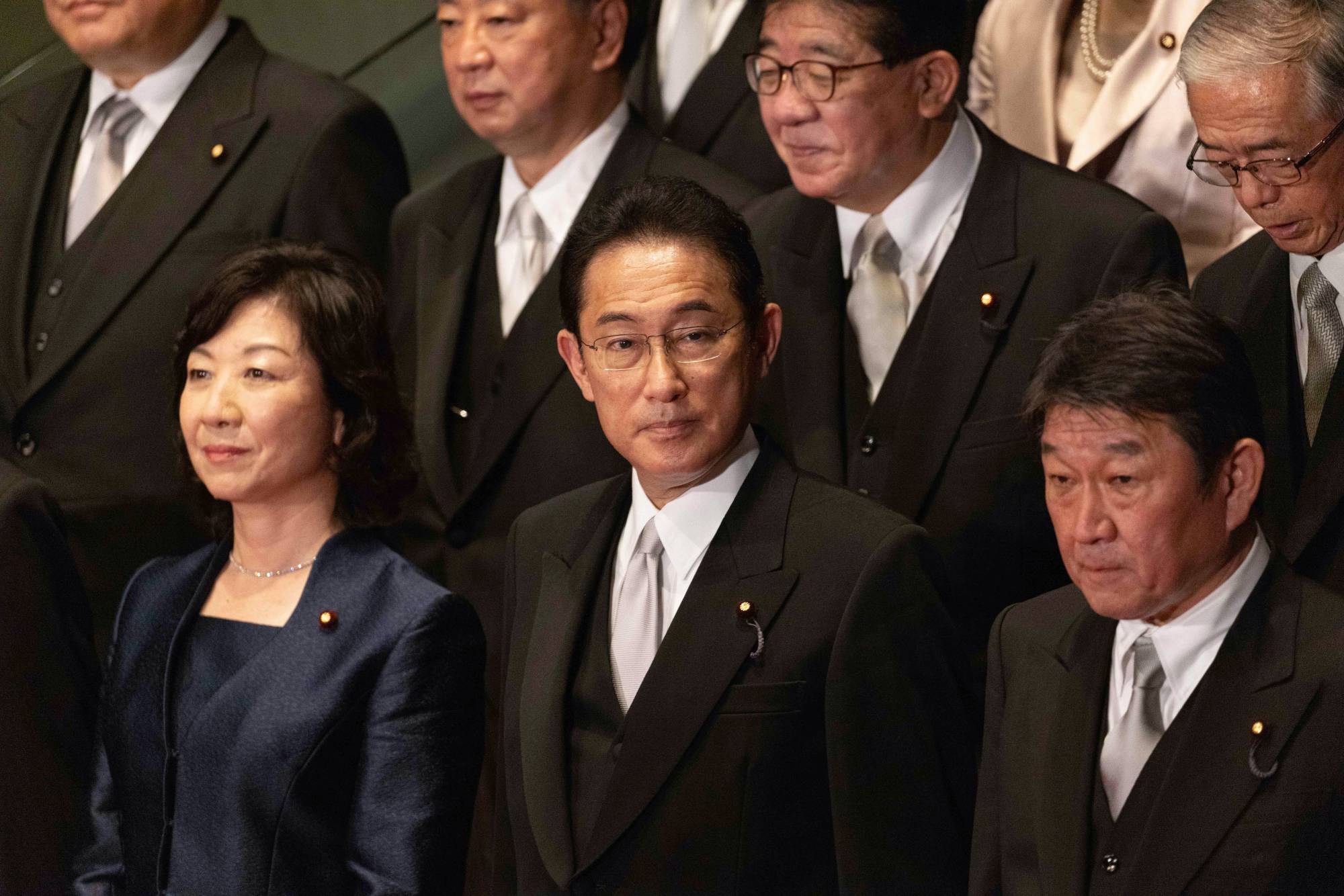
Fumio Kishida was elected Japan’s 100th prime minister on Monday. He takes office with two pressing tasks. The first, more long term, is to restore confidence in the economy, which means recovering from the COVID-19 pandemic and tackling the growing inequality that marks Japanese society. The second, and most immediate, is leading his Liberal Democratic Party (LDP) to victory in national elections now scheduled for the end of October.
The second is relatively easy; the first will take energy, creativity and patience. It isn’t clear if Kishida has all three.
In one of his first acts as prime minister, Kishida called a Lower House election for Oct. 31. That is earlier than anticipated — the vote had to take place before the end of the year — and reflects an eagerness to exploit the bump in popularity that new prime ministers enjoy. Unfortunately for Kishida, his Cabinet’s support rate may be 21 points above that of outgoing Prime Minister Yoshihide Suga, but it is lower than that of Suga or Shinzo Abe when they took office. In fact, it is the third worst inaugural rating of the last nine administrations.
That does not mean that the LDP won’t prevail in the upcoming ballot. Japan’s electorate remains scarred by the last opposition administration — when the Democratic Party of Japan governed from 2009-2012 — and will almost certainly rally behind the current ruling coalition. Turnout is likely to be low, however, and Kishida will find it especially hard to match the results of the last Lower House election, in 2017, when the LDP and its coalition partner Komeito won a landslide victory, taking two-thirds of the seats in the lower chamber.
To win back that support, Kishida will have to boost the economy and gain the public’s confidence. He has said that he wants to implement a “new Japanese capitalism.” It is not clear what that means, other than a rejection of the neoliberalism that provided the conceptual framework for Abenomics, the economic program adopted by Abe and continued by Suga, and a desire to redistribute wealth to reduce inequality and social divisions. He has spoken of a “Reiwa income-doubling plan” that would emulate the extraordinary successes of the 1960s, but details are missing.
KEYWORDS
In a time of both misinformation and too much information, quality journalism is more crucial than ever.
By subscribing, you can help us get the story right.
With your current subscription plan you can comment on stories. However, before writing your first comment, please create a display name in the Profile section of your subscriber account page.