


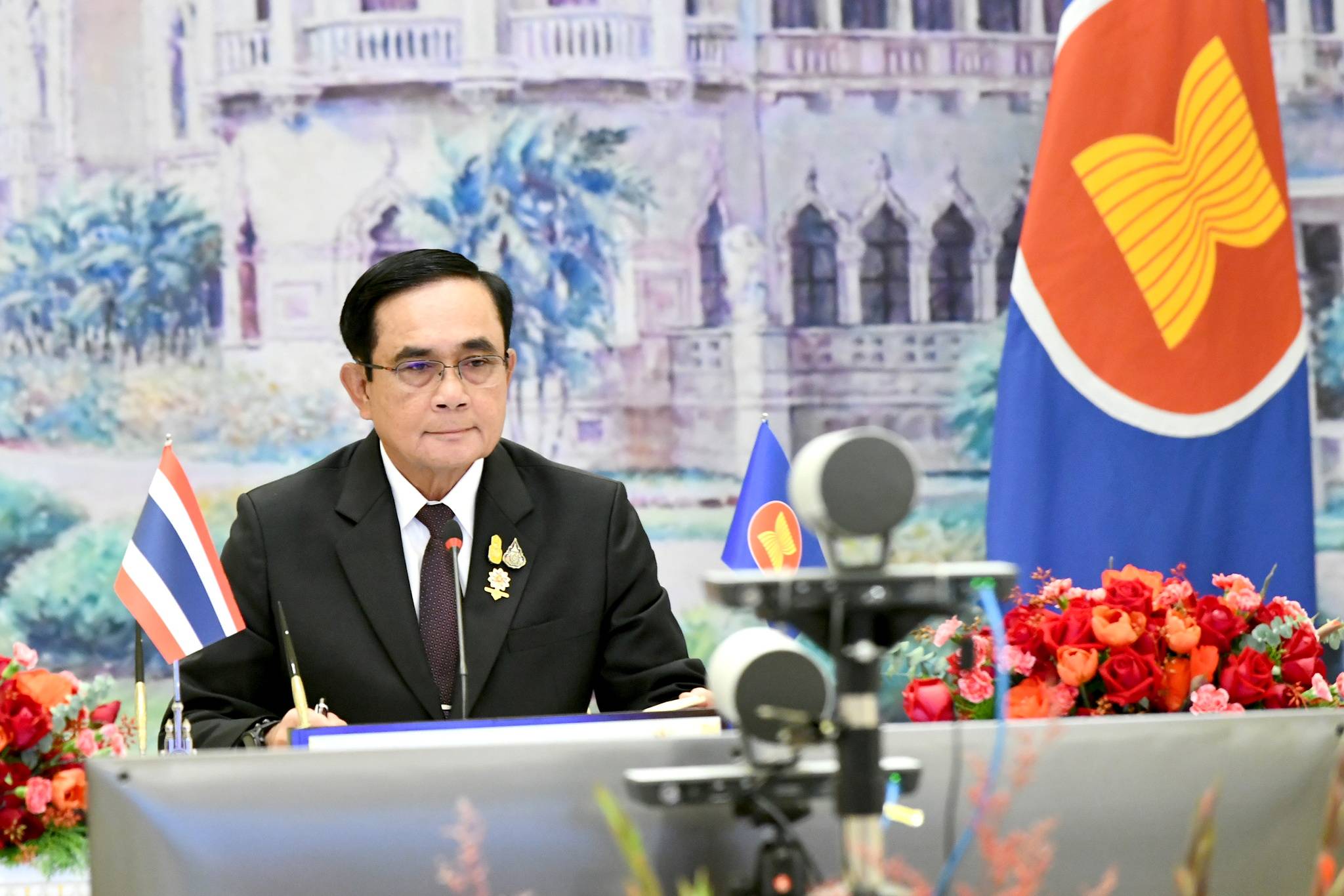
The Association of Southeast Asian Nations (ASEAN) this week held its fall gaggle of summits. In addition to stocktaking among regional leaders, the meetings included consultations with ASEAN’s dialogue partners — Japan, the United States and China among them — that reaffirmed the organization’s “centrality” to those countries’ thinking about the region.
Those assurances are gratifying, as are the monetary commitments that accompany them, but ASEAN’s relevance is being challenged as never before.
Attendance at this week’s meetings spotlighted one gap around the table and one new face. Missing was Myanmar. ASEAN foreign ministers decided earlier this month to not invite Gen. Min Aung Hlaing, installed as the leader of the country after a February coup, or any other political representative and instead offered a seat to the permanent secretary of the country’s Foreign Ministry.
While insisting that Myanmar “remains a member of the ASEAN family,” the summit declaration underscored that the junta’s refusal to meet with the group’s special envoy and lack of progress in restoring democracy challenged “our adherence to the rule of law, good governance, the principles of democracy and constitutional government … .” The Myanmar government said that it could not accept having its participation “downgraded,” but added that its failure to attend did “not intend to show its protest against ASEAN or to boycott ASEAN.”
ASEAN’s readiness to take that position facilitated the attendance of Joe Biden, whose presence marked the first time in four years that a U.S. president joined the group. While Biden has signaled his intention to re-engage, having Myanmar’s leader at the table would have made that difficult, if not impossible.
With your current subscription plan you can comment on stories. However, before writing your first comment, please create a display name in the Profile section of your subscriber account page.