


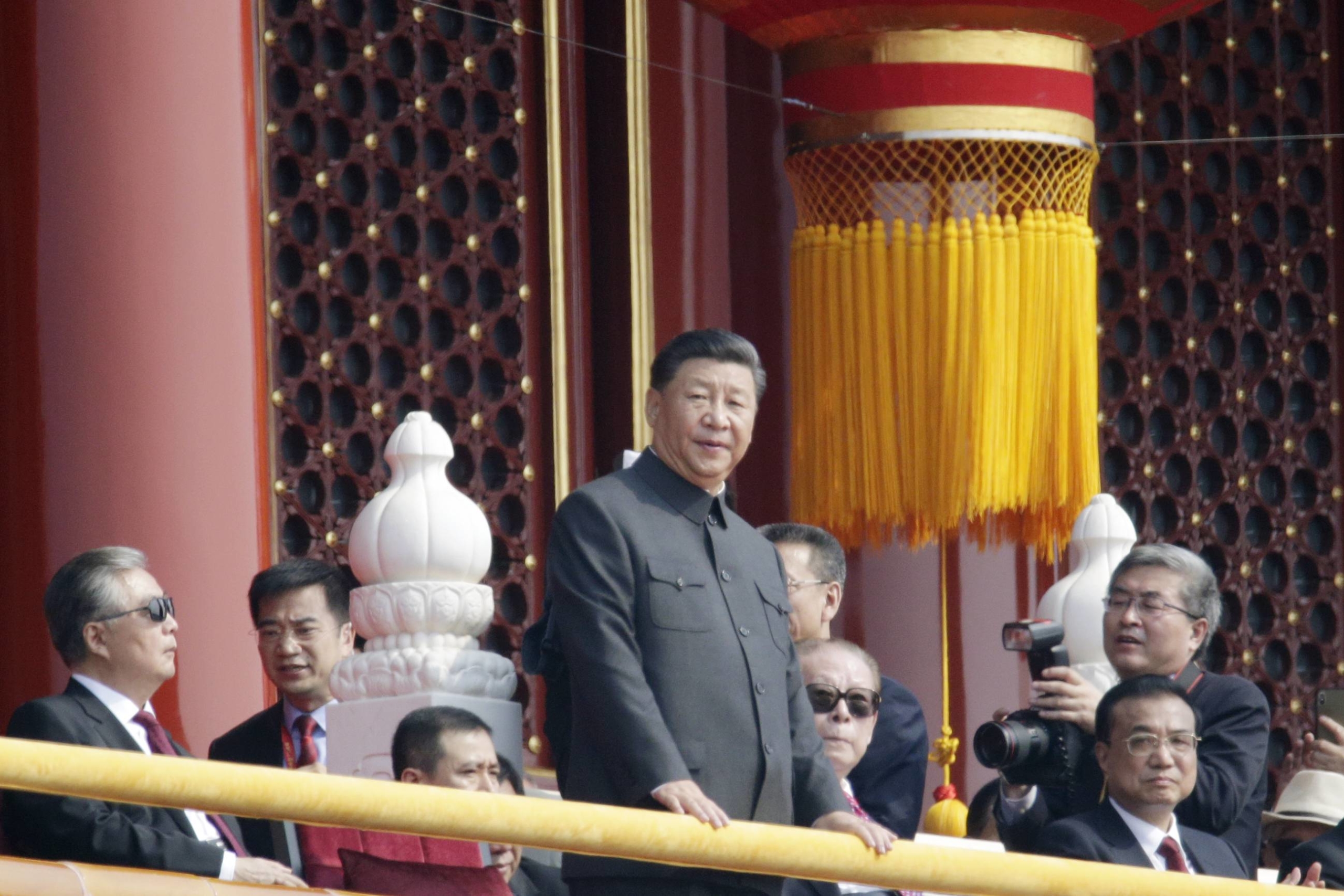
Xi Jinping, the leader of China, continues to consolidate power. This week, top officials of the Chinese Communist Party (CPC) declared that Xi’s leadership is “the key to the great rejuvenation of the Chinese nation.” That statement sounds banal to Western ears, and one more example of the hagiography that dominates Chinese media coverage of their leader.
To more discerning observers, however, it is a portent, an indication that Xi will defy precedent and remain in office for at least a third term, and likely longer. He is being elevated to a status in China equal to that of Mao Zedong. Along with that role is a consolidation of power that should be more worrisome. Checks and balances are needed to level decision making and avoid excesses and mistakes. That is the most important lesson of the Mao era, and one that may soon be ignored in Beijing.
Officially, the central committee of the CPC last week held its sixth plenum, an annual meeting attended by 348 full and alternate members. This meeting assumed special significance because it is the last before the party congress scheduled for the second half of 2022 and which will select the CPC leadership for the next five years.
Officially, the plenum released a communique that referred to a “draft Resolution on the Major Achievements and Historical Experience of the Party over the Past Century,” a document that detailed the CPC’s history and most notable accomplishments in its first 100 years. It concluded that “China has achieved the First Centenary Goal of building a moderately prosperous society in all respects” and that all Chinese should “resolutely uphold Comrade Xi Jinping’s core position on the Central Committee and in the Party as a whole.”
While that sounds like the work of bureaucratic functionaries, a historical resolution is anything but routine. This is only the third time that the CPC has adopted such a document, and each came at critical moments for the party. The first was passed in 1945 and it allowed Mao to consolidate power. The second was adopted in 1981, pushed by Deng Xiaoping after a brutal struggle with the Gang of Four. It not only confirmed his grip on power but also made the famous judgment that Mao’s achievements outweighed his liabilities. That set the bounds on criticism and ensured that there would be no challenge to Deng’s or the party’s leadership and legitimacy.
KEYWORDS
In a time of both misinformation and too much information, quality journalism is more crucial than ever.
By subscribing, you can help us get the story right.
With your current subscription plan you can comment on stories. However, before writing your first comment, please create a display name in the Profile section of your subscriber account page.