


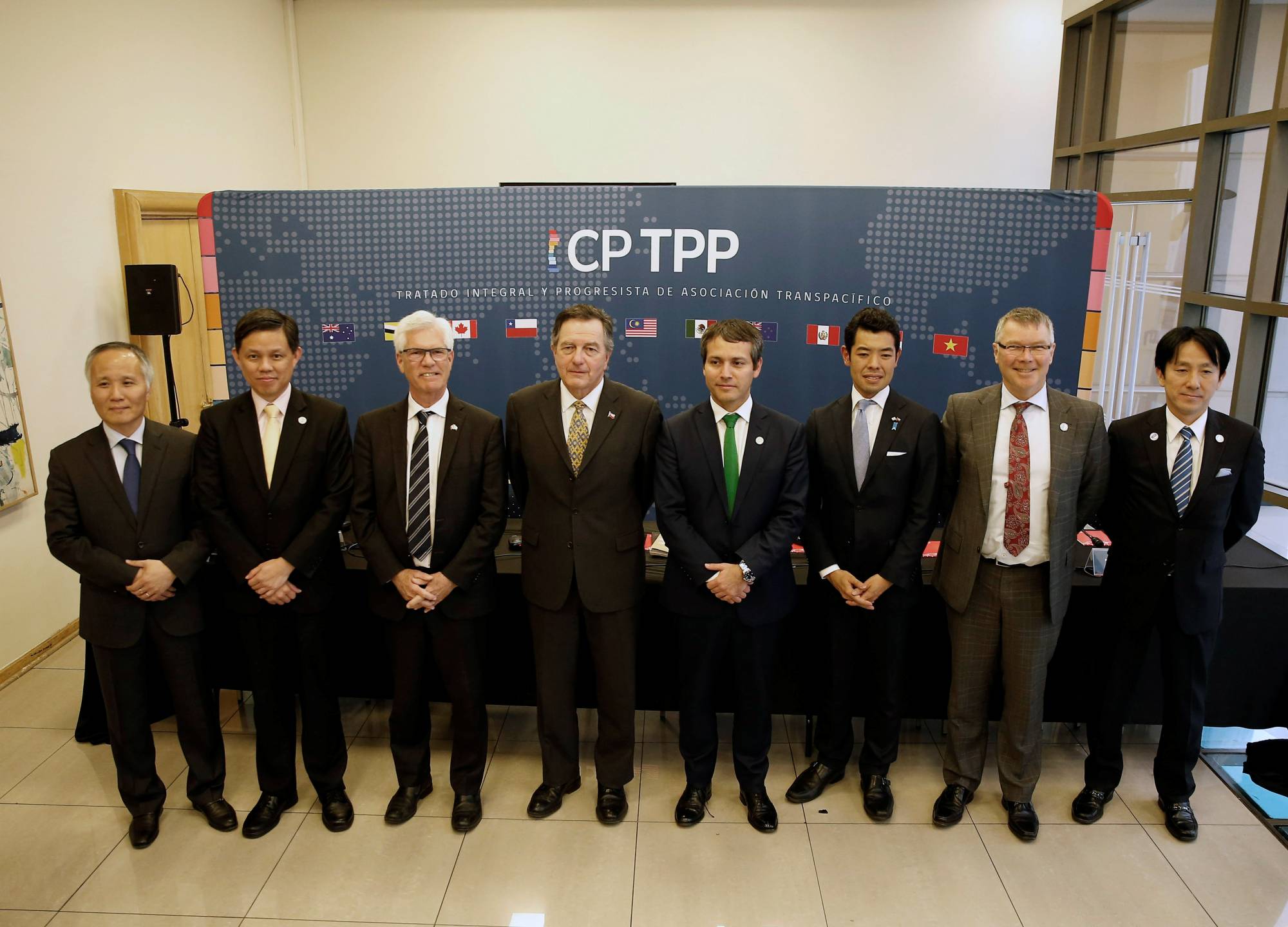
How did the stars align to make the Trans-Pacific Partnership a reality? The path toward the TPP’s conclusion has taken many dramatic twists and turns.
In October 2015, negotiations between 12 countries generated the basic outline of an agreement. This was the first act in the TPP drama.
Shortly after this, I visited Beijing at the invitation of a Chinese think tank. At a banquet, my seatmate — an important Chinese guest — could not conceal his amazement at the success of the TPP negotiations. Why did Japan agree to such extensive market liberalization? How did the Liberal Democratic Party convince Japanese rice farmers to go along with the agreement? Had Japan and the United States secretly made some kind of strategic pact? He could not make sense of it at all.
As the Obama administration’s efforts to build consensus for the TPP legislation in Congress stalled, however, the U.S. plunged into the 2016 presidential election. In January 2017, just three days after taking office, President Donald Trump announced that the U.S. would withdraw from the TPP.
The TPP could not go into effect without the U.S.
In a time of both misinformation and too much information, quality journalism is more crucial than ever.
By subscribing, you can help us get the story right.
With your current subscription plan you can comment on stories. However, before writing your first comment, please create a display name in the Profile section of your subscriber account page.