


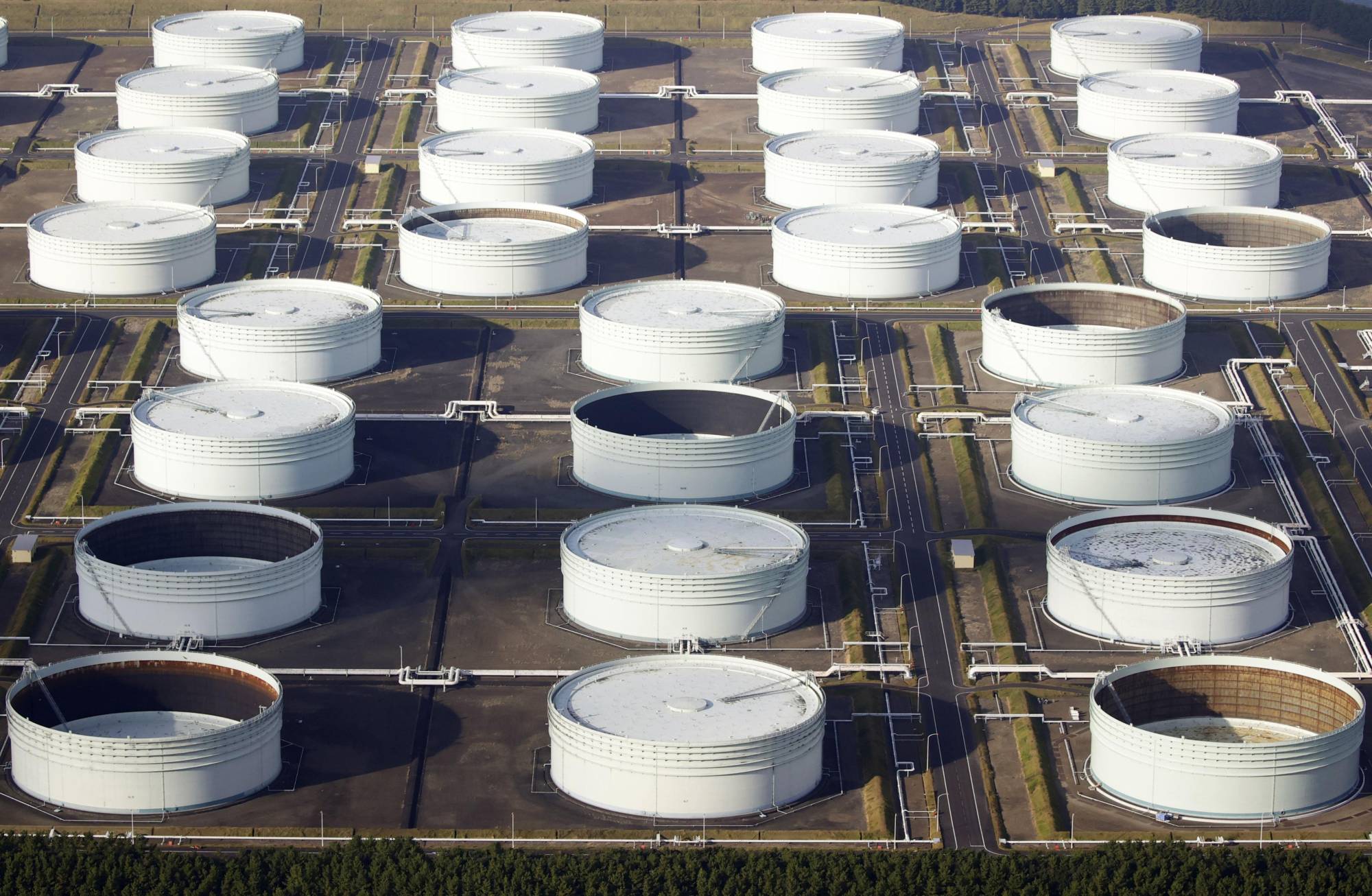
Prime Minister Fumio Kishida announced this week that Japan would, for the first time, release part of the government’s oil reserves to ease pressure on steadily rising oil prices.
While the move is being done in coordination with other nations, Japan is uniquely vulnerable to this problem. Unfortunately, the release is a veritable drop in the barrel when compared to demand for this vital commodity.
Energy price increases are to be expected as the global economy recovers from COVID-19. While efforts to ease that bottleneck are to be appreciated, they should be done in moderation, to avoid enduring market distortions and the promotion of greenhouse gas producing fuel consumption.
Crude oil constitutes 40% of Japan’s primary energy supply and the country imports 99.7% of its petroleum. That dependence and the resulting sense of vulnerability it creates have been a focus of Japanese foreign and economic policy for years. It motivated the adoption of nuclear power, a policy that has encountered difficulties of its own since the disaster at the Fukushima nuclear power plant in 2011, suspending operations at nuclear facilities across the nation.
The Petroleum Stockpiling Law, a product of the 1973 oil crisis, required Japan to create a reserve of crude oil and kerosene for use in emergencies. The law was amended after the 2011 crisis to include gasoline, fuel oil and light oil. The government is mandated to hold 90 days’ worth of daily imports in reserve, but total holdings by the public and private sectors, 145 days and 90 days, respectively, along with agreements with oil-producing countries, are the equivalent of 242 days’ worth of domestic consumption.
KEYWORDS
In a time of both misinformation and too much information, quality journalism is more crucial than ever.
By subscribing, you can help us get the story right.
With your current subscription plan you can comment on stories. However, before writing your first comment, please create a display name in the Profile section of your subscriber account page.