


Over the past few weeks, Alaska recorded record-high temperatures, scientists released a “report card” showing relentless deterioration of the Arctic’s climate, and researchers warned that an ice shelf in Antarctica could collapse within a few years, dramatically increasing the region’s contribution to rising sea levels.
These are signposts on a grim path. They show that damage to the cryosphere, the portions of Earth’s surface where ice predominates, is happening faster than many anticipated. After a year of promises — at the United Nations’ Glasgow climate conference and beyond — 2022 must be the year of concrete action, in particular at the Earth’s poles.
The annual Arctic health check produced by the U.S. National Oceanic and Atmospheric Administration provided a worrying snapshot. For the eighth year in a row, surface air temperatures in the High North were at least 1 degree Celsius (1.8 degrees Fahrenheit) above the long-term average. In April, the post-winter volume of sea ice — a crucial indicator — hit the lowest level since record-keeping began.
Since 1980, the Arctic has warmed nearly four times faster than the rest of the globe. This is partly due to feedback loops. Retreating sea ice exposes darker ocean, which absorbs sunlight rather than reflecting it, and hence causes more melting. It’s a similar story with thinning ice sheets and shrinking snow cover. Permafrost — which holds twice the present-day atmosphere’s load of carbon — is now thawing and releasing methane, which in turn is heating the atmosphere and worsening the thaw.
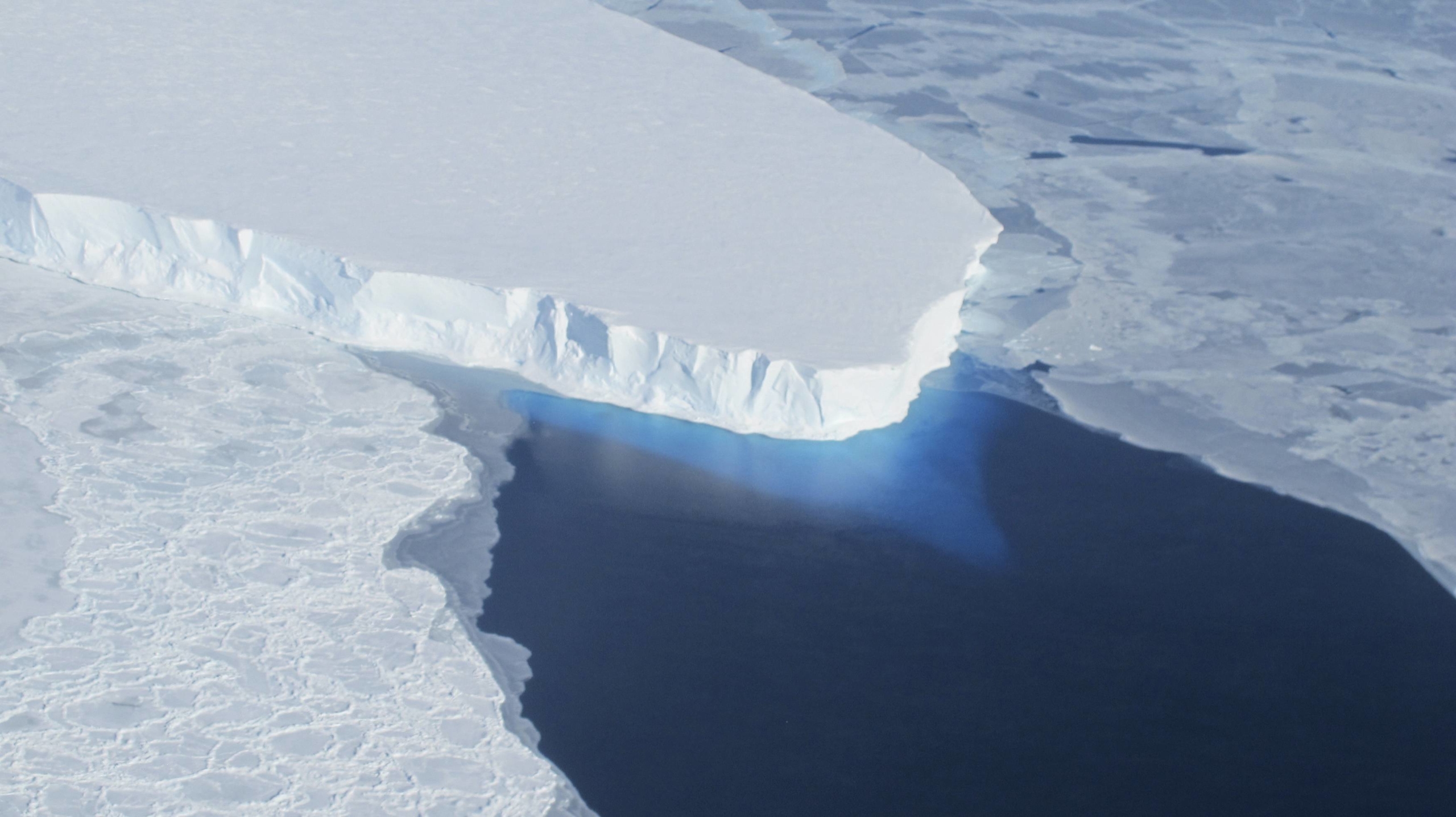
Antarctica tells a similar tale. An ice shelf has held the giant Thwaites Glacier in place like a cork, but researchers last month said warm water was melting it from below, while the grip of an undersea mountain that has pinned it in place is loosening. Increased fracturing could simply shatter it. If the Thwaites Glacier melted entirely, it would raise global sea levels by about two feet, threatening coastal cities.
KEYWORDS
In a time of both misinformation and too much information, quality journalism is more crucial than ever.
By subscribing, you can help us get the story right.
With your current subscription plan you can comment on stories. However, before writing your first comment, please create a display name in the Profile section of your subscriber account page.