


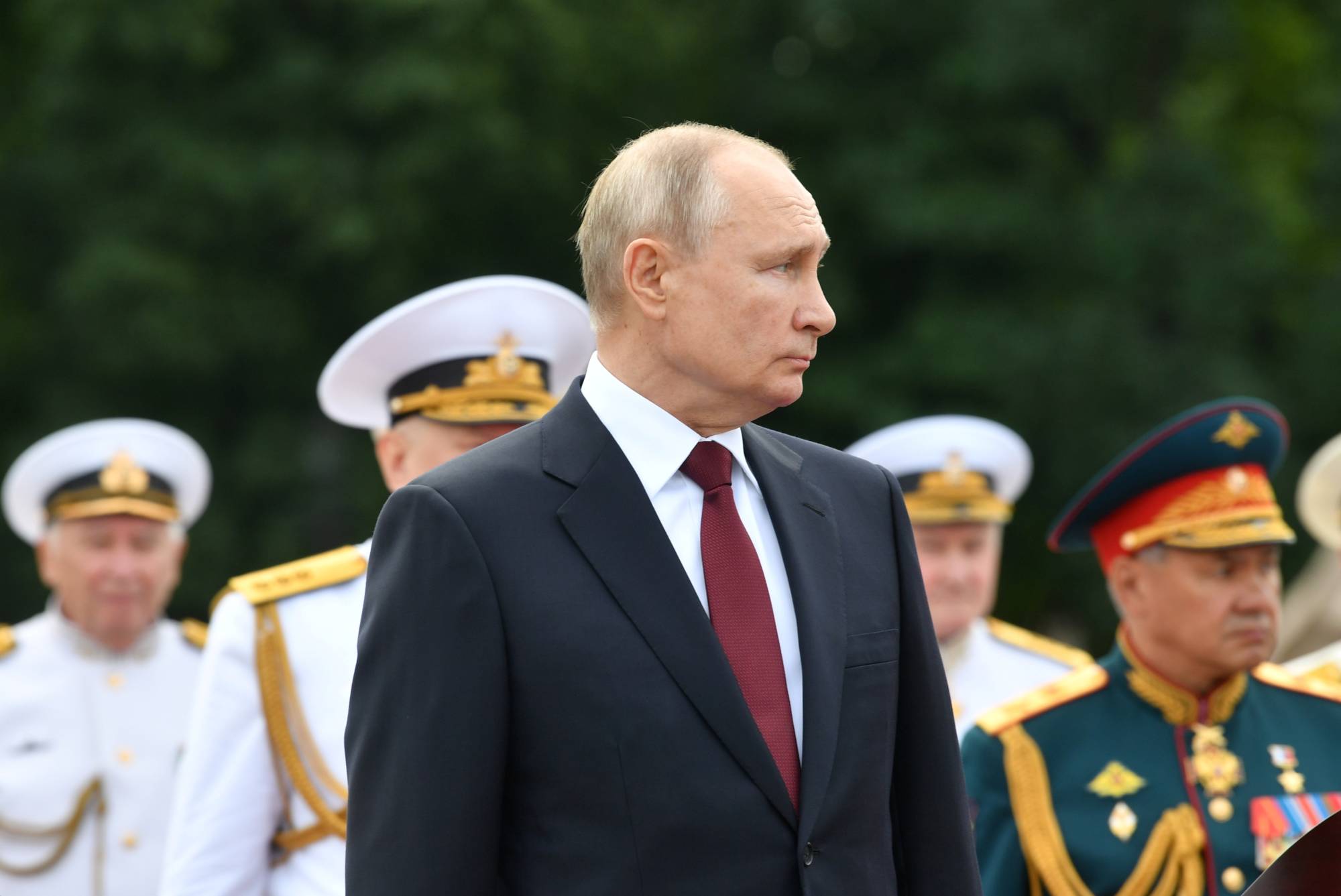
The world fears that Russian President Vladimir Putin is about to invade Ukraine, an act of naked aggression.
Many Westerners are rendered even more afraid by recognition that there is pathetically little they can do to stop him. No sane person believes that U.S. President Joe Biden — the only credible leader the Western democracies have — can or should threaten general war in response to such a Kremlin action.
We therefore face the repugnant prospect that Putin can succeed in his likely objective, overrunning a sufficient chunk of Ukraine to doom the rest of that country to become a failed state, subject to Moscow’s will.
Some commentators, most of them conservatives, respond by evoking the specter of the 1938 Munich agreement, whereby Britain and France acquiesced in Adolf Hitler’s dismemberment of Czechoslovakia, a state then less than 20 years old (it was born out of the wreck of the Austro-Hungarian empire after World War I). That was a shorter history than Ukraine claims today, having secured independence from Russia in 1991.
In almost every international crisis since the 1930s, the prospect of diplomatic compromise has been denounced by critics as “appeasement.” In 1956, when President Gamal Abdel Nasser of Egypt seized the Suez Canal from its British and French owners, U.K. Prime Minister Anthony Eden was fearful that if he acquiesced in Nasser’s action, he would be denounced as a new Neville Chamberlain, the prime minister who signed the 1938 deal. Thus, the British and French invaded Egypt, until forced to withdraw by Washington’s wrath.
KEYWORDS
In a time of both misinformation and too much information, quality journalism is more crucial than ever.
By subscribing, you can help us get the story right.
With your current subscription plan you can comment on stories. However, before writing your first comment, please create a display name in the Profile section of your subscriber account page.