


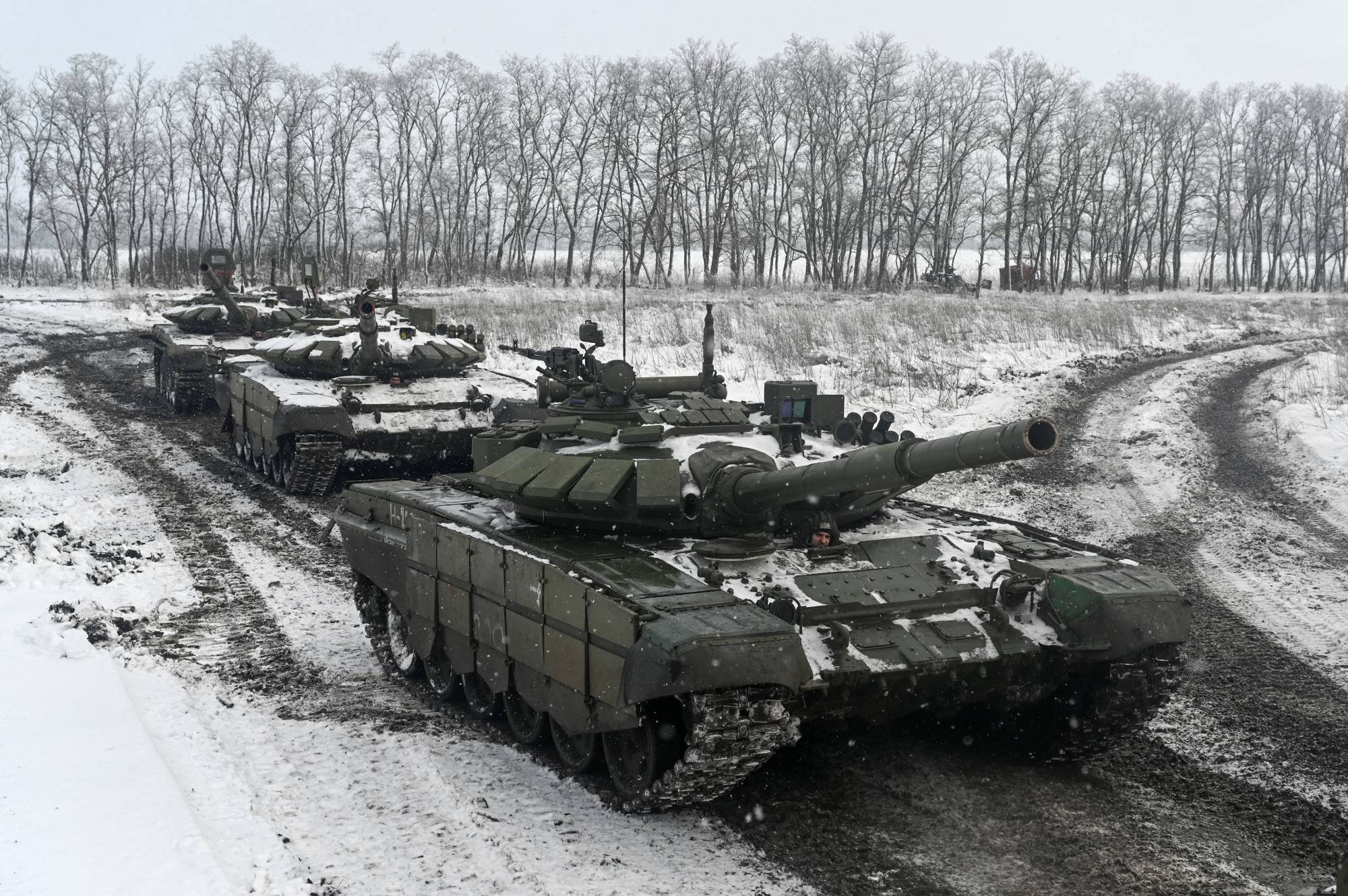
The West is facing its biggest crisis with Russia since the end of the Cold War, three decades ago.
Having massed over 100,000 troops on its border with Ukraine, the prospect of a large-scale land war on the European continent is very real. Moscow has presented an extensive list of demands to Washington and other Western capitals, but the bottom line for Russian President Vladimir Putin is simple: Russia is entitled to a sphere of influence in which its concerns override those of all other states. In his mind, only such an arrangement will provide the security and status that Putin believes his country deserves.
Those demands are unreasonable. All countries deserve security but not at the expense of the sovereign rights of others. Putin wants nothing less than a rewriting of the rules of international order. He must be resisted.
Angered by the steady expansion of Western influence eastward toward Russia’s borders, Putin has labored to create a buffer zone. If those governments resist him, he undermines them. In the case of Ukraine, the Kyiv government’s growing alignment with the West prompted him to reclaim Crimea in 2014 and foment unrest in and the possible partition of the eastern part of that country.
Like his fellow nationalists, Putin believes that Ukraine is not a real state but is an integral part of the Russian motherland. According to that logic, any demand by it, or another similarly situated county — i.e., a former Soviet republic — for autonomy from Russia must be the product of foreign subversion. Indeed, there is a pervasive belief among Russians that those countries are part of a plot to encircle, isolate and ultimately strangle their country.
In a time of both misinformation and too much information, quality journalism is more crucial than ever.
By subscribing, you can help us get the story right.
With your current subscription plan you can comment on stories. However, before writing your first comment, please create a display name in the Profile section of your subscriber account page.