


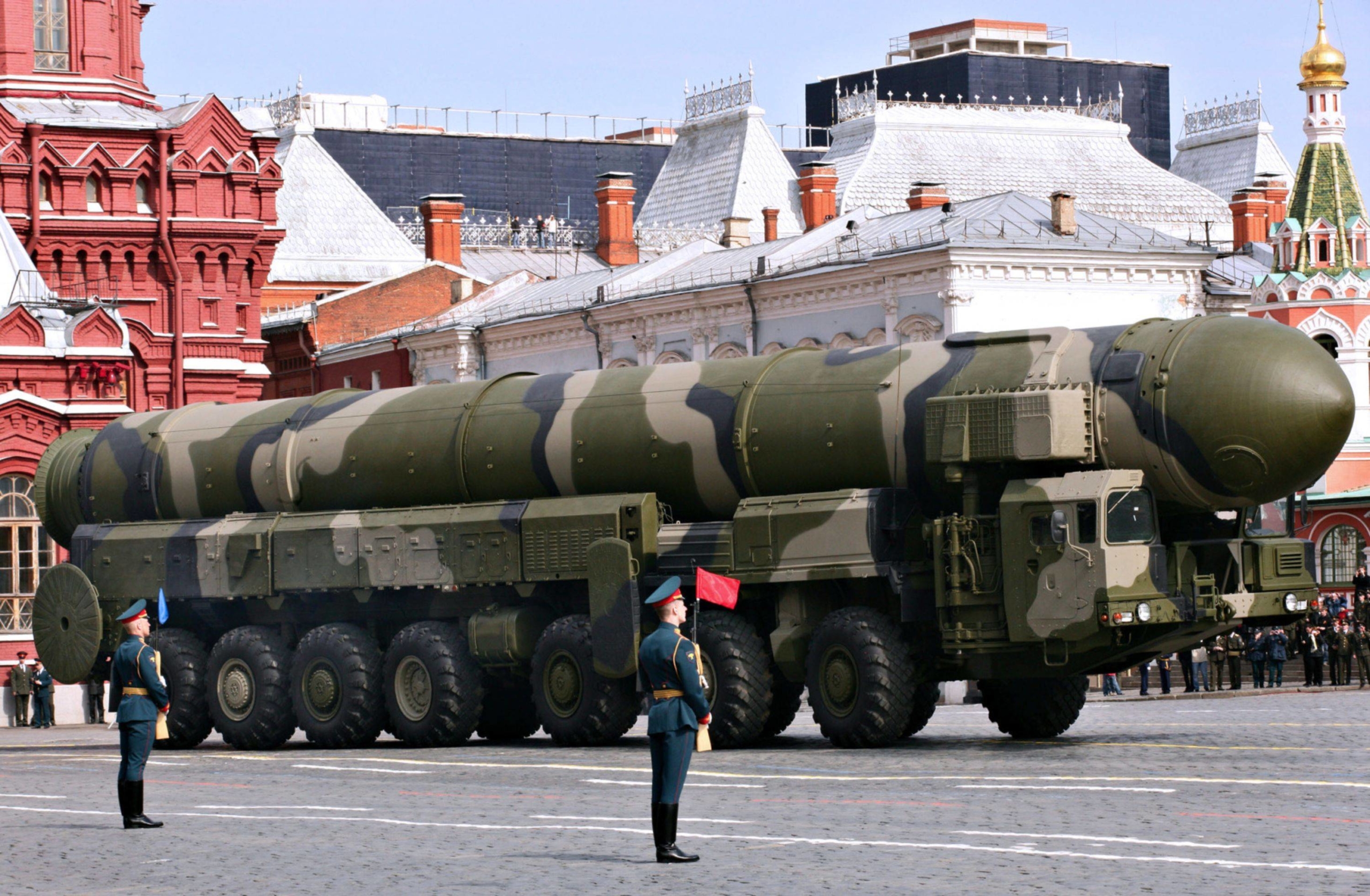
Among the many disturbing legacies of Russia’s invasion of Ukraine, one of the most alarming is its seeming confirmation of the utility of nuclear weapons.
The war has given policymakers and publics reason to believe that a nuclear arsenal contributes to national security. If those conclusions go unchallenged, nuclear proliferation is likely to follow. Nothing could be more dangerous.
The nuclear shadow has clouded the Ukraine conflict. Weeks before the invasion, Russia conducted maneuvers with its nuclear forces which, when combined with the marshaling of its military on the Ukraine border, signaled Moscow’s readiness to fight with all its capabilities. Shortly after the invasion began, Russian President Vladimir Putin said that he was putting his country’s “deterrent forces” — its nuclear weapons — on “a special regime of alert” and warned that intervention by the West would lead to “consequences you have never seen.”
Other Russian officials officials underscored their country’s nuclear options. Dmitry Medvedev, deputy chairman of the national security council, reminded the world that Russian doctrine allows nuclear strikes against an enemy that only uses conventional weapons. He added “that we are ready to give a worthy response to any infringement on our country, on its independence.”
Russian Foreign Minister Sergey Lavrov warned that the risks of nuclear war are now “very, very significant and should not be underestimated,” while Defense Minister Sergei Shougu said that nuclear “readiness” was a priority. Since Russia possesses the world’s largest stockpile of nuclear weapons — approximately 6,000 warheads — those comments must be taken seriously.
KEYWORDS
In a time of both misinformation and too much information, quality journalism is more crucial than ever.
By subscribing, you can help us get the story right.
With your current subscription plan you can comment on stories. However, before writing your first comment, please create a display name in the Profile section of your subscriber account page.