


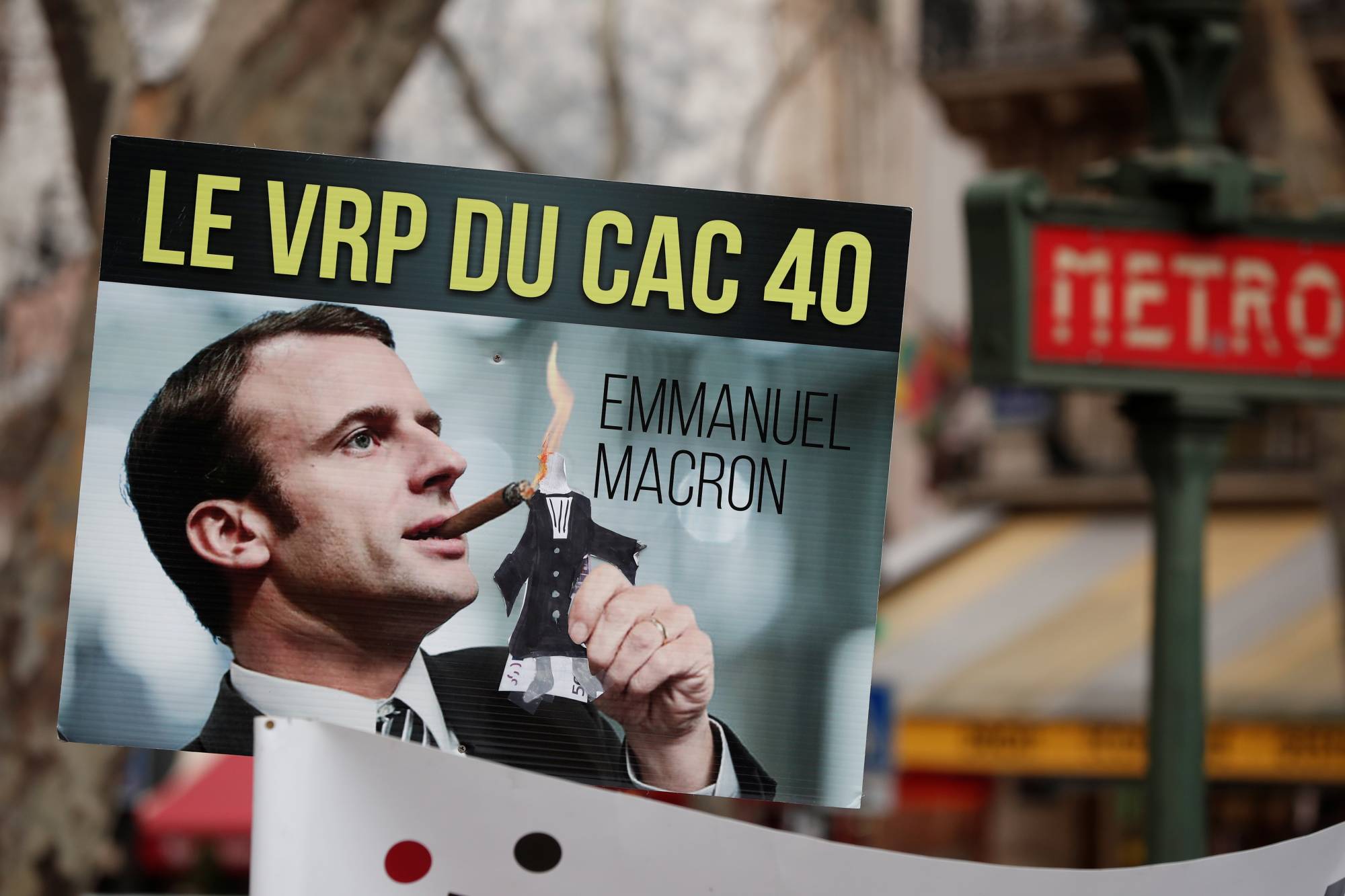
Like a lot of politicians, France’s Emmanuel Macron idolizes tech startups.
They are seen to provide jobs, opportunity and entrepreneurship in a country needing all three and they’re a benign counterweight to the establishment titans on the blue-chip CAC 40 stock index.
Hence the online celebrations from Macron’s government this week as France added a 24th “unicorn” to its list of home-grown billion-dollar startups: Fintech firm Qonto was valued at $5.5 billion after raising funds. There’s been debate over whether France has 23, 24 or 25 unicorns; either way it’s highly likely that Macron will soon announce he’s hit his 2025 target of 25 unicorns about three years ahead of schedule.
But the president would be wise to interrupt the chest-beating with some self-reflection.
For a supposedly mythical creature, startup unicorns are starting to look as common as everyday ponies. After all, what may be exciting for a country that had only four unicorns in 2018 barely registers at the global level: The U.S. boasts 644 unicorns, the U.K. 51 and Germany 33, according to data from analytics firm dealroom.co., which sees France as having 25. Whatever tide is lifting French boats is doing the same globally. There was a rapid 69% rise in startup valuations around the world last year, according to CBInsights, birthing 517 new unicorns for a total of 959.
KEYWORDS
In a time of both misinformation and too much information, quality journalism is more crucial than ever.
By subscribing, you can help us get the story right.
With your current subscription plan you can comment on stories. However, before writing your first comment, please create a display name in the Profile section of your subscriber account page.