


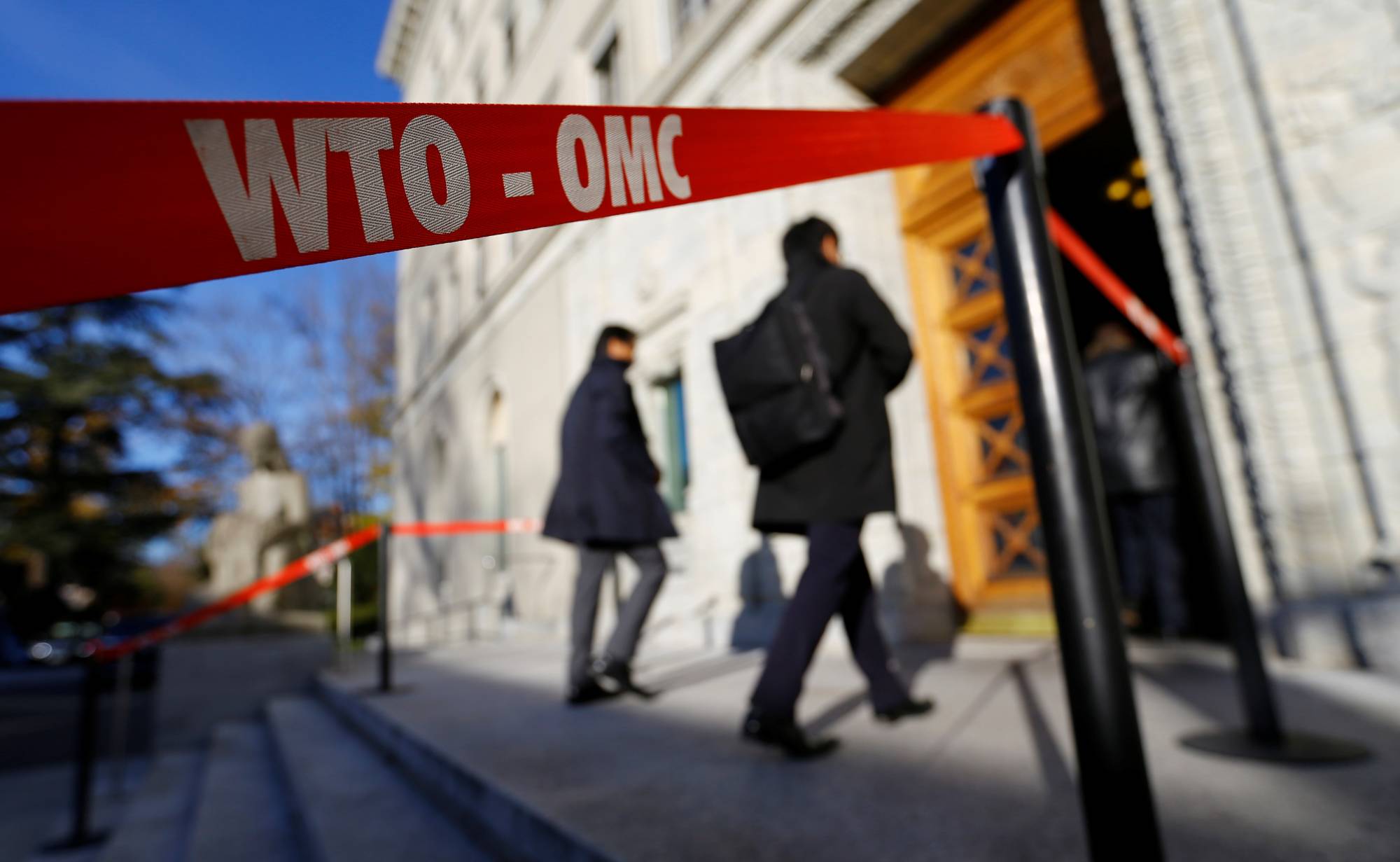
That the World Trade Organization was able to come to any kind of deal at its 12th ministerial meeting this month was something of a miracle.
The organization has been dead for years as a location for trade governance — and even longer as a place for successful negotiations.
In fact, reports of the WTO’s continued existence are greatly exaggerated. Until the two most influential trading powers in the world — the United States and China — commit to reform, the organization will continue to decline into irrelevance.
It is true that the deals struck recently mark two major steps forward for the WTO. While an agreement to limit subsidies for commercial fishing may have ended up much more modest in scope than originally envisaged, it injects the question of environmental sustainability into global trade policy for the first time. Most developing countries have long preferred to address environmental issues separately through the United Nations, correctly viewing them as a possible source of nontariff barriers against emerging-economy exporters.
The second sign of progress was China’s tacit acceptance that it cannot always and perpetually claim the special benefits granted to developing economies at the WTO. The vaccine IP waiver countries agreed upon effectively excluded large exporters — in this case, China — from benefiting.
KEYWORDS
In a time of both misinformation and too much information, quality journalism is more crucial than ever.
By subscribing, you can help us get the story right.
With your current subscription plan you can comment on stories. However, before writing your first comment, please create a display name in the Profile section of your subscriber account page.