


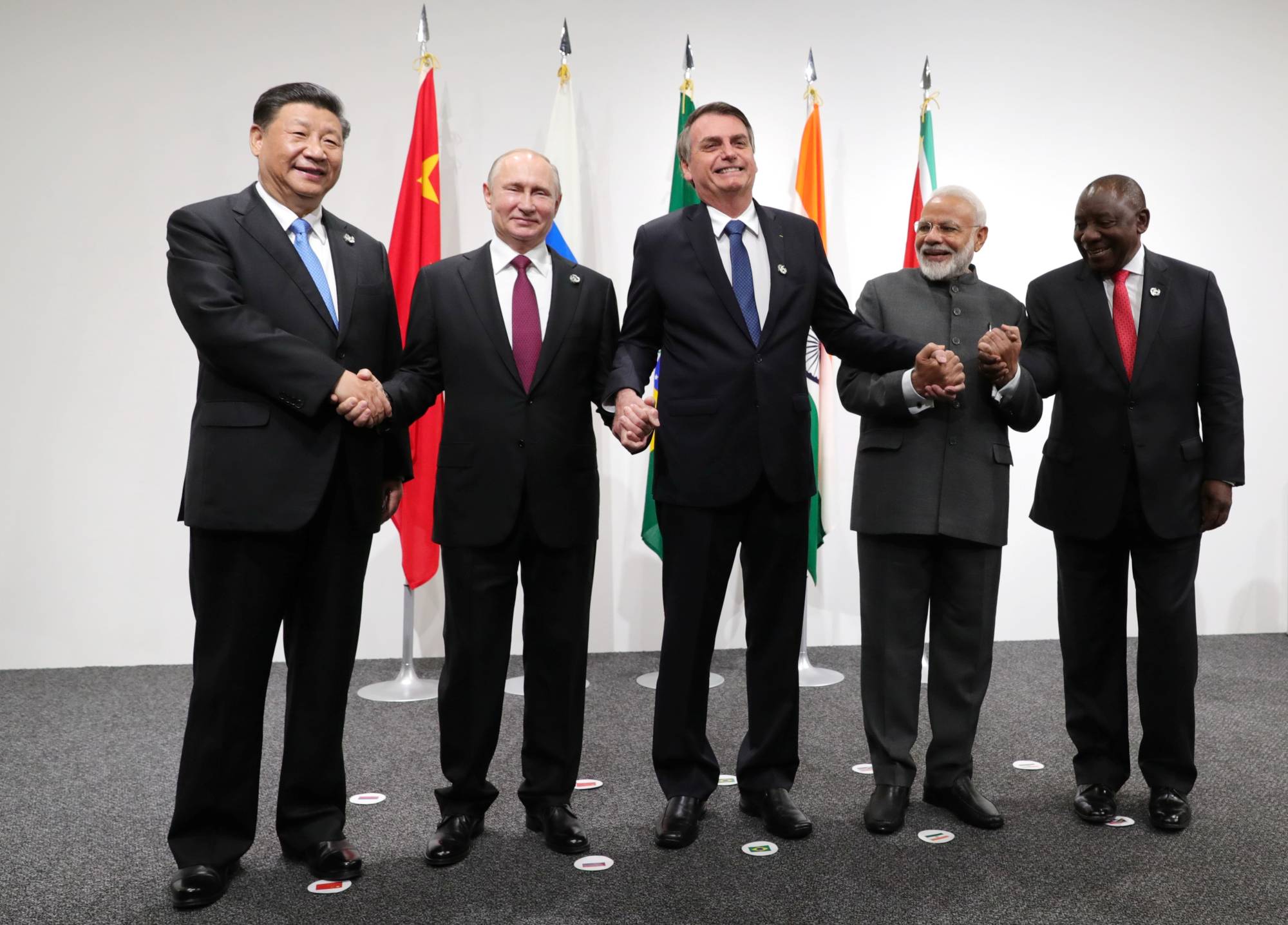
NEW DELHI – The recent virtual BRICS summit, which brought together the heads of state and government of Brazil, Russia, India, China and South Africa, was interesting as much for what did not happen as for what did.
The two-day gathering was marked by some constructive discussion but also platitudes and pablum, and concluded with a grandly titled but thoroughly anodyne “Beijing Declaration.”
Few doubt the huge potential of the BRICS, which comprises the world’s two most populous countries (China and India), a former superpower (Russia), and two of the biggest economies in Latin America and Africa. But the grouping’s record since the first annual BRIC meeting in 2009 (South Africa joined the bloc the following year) has mostly been a story of lofty rhetoric and chronic underachievement.
The Beijing Declaration states that the BRICS High-Level Dialogue is an opportunity to deepen cooperation in the fight against COVID-19, digital transformation, supply-chain resilience, stability and low-carbon development. All these goals are being pursued in a variety of multilateral forums.
More hypocritically, the declaration condemned terrorism and called for the finalization and adoption of the Comprehensive Convention on International Terrorism within the United Nations framework. This rang rather hollow, since the summit took place just days after China blocked a joint proposal by India and the United States to designate the Pakistan-based terrorist Abdul Rehman Makki as an international terrorist under the provisions of the U.N. Sanctions Committee.
KEYWORDS
In a time of both misinformation and too much information, quality journalism is more crucial than ever.
By subscribing, you can help us get the story right.
With your current subscription plan you can comment on stories. However, before writing your first comment, please create a display name in the Profile section of your subscriber account page.