


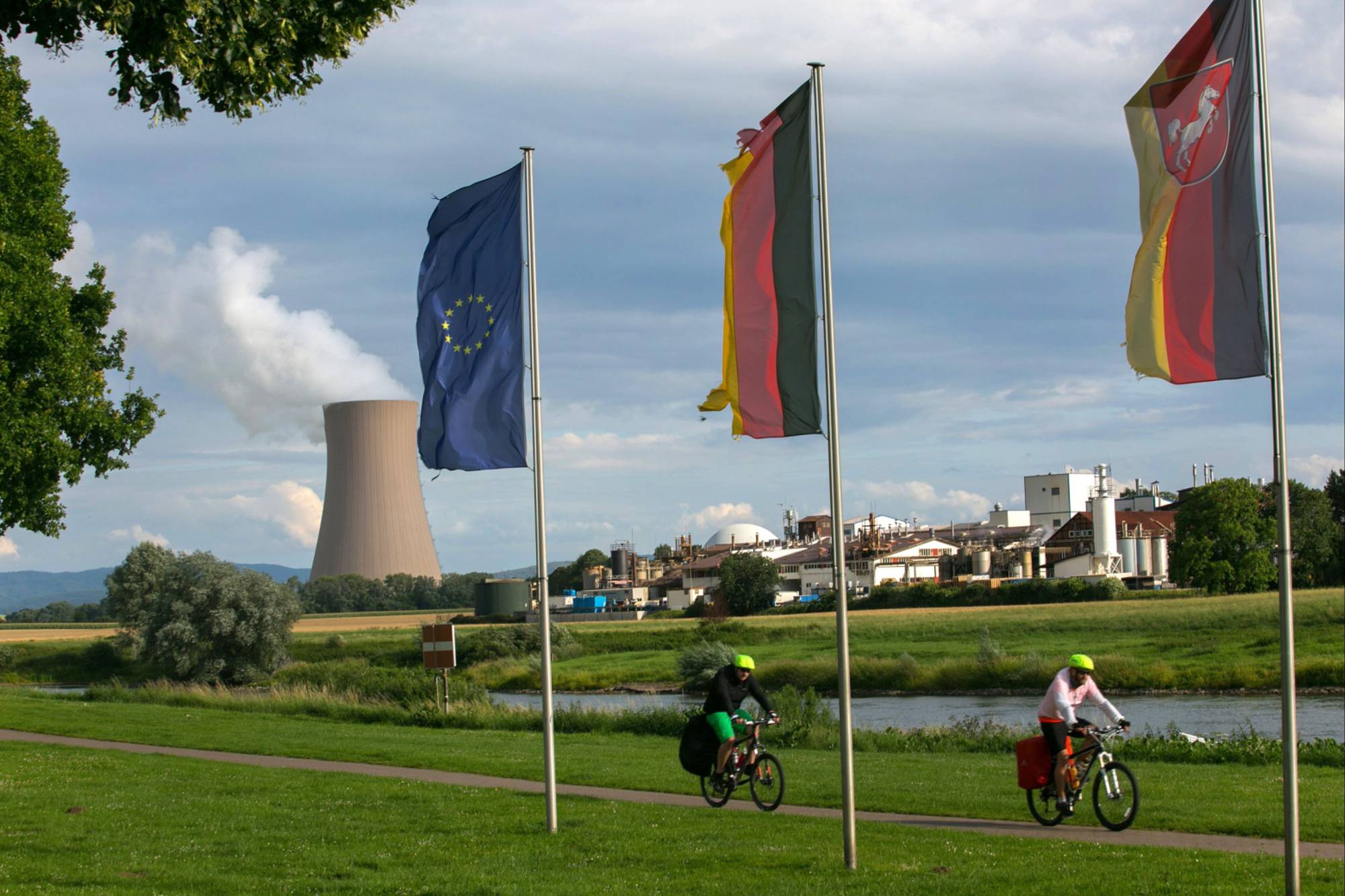
It’s getting hard to keep count of Germany’s “exits.” I’m talking about those pertaining to nuclear energy. Let’s see. I think we’re between three and four now, but closer to four.
Nuclear exit 1 began in 2000. The government back then consisted of the center-left Social Democrats and the Greens. The latter were in power for the first time, having grown out of the hippie counterculture of the 1970s, and in particular the German mass movement against nuclear energy. So Germany decided to phase out its nuclear power plants.
Exit 2 happened in 2010. The government, by then consisting of the center-right Christian Democrats and the pro-business Free Democrats, decided to exit from the first exit and keep the remaining nuclear plants running. Exit 3 followed within a year, after the nuclear disaster in Fukushima, Japan. It spooked the government into exiting from its own exit of the preceding exit. That is, Germany again began phasing out nuclear power.
The country’s last three fission reactors are due to go offline at the end of this year. Bad timing, obviously. This is the year Russian President Vladimir Putin chose to attack Ukraine and declare economic war on the European Union. He’s already throttling the natural gas that used to gush from Russia to central Europe.
Germany, in particular, relies on that gas. It mainly needs the stuff to fuel factories and heat homes. But gas was also supposed to fill the gap in power generation left by the nuclear energy being phased out — which still accounted for 12% of electricity last year.
KEYWORDS
In a time of both misinformation and too much information, quality journalism is more crucial than ever.
By subscribing, you can help us get the story right.
With your current subscription plan you can comment on stories. However, before writing your first comment, please create a display name in the Profile section of your subscriber account page.