


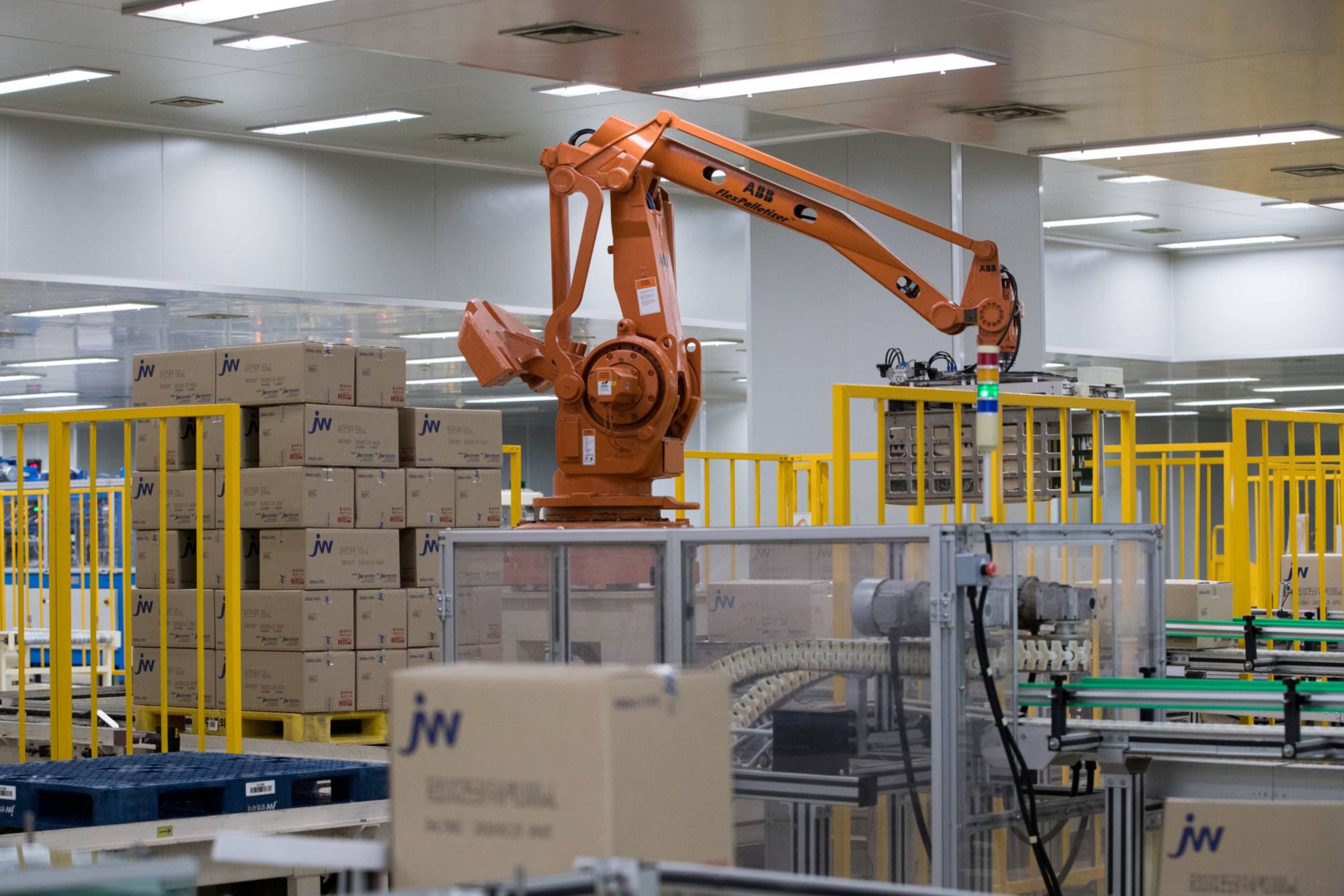
For those who believe that the surge of interest in warehouse automation and robotics was just a pandemic fling that will fade as the labor market loosens, meet Malcolm Wilson.
He’s the chief executive officer of GXO Logistics Inc., which operates about 900 warehouses, mostly in the U.S. and Europe for customers including Nike Inc. and Nestle SA. The Greenwich, Connecticut-based company, which cobbles together different types of robots tailored to a client’s needs, signed up a record $475 million of new business in the second quarter and has a pipeline of automated logistics projects that extend into 2024.
Even though GXO is one of the most advanced warehouse operators, the trend of adopting automation is only getting started. About a third of GXO’s warehouses are automated, double the percentage of about five years ago. GXO expects to have 60% to 70% of its warehouses operating mostly with machines in the next five years, he said. The warehousing industry as a whole is only about 5% automated, he said in a phone interview.
That will change, and it’s a transformation that is picking up speed. In the U.S., orders for industrial robots rose to a record 40,000 last year from 31,000 in 2020 and 30,000 in 2019. If anything, the U.S. lags behind on robot adoption. In the latest worldwide data from the International Federation of Robotics, Asia’s installations of 266,000 robots in 2020 topped those in the Americas by more than sixfold. For robot density, which measures the number of these machines for every 10,000 workers, the U.S. is seventh, trailing manufacturing powerhouses such as South Korea, Japan and Germany.
The pandemic and the lingering labor shortage that came with it will accelerate this adoption of automation, which should be viewed as beneficial for the economy, for companies and even for workers. It bolsters productivity, which allows salaries to rise without adding to inflation.
KEYWORDS
In a time of both misinformation and too much information, quality journalism is more crucial than ever.
By subscribing, you can help us get the story right.
With your current subscription plan you can comment on stories. However, before writing your first comment, please create a display name in the Profile section of your subscriber account page.