


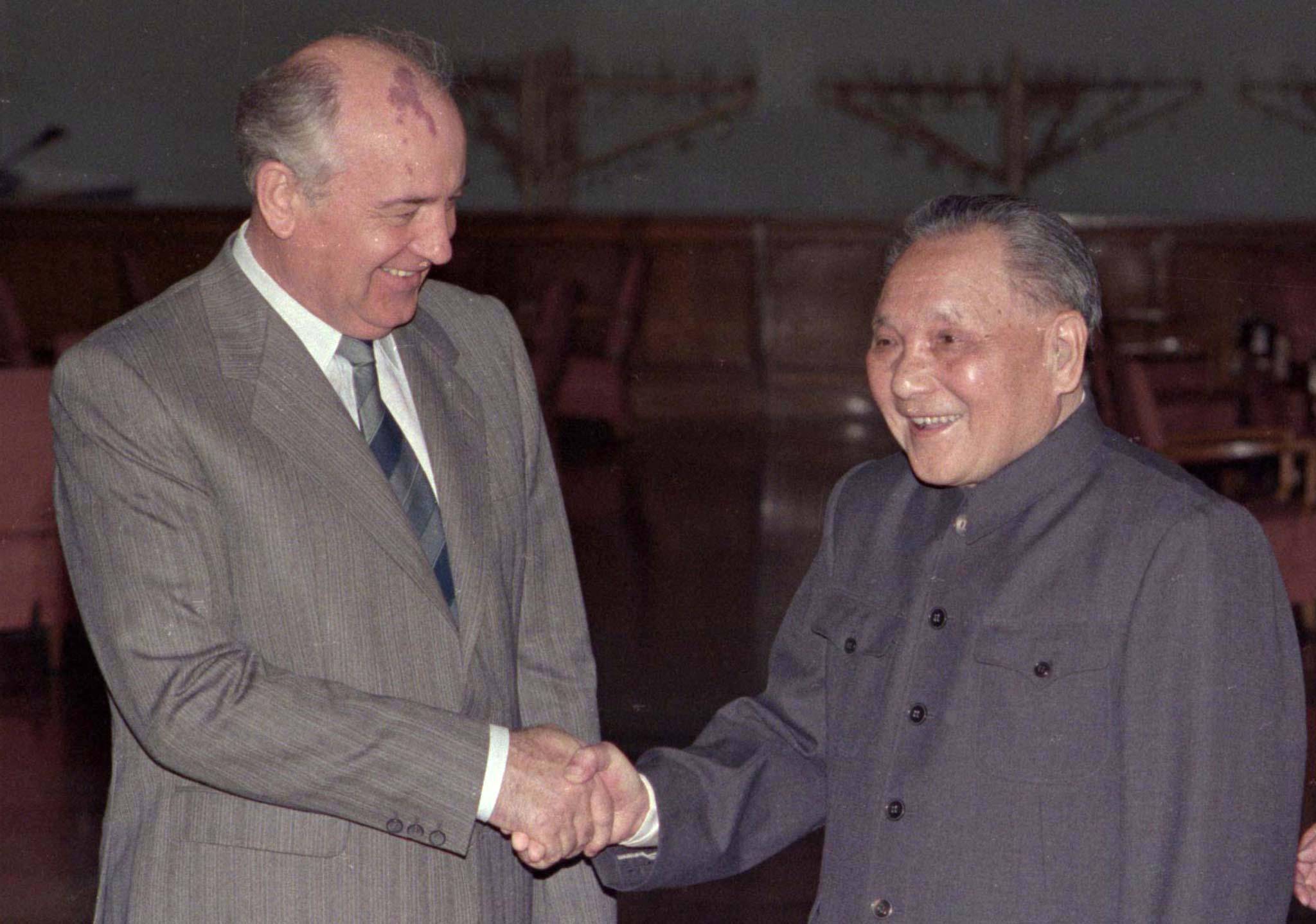
CLAREMONT, CALIFORNIA – There was a time when well-meaning, if not wishful-thinking, Westerners thought that “China’s Gorbachev” was the highest compliment they could pay a Chinese leader who looked like a reformer.
But when Zhu Rongji, the straight-talking mayor of Shanghai, visited the U.S. in July 1990, and some Americans called him that, the future premier was not amused. “I am not China’s Gorbachev,” Zhu reportedly snapped. “I am China’s Zhu Rongji.”
We will never know what Zhu, widely admired for implementing key reforms in the 1990s and spearheading China’s successful efforts to join the World Trade Organization, really thought about Mikhail Gorbachev, the last Soviet leader, who died on Aug. 30. What we do know for certain is that, in the eyes of most leaders of the Communist Party of China, Gorbachev committed the unforgivable crime of causing the collapse of the Soviet Union.
At the most practical level, the CPC’s vilification of Gorbachev makes little sense. Sino-Soviet relations improved dramatically during his six-year reign. The collapse of the Soviet Union was also a geopolitical boon to China. The lethal threat from the north nearly disappeared overnight, while Central Asia, formerly part of the Soviet space, suddenly opened up, enabling China to project its power there. Most importantly, the end of the Cold War, for which Gorbachev deserves much credit, ushered in three decades of globalization that made China’s economic rise possible.
The only plausible explanation for the CPC’s antipathy toward the former Soviet leader is its fear that what Gorbachev’s glasnost and perestroika accomplished in the former Soviet Union — the dissolution of a once-mighty one-party regime — might also happen in China. Chinese rulers do not share President Vladimir Putin’s view that the collapse of the Soviet Union was a “major geopolitical catastrophe” of the 20th century. To them, the fall of the USSR was a major ideological catastrophe that cast a shadow over their own future.
KEYWORDS
In a time of both misinformation and too much information, quality journalism is more crucial than ever.
By subscribing, you can help us get the story right.
With your current subscription plan you can comment on stories. However, before writing your first comment, please create a display name in the Profile section of your subscriber account page.