


If ever there was a time for the United Nations to show its utility, it would be when one member state was invaded by another and the rule-based international order, the cornerstone of the U.N. system, would appear threatened as a result.
Instead, the world body has been shaken, incapable of mustering action to protect a member, itself or the order that gives the institution meaning and purpose.
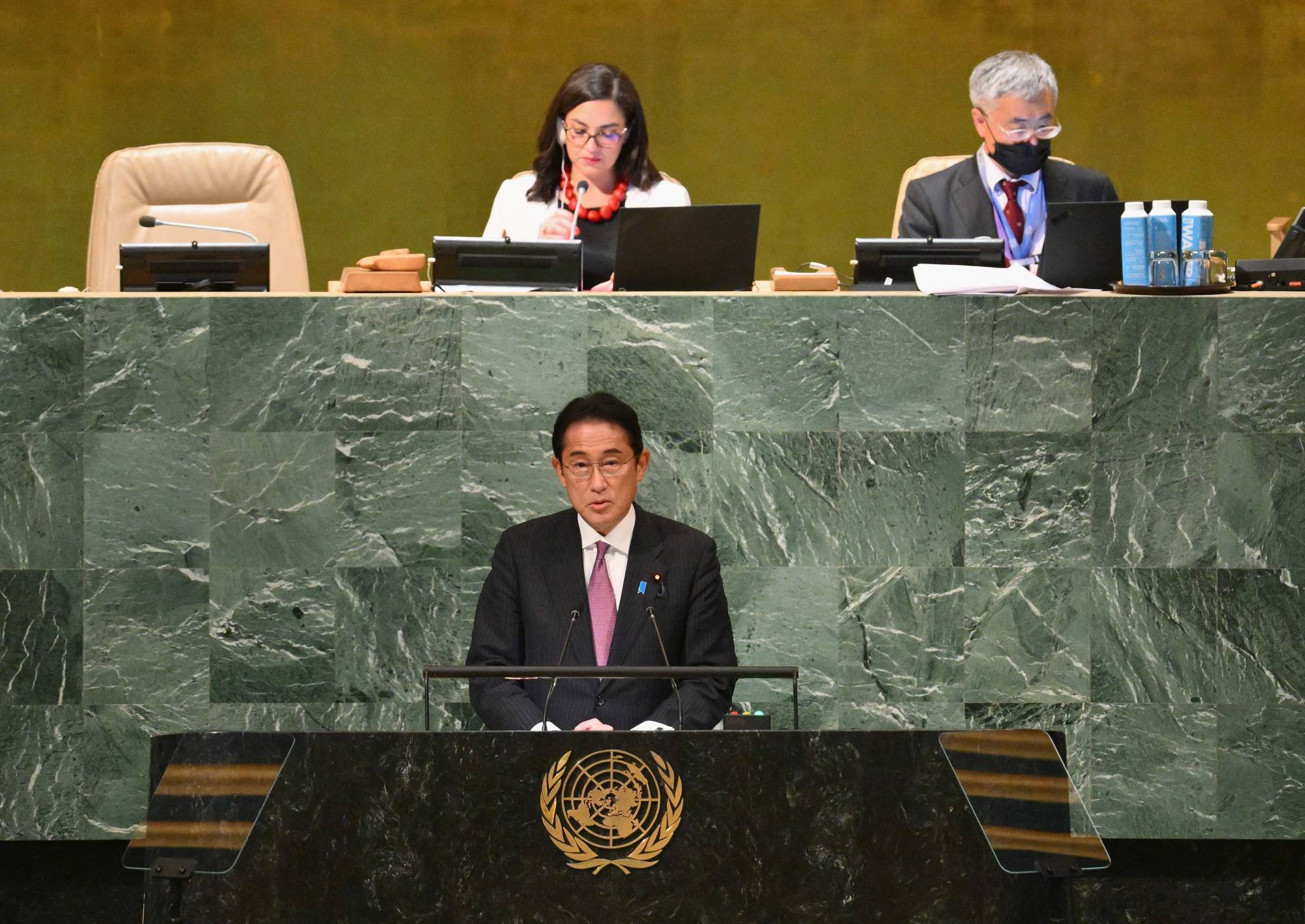
Prime Minister Fumio Kishida condemned the impotence of the world body and called for structural reform in remarks to the United Nations General Assembly earlier this week. He is not the first Japanese prime minister to make this case, but few have done so at a time of greater peril or urgency.
U.N. Secretary-General Antonio Guterres is right to warn that the “United Nations Charter and the ideals it represents are in jeopardy.” The “colossal global dysfunction” that he bemoaned in remarks to the annual opening of the General Assembly is the result of more than just the war in Ukraine. It encompasses the inflation that has been triggered and the global food crisis that has followed in its wake. It includes the inability to address climate change despite its intensifying and terrifying impacts. It is vast human migration triggered by man-made and natural causes. It is widening inequality that compounds the consequences of all other challenges.
None of these problems is unprecedented or unpredicted. We have watched them unfold. We have let them metastasize. Guterres’ conclusion is hard to wave away: “The international community is not ready or willing to tackle the big dramatic challenges of our age” even though they “threaten the very future of humanity and the fate of our planet.”
In a time of both misinformation and too much information, quality journalism is more crucial than ever.
By subscribing, you can help us get the story right.
With your current subscription plan you can comment on stories. However, before writing your first comment, please create a display name in the Profile section of your subscriber account page.