


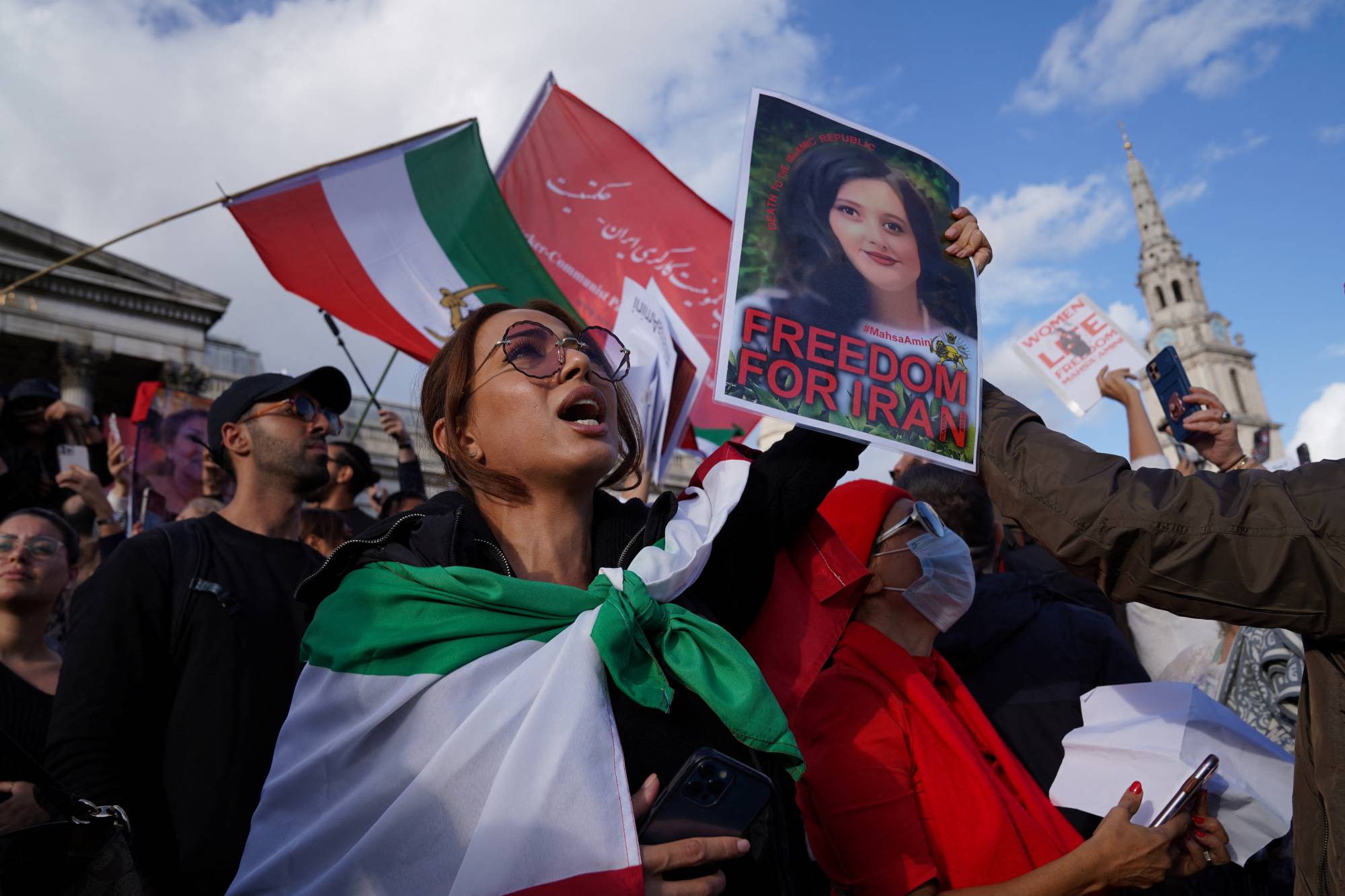
PERTH, Australia – In the 43 years since its founding, Iran’s Islamic Republic has overcome numerous internal and foreign policy challenges.
But the massive public protests that erupted across the country last month following the death of 22-year-old Mahsa Amini, who died in custody after the morality police arrested her for “improperly” wearing her hijab, pose a major threat to the regime. Iran is in the grip of what may be its most serious crisis.
When the Islamic Revolution toppled the pro-Western monarchy of Mohammad Reza Shah Pahlavi and installed Ayatollah Ruhollah Khomeini as the country’s Supreme Leader, Western observers doubted that a theocratic regime would last long. Some analysts argued that religious fundamentalists could not possibly have the necessary skills or experience to run a sophisticated country like Iran.
But the regime has withstood all of its domestic challenges by combining a combative (jihadi) line with Khomeini’s pragmatic (ijtihadi) approach. Khomeini’s successor, 83-year-old Ayatollah Ali Khamenei, has followed his predecessor in balancing ideological and practical considerations to ensure the regime’s survival.
As Supreme Leader, Khamenei is the embodiment of the “sovereignty of God” — a status that has helped him to prevail over presidents and other elected officials who merely represented the sovereignty of the people. When Khamenei sensed a serious threat to his authority and the state’s instruments of power, especially the Islamic Revolutionary Guard Corps, he consented to internal reform and showed pragmatism in his foreign policy, supporting the 2015 Iran nuclear agreement, for example, as an act of “heroic flexibility.” But, otherwise, he has remained iron-fisted at home and defiant in the face of Western pressure over Iran’s nuclear program and regional influence.
KEYWORDS
In a time of both misinformation and too much information, quality journalism is more crucial than ever.
By subscribing, you can help us get the story right.
With your current subscription plan you can comment on stories. However, before writing your first comment, please create a display name in the Profile section of your subscriber account page.