


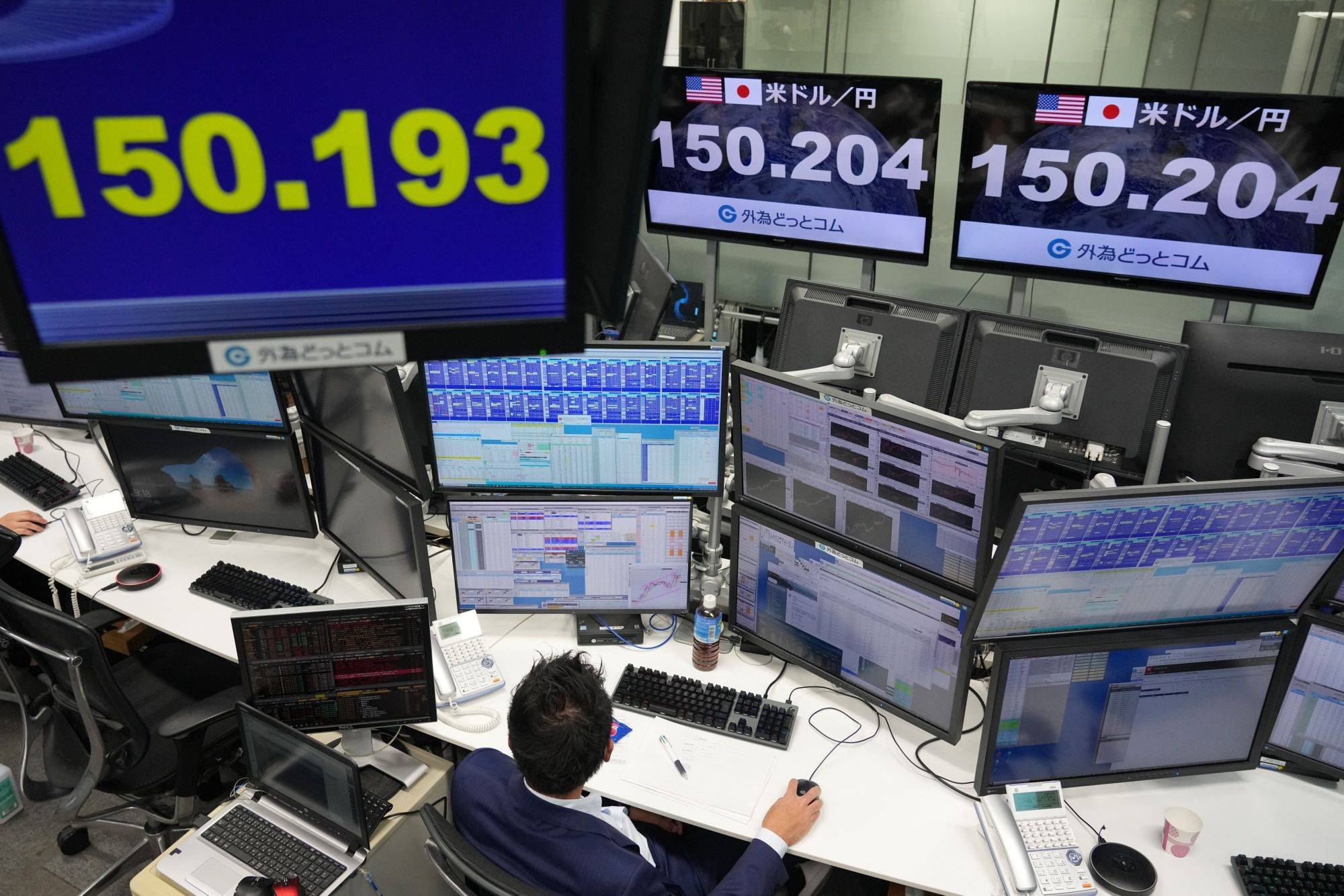
As the yen surpassed the 150 per dollar level, Japan’s economic and financial policy makers face growing pressure to change course.
A currency this weak is bad for Japan, bad for Asia and bad for the world. Measures to strengthen the yen threaten efforts to promote stable and sustainable price increases and grow wages as a result, however. Raising interest rates — the principle measure readily available to strengthen the currency — could also increase the government’s debt burden, an ominous concern when that deficit is already twice the country’s gross domestic product.
Japanese policy makers can take some solace from the fact that the factor driving this situation is the strong dollar. That does not release them from an obligation to minimize the impact of decisions made in Washington and protect this country’s economy.
The yen has been steadily declining in value against the U.S. dollar. This week it surpassed the 150 level, its lowest point in 32 years. That represents a loss of some 23% of its value against the dollar this year.
That slide prompted the Finance Ministry — the part of the government responsible for the yen’s value — to intervene in currency markets for the first time in 28 years. Last month, it spent ¥2.8 trillion ($19.5) to prop up the yen when it hit the 145 level. There are reports of “stealth intervention,” or spending to support the currency without official acknowledgement by the government.
KEYWORDS
In a time of both misinformation and too much information, quality journalism is more crucial than ever.
By subscribing, you can help us get the story right.
With your current subscription plan you can comment on stories. However, before writing your first comment, please create a display name in the Profile section of your subscriber account page.