


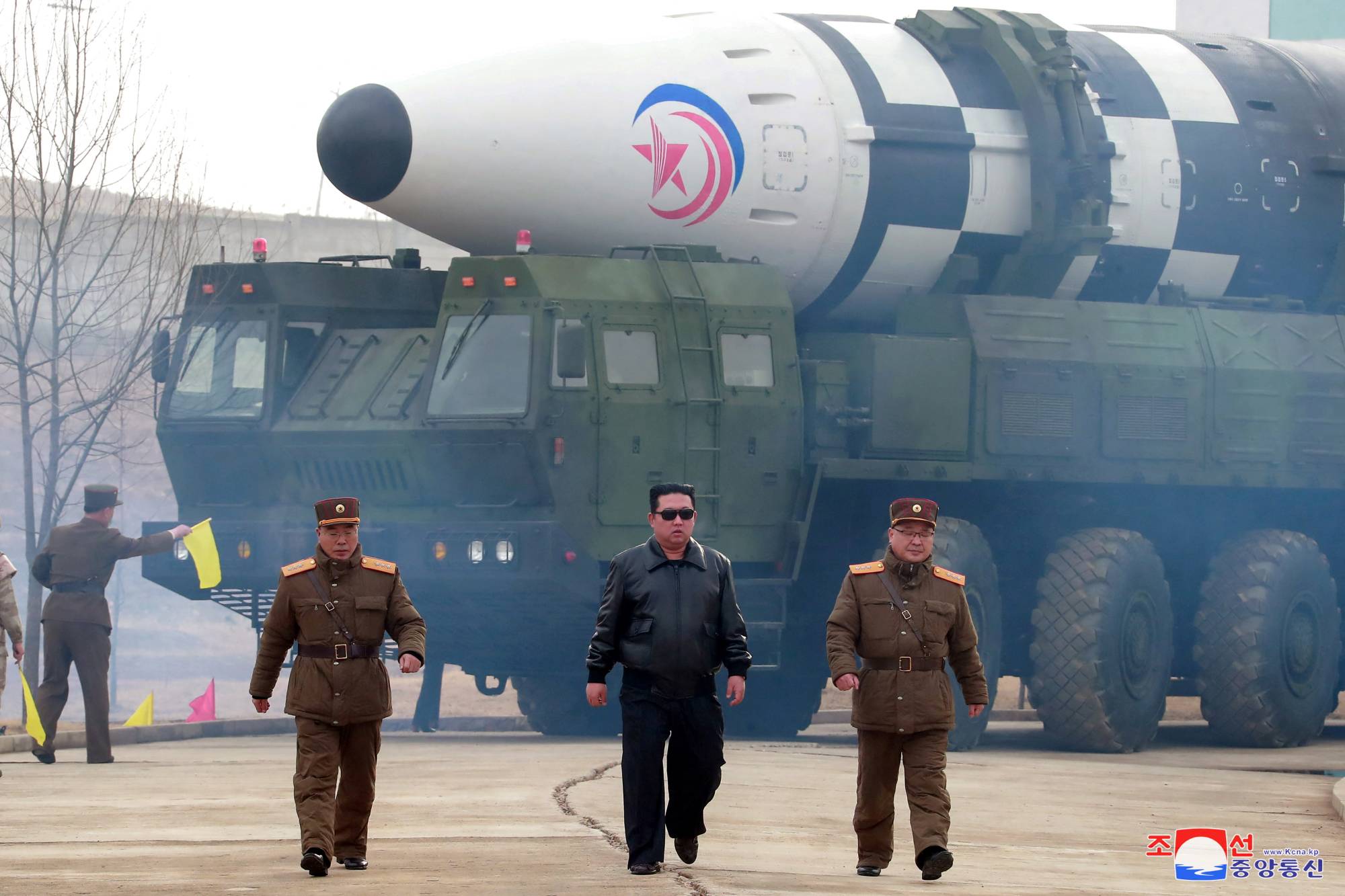
The recent wave of North Korean missile tests and other military provocations has sparked a flurry of supposition about the country’s motivation.
Much of this speculation, however, shares a common flaw: the assumption that North Korea’s actions should be understood in connection to external rather than internal factors.
Some see the tests as a response to recent South Korea-U.S. military drills and an effort to perfect North Korea’s defensive capabilities. Others claim they are part of leader Kim Jong Un’s strategy to win concessions from the outside world by creating a crisis that he can then defuse in exchange for certain benefits. Some see it as part of an offensive tactic intended to pressure the South and pave the way for eventual conquest. Still others put the Ukraine War at the heart of the story, claiming that Kim is inspired by the success of Putin’s nuclear threats in Ukraine and feels confident that the war will prevent any substantial response against the North.
Such views, however, reflect a Western-centric perspective that overstates the importance of the U.S.-led alliance on world events and minimizes the critical domestic imperatives that often drive policymaking. Officials tasked with formulating a response to this most recent wave of North Korean provocations would be wise to recognize that events in Pyongyang matter more than events in Washington.
Historically, the North Korean government launches its most provocative foreign policy moves when it faces particularly intense problems at home. In the late 1960s, a combination of economic decline and tensions with his superpower allies left Kim Il Sung facing his biggest political challenge in a decade. He responded by launching a wave of military aggression against South Korea and the United States so severe that some have called it the “Second Korean War.” Hundreds died in a series of cross-border incidents, which included a failed assassination attempt targeting South Korean President Park Chung-hee and the capture of a U.S. spy ship operating in international waters that left one sailor dead and 82 others in North Korean prison camps for almost a year.
KEYWORDS
In a time of both misinformation and too much information, quality journalism is more crucial than ever.
By subscribing, you can help us get the story right.
With your current subscription plan you can comment on stories. However, before writing your first comment, please create a display name in the Profile section of your subscriber account page.